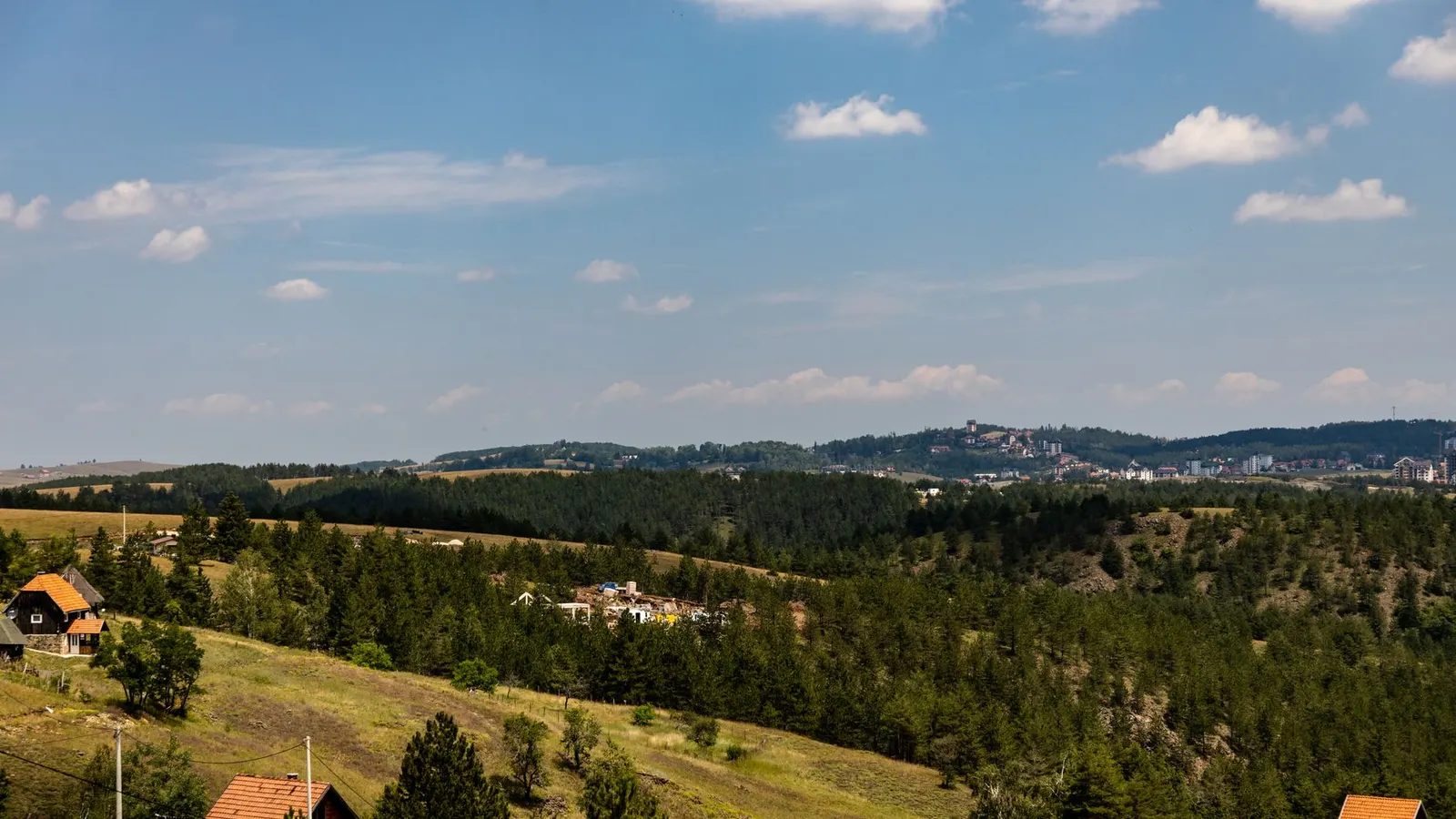
 Boris Hamer · Pexels License
Country Guide № 152 / 194 · Europe
Serbia
Belgrade's nightlife, Danube fortresses and a rural south nobody has heard of.
“Belgrade's nightlife, Danube fortresses and a rural south nobody has heard of.”
Serbia sits where the Ottoman and Habsburg empires met, and the seam runs through everything - Belgrade's Kalemegdan fortress has been fought over more than a hundred times, Novi Vojvodina to the north feels Central European, and the south toward Kosovo and North Macedonia is Balkan in a way that reads much further east.
Belgrade is the draw for most visitors, with a nightlife reputation built on the floating river clubs and a café culture that runs all day. The country beyond it is genuinely underexplored: the Đerdap gorge where the Danube narrows between cliffs, the Tara and Kopaonik mountains, the medieval monasteries of Raška, and the Guča trumpet festival, which is one of the strangest and best events in Europe.
Chapter 01
Highlights
Belgrade
Kalemegdan fortress over the Sava and Danube confluence, the Skadarlija bohemian quarter, the brutalist New Belgrade blocks and the splavovi river clubs that run until dawn.
The Đerdap gorge
The Iron Gates, where the Danube squeezes between cliffs on the Romanian border, with the Lepenski Vir Mesolithic settlement and the Roman Trajan's plaque above the water.
The Šargan Eight railway and Drvengrad
A narrow-gauge loop that climbs by crossing itself in a figure of eight, and Emir Kusturica's built-from-scratch wooden village at the top of the hill.
Guča trumpet festival
Half a million people, hundreds of brass bands and several days of continuous playing in a small western Serbian town every August. Unlike anything else on the continent.
Chapter 02
Entry requirements for Serbia
Checking your passport…
up to 90 days · free entry
90 days on arrival
Before you fly
The detail
- Maximum stay
- up to 90 days
- Fee
- free entry
- Passport validity
- Most destinations want validity beyond your stay, and some want six months. Check yours against the return date.
- Onward travel
- Airlines may ask for a return or onward ticket at check-in.
- Health
- No vaccinations required. Healthcare is adequate in Belgrade and thinner elsewhere; EHIC does not apply here, so travel insurance is necessary. Tap water is safe in cities. Tick-borne encephalitis is present in forests. Air quality in Belgrade and several industrial towns is poor in winter.
- Money
- Dinar. Cards are accepted in Belgrade and larger towns; villages and small restaurants are cash. Exchange offices (menjačnica) are widespread and give good rates - better than banks. ATMs are common. Tipping is around 10 %. Note that euros are not generally accepted despite being widely quoted for rents and property.
Serbia admits a United States passport without a visa for 90 days in any 180. Serbia is not in the Schengen area and keeps its own count. Days spent here do not come out of the Schengen allowance of 90 days in any rolling 180, and days already spent in the Schengen area do not come out of what you are allowed here. The Schengen window rolls, so time spent outside the area restores it day for day. It is why the western Balkans are where a long European itinerary buys itself room: a visitor who has nearly exhausted a rolling Schengen window can cross into Serbia and let it recover while they travel. Two things are worth knowing before you plan around that. The first is registration: every foreign visitor must be registered with the police within 24 hours of arrival, hotels do it automatically and issue the white slip, and anyone staying privately must register themselves at the local station. The slip is occasionally asked for on departure and the fine is levied there rather than where the omission happened, so keep one for every night of the trip. The second is Kosovo, and it is worth stating precisely rather than as a blanket warning. Serbia does not treat the line with Kosovo as an international border, and it has historically refused entry at Serbia–Kosovo crossings to travellers who reached Kosovo from a third country - from Albania, North Macedonia or Montenegro, or by air into Pristina - on the ground that they would be entering Serbia without ever having passed a Serbian border post. Going the other way is not a problem: enter Kosovo from Serbia and return the same way, or leave Kosovo by the route you arrived on. Practice has eased at some crossings and hardened at others and it is the kind of call made by the officer in front of you, so treat a Kosovo-to-Serbia leg as something to plan around rather than to test. A hire car crossing any Serbian border needs a green card from the rental company. Your passport should be valid three months beyond the day you intend to leave.
Check another destination with this passport →
Entry details: Editorial synthesis - Serbian Ministry of Foreign Affairs visa policy, Ministry of Interior registration rules, border-police practice (2025–2026) · compiled 18 Sept 2026
Who needs a visa for Serbia
12 common passports| Passport | Requirement | Stay | Process |
|---|---|---|---|
| United States | Visa-free | up to 90 days | No process · €0 / $0 |
| United Kingdom | Visa-free | up to 90 days | No process · €0 / $0 |
| Germany | Visa-free | up to 90 days | No process · €0 / $0 |
| India | Visa required | - | No Other passports record yet |
| China | Visa-free | up to 30 days | No Other passports record yet |
| Brazil | Visa-free | up to 90 days | No Other passports record yet |
| Nigeria | Visa required | - | No Other passports record yet |
| Indonesia | Visa-free | up to 30 days | No Other passports record yet |
| Philippines | Visa required | - | No Other passports record yet |
| Vietnam | Visa required | - | No Other passports record yet |
| Egypt | Visa required | - | No Other passports record yet |
| Nepal | Visa required | - | No Other passports record yet |
Holding a passport that is not listed? The picker above answers for any of them. See where your passport takes you. Source: Passport Index, updated 14 Aug 2026.
Chapter 03
When to go
BestMay–Jun, September. AvoidJan–Feb, November.
The best month - warm, green and long-dayed.
The band above each month is our editorial verdict - it weighs crowds, prices and access as well as weather. The line is average daily temperature, the bars are monthly rainfall. Select a month for the figures. Climate figures: ERA5 reanalysis via Open-Meteo, 2005–2024 normals.
Chapter 04
What it costs
A day in Serbia
Comfortable · sample day
≈ $59
Line items are real prices we track. The daily budget is an editorial estimate for this level, not their sum.
Where this sits among 244 countries we have costed
Belgrade prices rise around EXIT in July, Guča in August and New Year, and are otherwise flat. Kopaonik has a January to March ski peak. Serbia has no coastal season, so the swing that dominates its neighbours simply does not exist here. Prices have risen since 2022 with a substantial influx of new residents into Belgrade.
Updated Aug 2026 · Editorial synthesis - Serbian statistical office price data, operator fares, accommodation sampling (2025–2026) · confidence medium
Excludes international flights - they depend on where you fly from.
Chapter 05
Regions to know
5Belgrade
The capital at the Sava and Danube confluence - the fortress, Skadarlija, the river clubs and brutalist New Belgrade.
Vojvodina
The flat, Habsburg-shaped north - Novi Sad and Petrovaradin fortress, Subotica's art nouveau and the Fruška Gora monasteries.
The Danube & the east
The Đerdap gorge and Iron Gates, Lepenski Vir, and the Roman remains at Viminacium and Felix Romuliana.
Western Serbia
Tara national park, the Šargan Eight railway, Drvengrad, Zlatibor and the Guča festival town.
The south
Niš with its Ottoman and Roman layers, the Raška monasteries at Studenica and Sopoćani, and Kopaonik's ski slopes.
Chapter 06
Practical guide
Getting there
Belgrade (BEG) is well connected across Europe including by low-cost carriers, and Niš has some service. Buses reach every neighbouring capital cheaply and are the practical overland option; the rail network is slow, though the new fast line to Novi Sad is a genuine improvement.
Getting around
Buses are the backbone and cover everywhere, though stations charge a small platform fee that surprises people. The Belgrade to Novi Sad high-speed line is fast and cheap; the rest of the rail network is slow. A car helps in the west and south, where public transport thins out. Belgrade has trams and buses and is walkable in the centre.
Money & costs
Dinar. Cards are accepted in Belgrade and larger towns; villages and small restaurants are cash. Exchange offices (menjačnica) are widespread and give good rates - better than banks. ATMs are common. Tipping is around 10 %. Note that euros are not generally accepted despite being widely quoted for rents and property.
Safety
Safe, with petty theft and taxi overcharging the main risks - use apps or order by phone rather than hailing at the airport or bus station. Football-related disorder occurs around major matches. Landmine contamination from the 1990s persists in a few clearly marked areas near the Croatian and Kosovo borders. Nationalist graffiti and occasional political tension are visible and not directed at visitors.
Health
No vaccinations required. Healthcare is adequate in Belgrade and thinner elsewhere; EHIC does not apply here, so travel insurance is necessary. Tap water is safe in cities. Tick-borne encephalitis is present in forests. Air quality in Belgrade and several industrial towns is poor in winter.
SIM & internet
Not in the EU, so EU roaming does not apply automatically - though several operators include Western Balkans roaming, and the region has its own roaming-free zone. Local SIMs are cheap. Coverage is good. Free wifi is widespread and Belgrade has extensive public networks.
Chapter 07
Driving
A green card insurance certificate is required for foreign vehicles and is checked at the border - rental cars from EU countries often exclude Serbia, so confirm before driving in. Winter equipment is mandatory from November to April.
Rules change - verify with an official source before you rent.
ExplWorld VerifiedNo verified partners here yet - all 6 country seats are open.
Become ExplWorld Verified →Chapter 08
Itineraries through this country
Chapter 09
From the Journal
Chapter 10
Before you go
SerbiaChapter 11
Frequently asked questions
Do I need a visa?
Most Western passports do not - EU, UK, US, Canadian and Australian citizens get 90 days visa-free. Serbia is not in the EU or Schengen, which means those 90 days are separate from your Schengen allowance and the border is a real crossing with a stamp.
Can I travel between Serbia and Kosovo?
It is possible but the rules are specific. Serbia does not recognise Kosovo's independence and has historically refused entry to travellers arriving from Kosovo who first entered via a Kosovo border post, on the basis that they entered Serbia illegally. Entering Kosovo from Serbia and returning the same way is generally fine. Check current practice before planning it.
How cheap is Belgrade?
Noticeably cheaper than any EU capital. A restaurant main runs €7–11, a beer €2, a mid-range hotel €55. Rents and prices have risen since 2022 with an influx of new residents, but it remains among the best value city breaks in Europe.