 Vasilij Zajcev · Pexels License
Country Guide № 157 / 194 · Europe
Slovenia
Alps, karst caves and 46 kilometres of coast, in a country you can cross in three hours.
“Alps, karst caves and 46 kilometres of coast, in a country you can cross in three hours.”
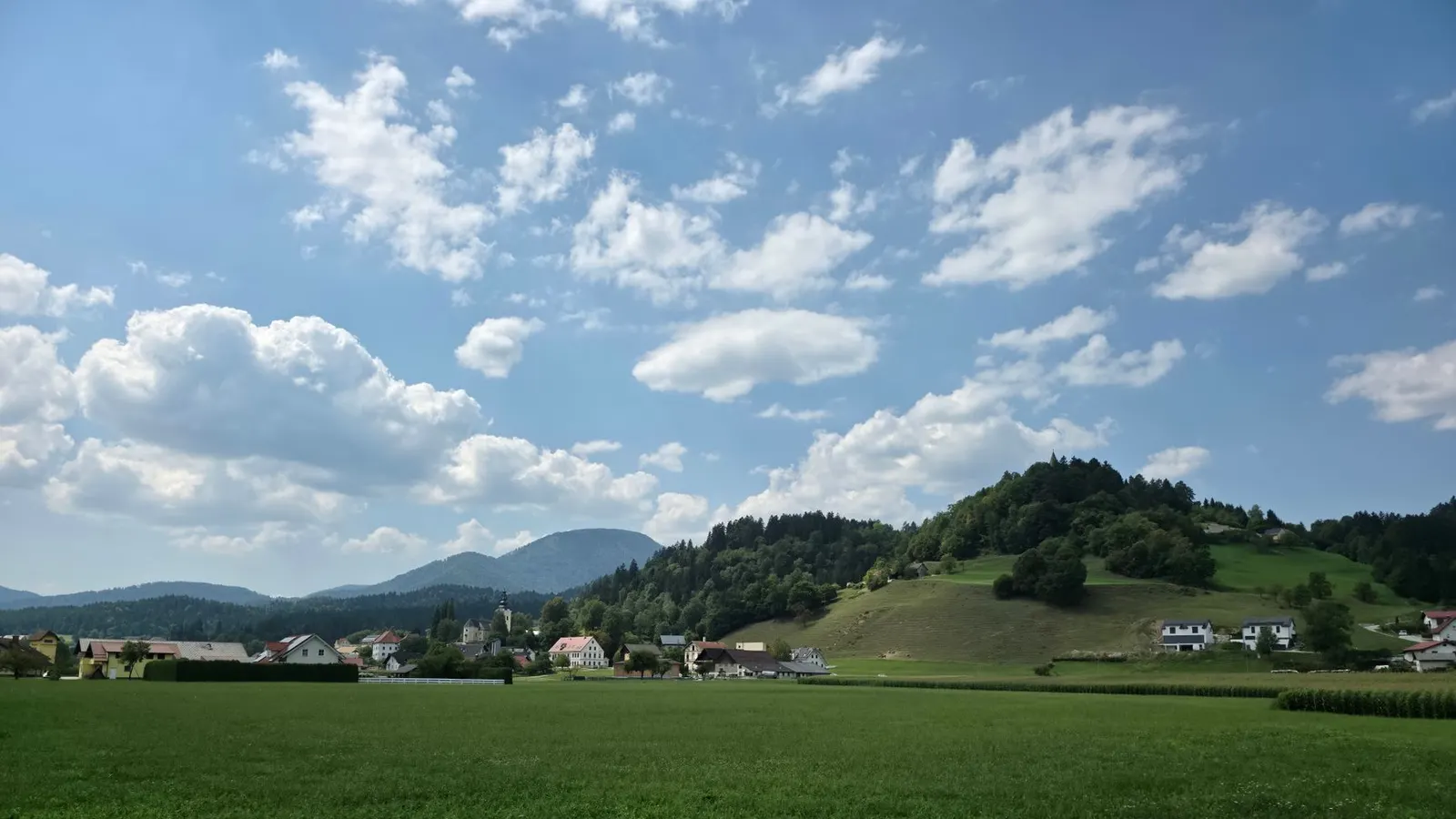
Slovenia packs an improbable amount into 20,000 square kilometres. In one day you can start in the Julian Alps at Triglav, drop through the Soča valley's turquoise river, cross the karst plateau where the word karst comes from, and reach the Adriatic at Piran. The whole country is under three hours end to end and more than half of it is forest.
It is also unusually well organised: Ljubljana pedestrianised its centre in 2007 and has been trading on it since, the trails are marked to Alpine Club standards, and the tourism sector has pushed hard on sustainability in a way that mostly seems genuine. The costs sit below Austria and above Croatia's interior, and it makes a natural bridge between the two.
Chapter 01
Highlights
Lake Bled and Lake Bohinj
The island church and clifftop castle at Bled are the postcard and the crowd; Bohinj, twenty minutes further into the mountains, is bigger, wilder and far quieter.
The Soča valley
A river of an almost artificial turquoise running through the Julian Alps, with rafting, the Vršič pass above it and a dense First World War Isonzo Front history along its length.
Postojna and Škocjan caves
Postojna has an underground train and the olm, a blind cave salamander; Škocjan is UNESCO-listed and holds one of the largest underground canyons in the world. Škocjan is the more astonishing.
Ljubljana
A capital of 300,000 with a pedestrianised centre, Plečnik's architecture along the river, a castle on the hill and a market and riverside bar culture that runs all summer.
Chapter 02
Entry requirements for Slovenia
Checking your passport…
up to 90 days · free entry
90 days on arrival
Before you fly
The detail
- Maximum stay
- up to 90 days
- Fee
- free entry
- Passport validity
- Most destinations want validity beyond your stay, and some want six months. Check yours against the return date.
- Onward travel
- Airlines may ask for a return or onward ticket at check-in.
- Health
- No vaccinations required. Healthcare is good; EHIC/GHIC covers EU and UK visitors. Tick-borne encephalitis is prevalent in Slovenian forests - the country has one of the higher incidence rates in Europe and vaccination is routine among residents who spend time outdoors. Tap water is excellent. Mountain rescue is well organised and charged.
- Money
- Euro. Cards are accepted almost everywhere. Tipping is around 10 % by rounding up. A tourist tax per night is added to accommodation. Mountain huts often take cash only.
No visa and no fee for a United States passport: 90 days in any rolling 180, and the allowance belongs to the twenty-nine-country Schengen area rather than to Slovenia, so a week in Venice or Vienna beforehand is a week already spent. The window rolls: count backwards 180 days from any date and add up every day you were anywhere in the area, arrival and departure days included. Slovenia has no external Schengen land border at all - Italy, Austria, Hungary and, since 2023, Croatia are all inside the area - so unless you fly into Ljubljana from outside it, your biometric enrolment happened wherever you first arrived in Europe. Two of those internal borders are nonetheless checked: Slovenia reintroduced temporary controls towards Croatia and Hungary in late 2023 on security grounds and has extended them repeatedly, so carry the passport on those crossings even though both are internal and the checks are occasional rather than systematic. Since 10 April 2026 the Entry/Exit System has been fully operational, after a phased start in October 2025: your first crossing records a facial image and fingerprints, the passport is no longer stamped, and the count is now kept by a machine rather than by an officer finding the right inky page. A day trip to Trieste or over the Karawanks costs nothing in paperwork and changes nothing in the count. ETIAS was announced but not required at the time of writing; check when you book. Your passport must be valid three months beyond your intended departure from the Schengen area.
Check another destination with this passport →
Entry details: Editorial synthesis - Schengen Borders Code (Regulation 2016/399), Slovenian Police border-control notices, EU Entry/Exit System rollout (2025–2026) · compiled 17 Sept 2026
Who needs a visa for Slovenia
12 common passports| Passport | Requirement | Stay | Process |
|---|---|---|---|
| United States | Visa-free | up to 90 days | No process · €0 / $0 |
| United Kingdom | Visa-free | up to 90 days | No process · €0 / $0 |
| Germany | Visa-free | - | No process · €0 / $0 |
| India | Visa required | - | No Other passports record yet |
| China | Visa required | - | No Other passports record yet |
| Brazil | Visa-free | up to 90 days | No Other passports record yet |
| Nigeria | Visa required | - | No Other passports record yet |
| Indonesia | Visa required | - | No Other passports record yet |
| Philippines | Visa required | - | No Other passports record yet |
| Vietnam | Visa required | - | No Other passports record yet |
| Egypt | Visa required | - | No Other passports record yet |
| Nepal | Visa required | - | No Other passports record yet |
Holding a passport that is not listed? The picker above answers for any of them. See where your passport takes you. Source: Passport Index, updated 14 Aug 2026.
Chapter 03
When to go
BestMay–Jun, September. AvoidNovember.
Green, warm and long-dayed - the best month.
The band above each month is our editorial verdict - it weighs crowds, prices and access as well as weather. The line is average daily temperature, the bars are monthly rainfall. Select a month for the figures. Climate figures: ERA5 reanalysis via Open-Meteo, 2005–2024 normals.
Chapter 04
What it costs
A day in Slovenia
Comfortable · sample day
≈ $97
Line items are real prices we track. The daily budget is an editorial estimate for this level, not their sum.
Where this sits among 244 countries we have costed
Bled and the coast roughly double in July and August; the ski resorts peak from Christmas to February. Ljubljana is steadier and busiest from May to September. Mountain huts are fixed-price and open from roughly late June to late September. Cave entry is fixed year-round.
Updated Aug 2026 · Editorial synthesis - Slovenian Alpine Association hut tariffs, cave and park entry prices, accommodation sampling (2025–2026) · confidence high
Excludes international flights - they depend on where you fly from.
Chapter 05
Regions to know
5Ljubljana & the centre
The pedestrianised capital, Plečnik's architecture, and the Ljubljana marshes with their prehistoric pile dwellings.
The Julian Alps
Triglav national park, Lake Bled and Lake Bohinj, the Vršič pass and the Vintgar gorge.
The Soča valley
Turquoise river, Kobarid and Bovec, whitewater rafting and the First World War Isonzo Front museums.
The Karst & the coast
Postojna and Škocjan caves, the Lipica stud farm, and Piran's Venetian old town on the Adriatic.
The east & Prekmurje
Maribor and the Pohorje hills, Ptuj's old town, thermal spas and the wine roads toward Hungary.
Chapter 06
Practical guide
Getting there
Ljubljana (LJU) has limited European service; many visitors fly to Venice, Trieste, Zagreb or Klagenfurt and come overland, all under three hours. Trains link Ljubljana to Vienna, Zagreb and Munich, and buses reach Trieste and Venice cheaply.
Getting around
Buses are the workhorse and cover everywhere; trains link the main towns and are slower but cheap. A car is genuinely useful for the Alps, the Soča valley and the Karst, where bus services are sparse. Ljubljana is walkable and has a bike-share scheme. The country is small enough that no drive takes more than three hours.
Money & costs
Euro. Cards are accepted almost everywhere. Tipping is around 10 % by rounding up. A tourist tax per night is added to accommodation. Mountain huts often take cash only.
Safety
Very safe with low crime. The risks are Alpine - Triglav and the Julian Alps have serious exposed terrain and a genuine accident rate, and summer thunderstorms build fast. Check the forecast and hut availability. Slovenia has a substantial brown bear population in the southern forests, which is worth knowing though attacks are rare.
Health
No vaccinations required. Healthcare is good; EHIC/GHIC covers EU and UK visitors. Tick-borne encephalitis is prevalent in Slovenian forests - the country has one of the higher incidence rates in Europe and vaccination is routine among residents who spend time outdoors. Tap water is excellent. Mountain rescue is well organised and charged.
SIM & internet
EU roaming applies. Coverage is comprehensive including in most Alpine valleys. Free wifi is standard.
Chapter 07
Driving
The e-vignette is registered to the number plate and must be bought before joining the motorway - there is no booth and no grace period. The Vršič pass has fifty hairpins, is cobbled in places and closes in winter.
Rules change - verify with an official source before you rent.
ExplWorld VerifiedNo verified partners here yet - all 6 country seats are open.
Become ExplWorld Verified →Chapter 08
Itineraries through this country
Chapter 09
From the Journal
Chapter 10
Before you go
SloveniaChapter 11
Frequently asked questions
How long do I need?
Five days covers Ljubljana, Bled or Bohinj, and one cave system. Eight to ten lets you add the Soča valley, the coast at Piran and the Karst wine country. The country is small enough that you can base in Ljubljana and day-trip almost everywhere, though the Alps reward staying up there.
Can I climb Triglav?
It is the national mountain and something of a rite of passage, at 2,864 metres, and it is not a walk - the final sections are secured via ferrata with cables and pegs, and a helmet and harness are needed. Most people do it over two days with a mountain hut. Guides are widely available and worth it if you have not done exposed scrambling.
Is the coast worth it?
Slovenia has 46 kilometres of coastline and Piran, a Venetian-era town on a point, is the reason to go. It is lovely and small. If you want a beach holiday, Croatia is next door with a thousand islands; if you want a day of Venetian architecture and good seafood, Piran does it well.