 Th2city Santana · Pexels License
Country Guide № 158 / 194 · Oceania
Solomon Islands
Iron Bottom Sound, Marovo Lagoon and the least-visited archipelago in the Pacific.
“Iron Bottom Sound, Marovo Lagoon and the least-visited archipelago in the Pacific.”
The Solomons are around 900 islands running 1,500 kilometres southeast from Papua New Guinea, and they receive fewer visitors than almost any country in the Pacific. The Guadalcanal campaign of 1942–43 left the seabed off Honiara so full of sunken warships that it is called Iron Bottom Sound - dozens of Japanese and American vessels and aircraft, many within recreational depth, making this one of the great wreck-diving regions and largely unexploited.
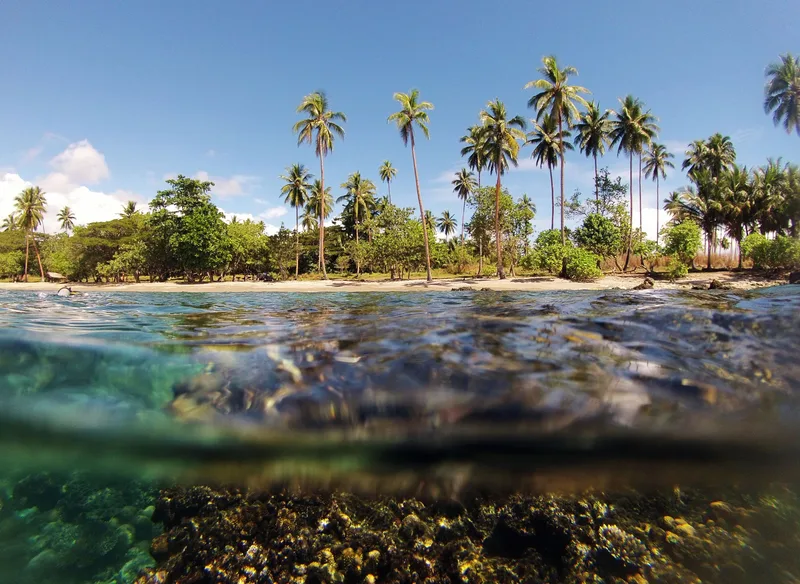
Marovo Lagoon in the Western Province is the largest saltwater lagoon in the world, a double barrier reef enclosing hundreds of islands, with carving villages and eco-lodges built on customary land. Around 70 languages are spoken. Infrastructure is minimal, domestic flights are unreliable, malaria is endemic and the wet season is genuinely wet - this is travel for people who want the Pacific before it was arranged for visitors.
Chapter 01
Highlights
Iron Bottom Sound
The strait off Guadalcanal where dozens of warships and aircraft sank during the 1942–43 campaign. Many wrecks are within recreational depth, and the diving is world-class with almost no other divers on it.
Marovo Lagoon
The largest saltwater lagoon on earth, a double barrier reef enclosing hundreds of islands. Carving villages, eco-lodges on customary land and canoe travel between them.
Guadalcanal battlefields
Bloody Ridge, Henderson Field, the US and Japanese memorials and rusting materiel still in the bush around Honiara - the ground campaign that turned the Pacific war.
Rennell Island
A raised coral atoll in the south with Lake Tegano, the largest lake in the Pacific - UNESCO-listed and on the World Heritage in Danger list because of logging pressure.
Chapter 02
Entry requirements for Solomon Islands
Checking your passport…
up to 90 days · free entry
90 days on arrival
Before you fly
The detail
- Maximum stay
- up to 90 days
- Fee
- free entry
- Passport validity
- Most destinations want validity beyond your stay, and some want six months. Check yours against the return date.
- Onward travel
- Airlines may ask for a return or onward ticket at check-in.
- Health
- Malaria is endemic and among the higher-risk in the Pacific - prophylaxis is standard advice. Dengue outbreaks occur. Medical facilities are very limited; evacuation to Australia is the plan for anything serious, and insurance must cover it.
- Money
- Solomon Islands dollar in cash for nearly everything. ATMs in Honiara and Gizo; nothing in the villages. Cards work at a handful of hotels. Carry cash for the whole outer-island portion of a trip.
A United States passport receives a visitor's permit on arrival at Honiara for up to three months, issued free, with nothing applied for beforehand. Carry the onward ticket and the first accommodation booking in a form you can show on a phone. Across the Pacific these are asked for far more consistently than in most of the world, and they are asked for by the AIRLINE at check-in rather than by the Solomon Islands at the door - a carrier that lands somebody in a country they have no way out of owns the cost of taking them home, so the refusal comes from a check-in agent hours before anyone official has looked at your passport. A yellow fever certificate is required if you have come from a country where the disease is present, and the threshold the International Health Regulations set is a transit of more than twelve hours in an airport of such a country rather than any transit at all - check it against the whole routing rather than the departure airport, because almost nothing in this part of the world is fewer than three flights. The health question here is more pressing than the paperwork one. Malaria is endemic and among the higher-risk in the Pacific, prophylaxis is standard advice rather than an option to weigh, and the risk does not stop at the edge of Honiara. Dengue outbreaks occur. Medical facilities are very limited, the plan for anything serious is an evacuation to Australia, and insurance that names that explicitly is the difference between an incident and a catastrophe. The other thing a visitor should know before landing is that the Second World War is not finished here in the literal sense: unexploded ordnance is still found on Guadalcanal and across the western provinces, it is still occasionally fatal, and the rule is simple - stay on paths at battlefield sites, do not pick anything up and do not take anything away, including from the wrecks, which are war graves. Getting around is slow: Solomon Airlines flies a domestic network of variable reliability, boats do the rest, and lodges arrange their own transfers, so build buffer days rather than tight connections. Cash in Solomon Islands dollars is needed for everything outside Honiara and Gizo.
Check another destination with this passport →
Entry details: Editorial synthesis - Solomon Islands Immigration visitor permit practice, provincial travel conditions (2025–2026) · compiled 18 Sept 2026
Who needs a visa for Solomon Islands
12 common passports| Passport | Requirement | Stay | Process |
|---|---|---|---|
| United States | Visa on arrival | - | No process · €0 / $0 |
| United Kingdom | Visa on arrival | - | No process · €0 / $0 |
| Germany | Visa-free | up to 90 days | No process · €0 / $0 |
| India | Visa required | - | No Other passports record yet |
| China | Visa on arrival | - | No Other passports record yet |
| Brazil | Visa on arrival | - | No Other passports record yet |
| Nigeria | Visa required | - | No Other passports record yet |
| Indonesia | Visa required | - | No Other passports record yet |
| Philippines | Visa required | - | No Other passports record yet |
| Vietnam | Visa required | - | No Other passports record yet |
| Egypt | Visa required | - | No Other passports record yet |
| Nepal | Visa required | - | No Other passports record yet |
Holding a passport that is not listed? The picker above answers for any of them. See where your passport takes you. Source: Passport Index, updated 14 Aug 2026.
Chapter 03
When to go
BestMay–Oct. AvoidDec–Mar.
Dry season opens - the best diving conditions.
The band above each month is our editorial verdict - it weighs crowds, prices and access as well as weather. The line is average daily temperature, the bars are monthly rainfall. Select a month for the figures. Climate figures: ERA5 reanalysis via Open-Meteo, 2005–2024 normals.
Chapter 04
What it costs
A day in Solomon Islands
Comfortable · sample day
≈ $151
Line items are real prices we track. The daily budget is an editorial estimate for this level, not their sum.
Where this sits among 244 countries we have costed
Visitor numbers are so low that seasonal pricing barely exists. Honiara hotel demand comes from aid, mining and government rather than tourism.
Updated Aug 2026 · Editorial synthesis - operator quotes and market sampling (2025–2026) · confidence medium
Excludes international flights - they depend on where you fly from.
Chapter 05
Regions to know
5Guadalcanal
Honiara, the battlefields, Bonegi's shore-dive wrecks and the mountains behind the coastal strip.
The Western Province
Gizo, Munda, Marovo Lagoon, Kennedy Island and the best diving in the country.
Malaita
The artificial islands of Langa Langa lagoon, shell money manufacture and strong kastom traditions.
Isabel and Choiseul
Long forested islands with almost no visitor infrastructure and reefs nobody has dived.
Rennell and the outliers
Lake Tegano's UNESCO site, the Polynesian outlier islands and Temotu in the far east.
Chapter 06
Practical guide
Getting there
Honiara Henderson is served by Solomon Airlines, Fiji Airways and Virgin Australia from Brisbane, Nadi, Port Vila and Port Moresby. There is no route from Europe under about 30 hours.
Getting around
Solomon Airlines flies the domestic network with variable reliability. Ferries and open boats connect the provinces slowly. In Honiara, shared minibuses run the coastal road cheaply. Lodges arrange boat transfers, which is how most people move.
Money & costs
Solomon Islands dollar in cash for nearly everything. ATMs in Honiara and Gizo; nothing in the villages. Cards work at a handful of hotels. Carry cash for the whole outer-island portion of a trip.
Safety
Petty crime and occasional unrest in Honiara. Unexploded ordnance from the Second World War is still found - do not pick anything up, and stay on paths at battlefield sites. Saltwater crocodiles inhabit some estuaries and mangroves.
Health
Malaria is endemic and among the higher-risk in the Pacific - prophylaxis is standard advice. Dengue outbreaks occur. Medical facilities are very limited; evacuation to Australia is the plan for anything serious, and insurance must cover it.
SIM & internet
Our Telekom and bmobile; SIM registration requires a passport. Coverage in Honiara and provincial centres; sparse to absent elsewhere. Lodges may have satellite internet or none.
Chapter 07
Driving
The road network is essentially Guadalcanal's coastal road plus short stretches elsewhere. Few visitors drive; boats and small aircraft do the work. Pedestrians and dogs on the road are constant.
Rules change - verify with an official source before you rent.
ExplWorld VerifiedNo verified partners here yet - all 6 country seats are open.
Become ExplWorld Verified →Chapter 08
Itineraries through this country
Chapter 09
From the Journal
Chapter 10
Before you go
Solomon IslandsChapter 11
Frequently asked questions
How hard is it to get around?
Hard. Solomon Airlines flies domestically to small airstrips but cancellations and reschedules are routine, and boats between islands run to no reliable timetable. Build in buffer days, especially before an international departure, and treat any published schedule as a suggestion.
Is Honiara safe?
Ordinary petty crime and occasional opportunistic robbery, and there have been episodes of serious civil unrest - riots in 2021 caused significant damage in Chinatown and elsewhere. Avoid walking at night, avoid political gatherings, and check the current advisory. The outer islands are calm.
What about land ownership?
Around 85% of land is under customary ownership, which means beaches, reefs, dive sites and walking routes usually belong to a clan. Access is arranged and a fee paid, normally through your lodge or guide. Never assume a beach is public.