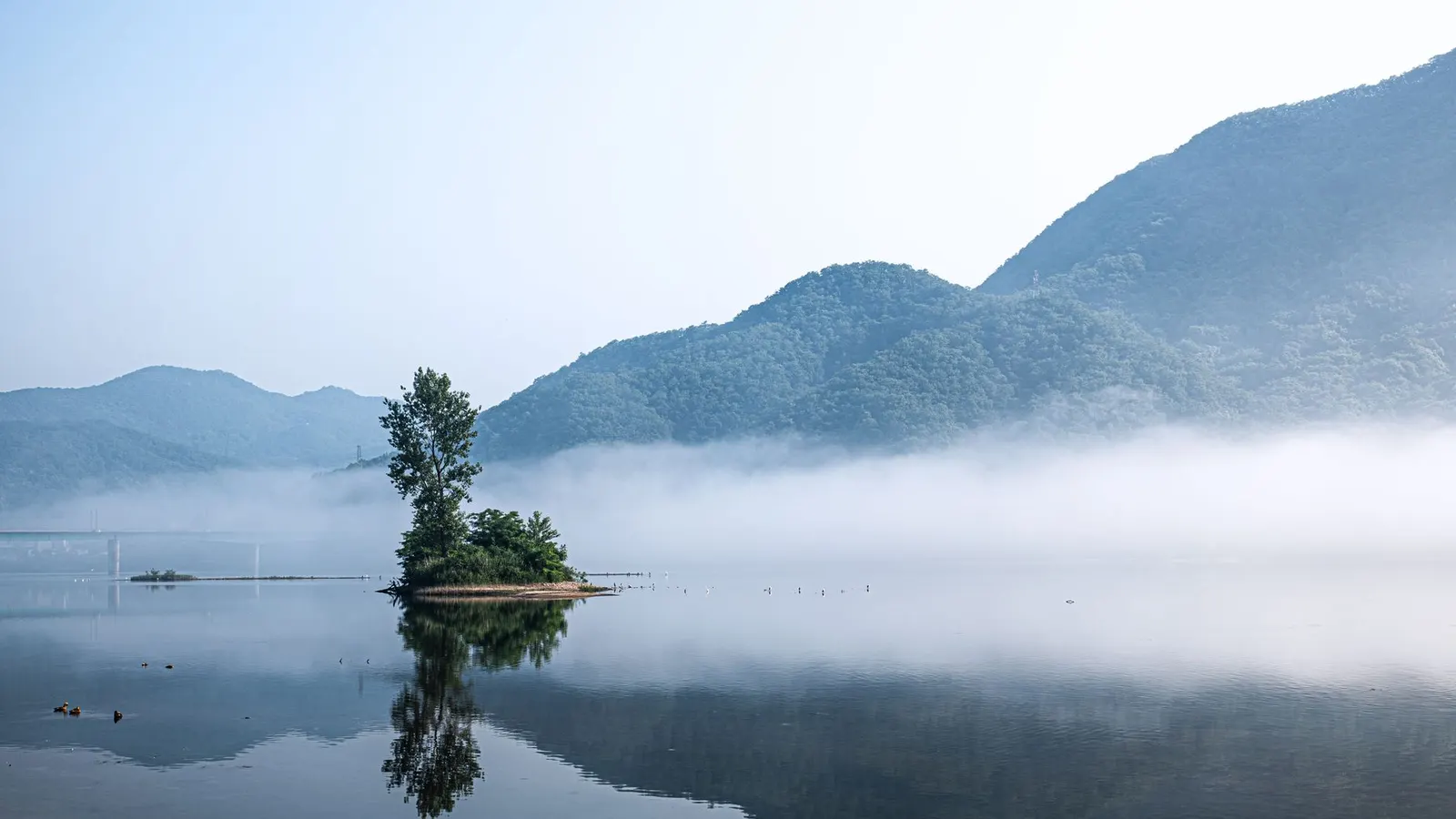
 한기 장 · Pexels License
Country Guide № 161 / 194 · Asia
South Korea
Mountains in every direction, and a country that rebuilt itself in fifty years.
“Mountains in every direction, and a country that rebuilt itself in fifty years.”
South Korea is seventy per cent mountain, which is the fact that explains everything else - the population squeezed into valleys and coastal plains, the hiking culture that sees pensioners in full technical gear on a Tuesday, the temples tucked into every national park. Seoul holds half the country's people and is one of the most efficiently run cities anywhere.
It is also the easiest East Asian country to travel independently: excellent rail and bus networks, near-universal card payment, English signage on transport, and a K-culture wave that has made the country legible to visitors who have never been. Give it two weeks, split between Seoul, a historic city like Gyeongju or Jeonju, and a national park or the island of Jeju.
Chapter 01
Highlights
Seoul's palaces and mountains
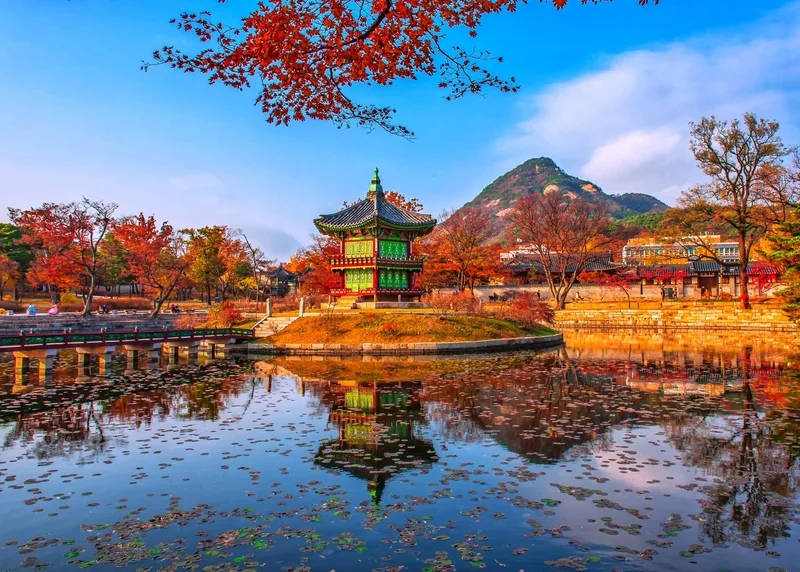
Gyeongbokgung and Changdeokgung's secret garden, with Bukhansan national park reachable by metro - a 800-metre granite peak inside the city limits.
Gyeongju
The Silla capital for a thousand years: royal burial mounds in the middle of town, the Seokguram grotto Buddha and Bulguksa temple. Cycle it.
A temple stay
Overnight in a working mountain monastery - 4 a.m. chanting, temple food, tea with a monk. Programmes run in English at dozens of temples and cost around €50.
Jeju Island
A volcanic island with a 1,950-metre peak, lava tubes, coastal walking trails and the haenyeo women divers. An hour from Seoul and the busiest air route in the world.
Chapter 02
Entry requirements for South Korea
Checking your passport…
up to 90 days · free entry
90 days on arrival
Before you fly
The detail
- Maximum stay
- up to 90 days
- Fee
- free entry
- Passport validity
- Most destinations want validity beyond your stay, and some want six months. Check yours against the return date.
- Onward travel
- Airlines may ask for a return or onward ticket at check-in.
- Arrival form
- K-ETA where required, plus the Q-CODE health declaration and an electronic customs declaration - all online and free through official portals.
- Health
- No vaccinations required. Healthcare is excellent and relatively affordable, though visitors pay upfront - insurance is still needed. Tap water is safe to drink, though most Koreans drink filtered. Summer heat and humidity are genuinely dangerous during heat waves. Fine-dust (미세먼지) episodes in spring affect air quality; the forecast is on every weather app and masks are normal.
- Money
- Card payment is near-universal, including for small purchases and street food in Seoul. Foreign cards work widely but not everywhere - carry some won for markets and rural areas. ATMs marked "Global" accept foreign cards; ordinary domestic ones often do not. Tipping is not practised and can cause confusion.
United States passports are currently exempt from K-ETA and enter visa-free for 90 days, which is a temporary exemption rather than the standing rule: Korea suspended K-ETA for twenty-two countries from April 2023 and has rolled the suspension forward a year at a time since, so the first thing to establish before flying is whether it has been renewed again. Should it lapse, the application is at k-eta.go.kr, costs 10,000 won plus a processing fee, lasts three years and must be approved before boarding - and that domain is the only official one, whatever the sponsored results suggest. Exempt travellers complete the electronic arrival card instead, either online in the three days before arrival or on paper in the air; holders of a valid K-ETA are excused it, which is the one reason to apply voluntarily. The 90 days covers tourism and family visits, cannot be extended in the ordinary case, and teaching English on it is the most common route to being deported from Korea. Airlines check onward tickets at the gate and the passport must be valid for the whole stay.
Check another destination with this passport →
Entry details: Editorial synthesis - Korea Immigration Service K-ETA scheme, Ministry of Justice visa-waiver announcements, Korean e-Arrival Card (2025–2026) · compiled 15 Sept 2026
Who needs a visa for South Korea
12 common passports| Passport | Requirement | Stay | Process |
|---|---|---|---|
| United States | Visa-free | up to 90 days | No process · €0 / $0 |
| United Kingdom | Visa-free | up to 90 days | No process · €0 / $0 |
| Germany | Visa-free | up to 90 days | No process · €0 / $0 |
| India | e-Visa | - | No Other passports record yet |
| China | e-Visa | - | No Other passports record yet |
| Brazil | eTA | - | No Other passports record yet |
| Nigeria | e-Visa | - | No Other passports record yet |
| Indonesia | e-Visa | - | No Other passports record yet |
| Philippines | e-Visa | - | No Other passports record yet |
| Vietnam | e-Visa | - | No Other passports record yet |
| Egypt | e-Visa | - | No Other passports record yet |
| Nepal | e-Visa | - | No Other passports record yet |
Holding a passport that is not listed? The picker above answers for any of them. See where your passport takes you. Source: Passport Index, updated 14 Aug 2026.
Chapter 03
When to go
BestApr–May, Oct–Nov. AvoidJul–Aug.
Cherry blossom moves north through the month - the busiest and prettiest weeks.
The band above each month is our editorial verdict - it weighs crowds, prices and access as well as weather. The line is average daily temperature, the bars are monthly rainfall. Select a month for the figures. Climate figures: ERA5 reanalysis via Open-Meteo, 2005–2024 normals.
Chapter 04
What it costs
A day in South Korea
Comfortable · sample day
≈ $92
Line items are real prices we track. The daily budget is an editorial estimate for this level, not their sum.
Where this sits among 244 countries we have costed
Cherry-blossom weeks in early April and the autumn colour peak in late October and early November lift hotel rates in Seoul, Gyeongju and the park towns. Chuseok and Lunar New Year shut a large share of restaurants and shops for several days and fill every train. Jeju flights spike in the summer domestic holidays. Food, transport and entry fees are flat year-round.
Updated Aug 2026 · Editorial synthesis - KORAIL published fares, Korea Tourism Organization, hotel rate sampling (2025–2026) · confidence high
Excludes international flights - they depend on where you fly from.
Chapter 05
Regions to know
5Seoul & Gyeonggi
The capital, its five palaces, the mountains inside the city, and the DMZ an hour north.
Gangwon & the east
Seoraksan national park, ski resorts, and the east-coast beaches around Gangneung.
The Gyeongsang provinces
Gyeongju's Silla tombs, Andong's Confucian villages and Busan's beaches, markets and film festival.
The Jeolla provinces
Jeonju's hanok village and the country's most celebrated food, plus the southwest islands and Naejangsan's autumn colour.
Jeju Island
A volcanic island with Hallasan, lava tubes, the Olle coastal trail network and the haenyeo diving tradition.
Chapter 06
Practical guide
Getting there
Incheon (ICN) is a major hub with direct flights from most European capitals in 10–11 hours, and is consistently among the best-run airports in the world. The AREX train reaches central Seoul in under an hour. Busan (PUS) and Jeju take regional flights. Ferries connect Busan with Fukuoka and Osaka in Japan.
Entry formalities
K-ETA where required, plus the Q-CODE health declaration and an electronic customs declaration - all online and free through official portals.
Getting around
KTX high-speed trains link Seoul with Busan in under three hours; regular KORAIL services and express buses cover everything else cheaply. In cities, buy a T-money card (or use a contactless foreign card on Seoul's metro) - it works on subways, buses and taxis nationwide. Kakao T is the taxi app. Domestic flights to Jeju are frequent and cheap. Renting a car makes sense only for Jeju and remote national parks.
Money & costs
Card payment is near-universal, including for small purchases and street food in Seoul. Foreign cards work widely but not everywhere - carry some won for markets and rural areas. ATMs marked "Global" accept foreign cards; ordinary domestic ones often do not. Tipping is not practised and can cause confusion.
Safety
One of the safest countries in the world - solo night walking is unremarkable and theft is rare enough that people leave laptops on café tables. The practical hazards are summer typhoons, heat waves, and heavy monsoon rain that occasionally causes deadly flooding. The North Korean border situation produces headlines but no meaningful day-to-day risk to visitors. Drug laws are strict and apply to foreigners.
Health
No vaccinations required. Healthcare is excellent and relatively affordable, though visitors pay upfront - insurance is still needed. Tap water is safe to drink, though most Koreans drink filtered. Summer heat and humidity are genuinely dangerous during heat waves. Fine-dust (미세먼지) episodes in spring affect air quality; the forecast is on every weather app and masks are normal.
SIM & internet
Among the best connected countries on earth. Tourist SIMs and eSIMs are cheap and instant; free public wifi is widespread and fast. Naver Map or Kakao Map rather than Google Maps, which is crippled here by mapping-data export restrictions - this catches out almost every first-time visitor. KakaoTalk is the universal messaging app.
Chapter 07
Driving
Driving is well signposted and orderly, but city traffic and parking make it pointless in Seoul. Jeju is the one place where a car genuinely improves the trip.
Rules change - verify with an official source before you rent.
ExplWorld VerifiedNo verified partners here yet - all 6 country seats are open.
Become ExplWorld Verified →Chapter 08
Itineraries through this country
Chapter 09
From the Journal
Chapter 10
Before you go
South KoreaChapter 11
Frequently asked questions
Do I need the K-ETA?
It depends on the year. South Korea temporarily waived the K-ETA requirement for many visa-free nationalities including most of Europe, and the waiver has been extended more than once. When it lapses, the K-ETA is a US$10 online authorisation applied for at least 72 hours before departure. Check the current status for your passport before booking - this is one of the more changeable rules in the region.
Is language a problem?
Less than you would expect. Transport signage, station announcements and major museums are in English, Naver Map and Papago handle the rest, and younger Koreans often speak some English. Older restaurants and rural areas are where it thins out - a photo menu and a translation app cover most of it. Learning the hangul alphabet takes an hour and is genuinely useful.
Can I visit the DMZ?
Yes, on an organised tour from Seoul - independent access is not permitted. Tours visit the observation posts, the infiltration tunnels and, when conditions allow, the Joint Security Area at Panmunjom. JSA access is suspended and resumed depending on the political situation, so confirm what is actually included before paying.