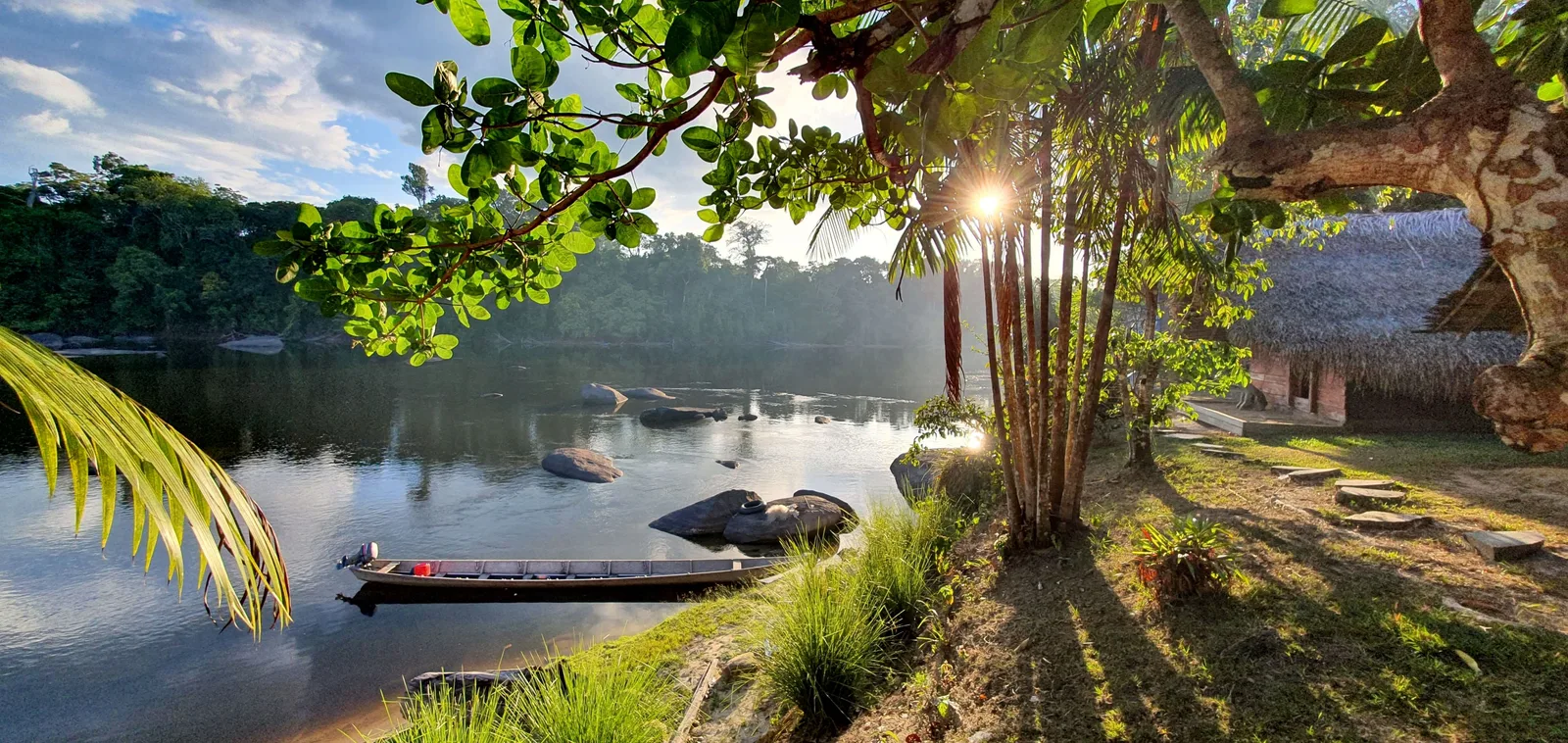
 sandra / stock.adobe.com
Country Guide № 166 / 194 · South America
Suriname
South America’s Dutch-speaking outlier - rainforest rivers, Javanese warungs and a wooden UNESCO capital.
“South America’s Dutch-speaking outlier - rainforest rivers, Javanese warungs and a wooden UNESCO capital.”
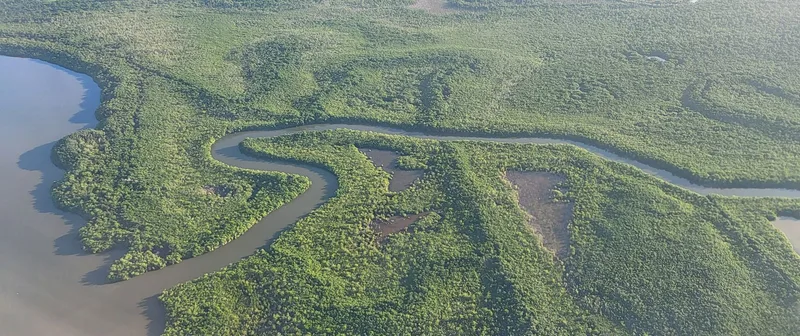
Suriname does not feel like the South America next door. Dutch is the official language, roti and bami share menus with cassava and pom, mosques stand beside synagogues on Paramaribo’s Keizerstraat, and the interior - over ninety percent of the country - is unbroken Amazonian rainforest reached by river or bush plane rather than road.
This is slow, small-scale travel. The circuit is short - the wooden UNESCO inner city, plantation loops along the Commewijne, turtle beaches at Galibi, and multi-day lodge stays up the Suriname River in Maroon territory - and almost everything beyond the capital is organised as a package with boat transport included. Come in a dry season, bring patience, and let the rivers set the pace.
Chapter 01
Highlights
Paramaribo’s wooden inner city
A UNESCO-listed grid of white-timber colonial buildings, a wooden cathedral among the largest in the Americas, and the surreal sight of a mosque and a synagogue sharing a fence line.
Upper Suriname River lodges
Two hours of road and hours more of dugout boat bring you to Saamaka Maroon villages and island lodges where the itinerary is jungle walks, rapids swims and drumming after dark.
Commewijne plantation loop
Cycle or boat between former coffee and cacao plantations across the river from town - Frederiksdorp’s restored quarters, Javanese warungs in Tamanredjo, and river dolphins at the Commewijne’s mouth at dusk.
Galibi turtle beaches
At the Marowijne river mouth, reachable only by boat through Kali’na villages, giant leatherbacks haul out to nest between roughly February and July.
Chapter 02
Entry requirements for Suriname
Checking your passport…
up to 90 days · €40 / $43 · e-visa
90 days on arrival
Official portal only
Paid look-alike sites charge for a process that is free or cheap on the government portal. Use the link below and nothing else.
suriname.vfsevisa.com →Before you fly
The detail
- Maximum stay
- up to 90 days
- Process
- e-visa
- Fee
- €40 / $43
- Processing time
- Processing takes 1–5 days - apply with room to spare.
- Passport validity
- Most destinations want validity beyond your stay, and some want six months. Check yours against the return date.
- Onward travel
- Airlines may ask for a return or onward ticket at check-in.
- Health
- Yellow fever vaccination is recommended (and required if arriving from an endemic country); malaria risk persists in parts of the deep interior, so discuss prophylaxis for multi-day jungle stays, and dengue is present in town. Most visitors stick to bottled water. Medical facilities beyond the capital are minimal - insurance with evacuation cover is essential.
- Money
- The Surinamese dollar floats and has a history of sharp devaluation; prices for tours and better hotels are often quoted in euros or US dollars, and cash euros are genuinely useful. ATMs in Paramaribo dispense SRD but foreign cards fail often - bring more hard-currency cash than feels natural and change at banks or cambios, never on the street.
What changed
Suriname no longer sells the old paper tourist card at the airport, and this is the change a stale guidebook will get wrong: the authorisation is arranged online before you fly. There are two products on the government’s portal at suriname.vfsevisa.com - the single-entry e-Tourist Card, which is what an ordinary holiday needs, and the e-visa for longer or multiple-entry stays - and approval normally comes back within a few days. Print the approval. The airline checks the document at the gate and will not board you on a screenshot of an email. What it costs has moved more than once as the products have been renamed and repriced, so take the figure from the portal at the moment you apply rather than from any number quoted in print, and apply only on that domain: the resellers sitting above it in search results charge several times the fee for the identical PDF. The passport needs six months beyond arrival and a blank page. A yellow fever certificate is required if you are arriving from a country where the disease is present, and a transit of more than twelve hours through such a country counts - check it against your routing. If you are coming overland, by the Corentyne ferry from Guyana or across at Albina from French Guiana, confirm on the portal that the product you are buying covers that entry point before you set out.
Check another destination with this passport →
Entry details: Editorial synthesis - Republic of Suriname e-visa and e-Tourist Card service, Surinamese Ministry of Foreign Affairs, WHO International Health Regulations yellow fever requirements (2025–2026) · compiled 18 Sept 2026
Who needs a visa for Suriname
12 common passports| Passport | Requirement | Stay | Process |
|---|---|---|---|
| United States | eTA | - | e-Visa · €40 / $43 · 1–5 d |
| United Kingdom | eTA | - | e-Visa · €40 / $43 · 1–5 d |
| Germany | eTA | - | e-Visa · €40 / $43 · 1–5 d |
| India | e-Visa | - | No Other passports record yet |
| China | Visa-free | up to 30 days | No Other passports record yet |
| Brazil | Visa-free | up to 180 days | No Other passports record yet |
| Nigeria | e-Visa | - | No Other passports record yet |
| Indonesia | eTA | - | No Other passports record yet |
| Philippines | Visa-free | up to 30 days | No Other passports record yet |
| Vietnam | eTA | - | No Other passports record yet |
| Egypt | e-Visa | - | No Other passports record yet |
| Nepal | e-Visa | - | No Other passports record yet |
Holding a passport that is not listed? The picker above answers for any of them. See where your passport takes you. Source: Passport Index, updated 15 Aug 2026.
Chapter 03
When to go
BestFeb–Mar, Sep–Nov.
Short dry season begins; leatherback nesting starts at Galibi.
The band above each month is our editorial verdict - it weighs crowds, prices and access as well as weather. The line is average daily temperature, the bars are monthly rainfall. Select a month for the figures. Climate figures: ERA5 reanalysis via Open-Meteo, 2005–2024 normals.
Chapter 04
What it costs
A day in Suriname
Comfortable · sample day
≈ $76
Line items are real prices we track. The daily budget is an editorial estimate for this level, not their sum.
Where this sits among 244 countries we have costed
Prices barely move with the seasons - the variables are currency and logistics. SRD devaluations reshuffle local prices quickly (tours hold steady in EUR/USD terms), and interior packages cost more per day the deeper and shorter you go. The Dutch summer holiday (July–August) and Owru Yari at New Year are the only demand peaks.
Updated Aug 2026 · Editorial synthesis - Budget Your Trip, Dutch-market travel guides, operator package tariffs (2025–2026) · confidence medium
Excludes international flights - they depend on where you fly from.
Chapter 05
Regions to know
5Paramaribo
The wooden UNESCO capital - colonial timber streets, the Central Market, mosque-beside-synagogue Keizerstraat and the best roti on the continent.
Commewijne
Across the river from town: plantation houses, Javanese villages, bike-and-boat loops and estuary dolphins at sunset.
Upper Suriname River
Maroon heartland - Saamaka villages, island jungle lodges and dugout-boat life beyond the end of the road at Atjoni.
Galibi & the Marowijne
Kali’na villages and leatherback nesting beaches at the Guyane border, boat-access only from Albina.
Central Suriname Nature Reserve
A UNESCO wilderness of granite domes and pristine forest around Raleighvallen - fly-in or long boat, for travellers with time.
Chapter 06
Practical guide
Getting there
The classic route is Amsterdam–Paramaribo direct with KLM (about 9 hours) - a legacy of the colonial tie and still the only comfortable option from Europe. Regional links via Caribbean hubs and Georgetown exist but are unreliable. The airport (PBM/Zanderij) is 45 km south of town; arrange a transfer, as arrivals cluster at night.
Getting around
There is essentially one paved east–west road; shared minibuses cover it cheaply between Paramaribo, Albina and Nieuw Nickerie. Everything in the interior moves by dugout boat or small plane, almost always sold as a package with the lodge. Self-driving works for the coastal strip and Commewijne - remember Suriname drives on the left.
Money & costs
The Surinamese dollar floats and has a history of sharp devaluation; prices for tours and better hotels are often quoted in euros or US dollars, and cash euros are genuinely useful. ATMs in Paramaribo dispense SRD but foreign cards fail often - bring more hard-currency cash than feels natural and change at banks or cambios, never on the street.
Safety
Paramaribo is calm by South American standards; pickpocketing and occasional robberies after dark are the main urban risks, so use taxis at night and avoid unlit stretches of the waterfront. In the interior, the real safety questions are boats, weather and evacuation distance - go with established operators and expect no phone signal.
Health
Yellow fever vaccination is recommended (and required if arriving from an endemic country); malaria risk persists in parts of the deep interior, so discuss prophylaxis for multi-day jungle stays, and dengue is present in town. Most visitors stick to bottled water. Medical facilities beyond the capital are minimal - insurance with evacuation cover is essential.
SIM & internet
Telesur SIMs are cheap and cover the coastal strip well; 4G in Paramaribo is decent. Assume nothing in the interior - most river lodges have no signal and at best paid satellite wifi, which is half the point. Download offline maps and translations before you leave town.
Chapter 07
Driving
Suriname drives on the LEFT - one of only two countries on the continent (with Guyana). There are no motorways; the 80 km/h figure is the open-road limit. Watch for unmarked speed bumps and wandering dogs at village edges.
Rules change - verify with an official source before you rent.
ExplWorld VerifiedNo verified partners here yet - all 6 country seats are open.
Become ExplWorld Verified →Chapter 08
Itineraries through this country
Chapter 09
From the Journal
Chapter 10
Before you go
SurinameChapter 11
Frequently asked questions
Is Suriname safe to visit?
By regional standards, yes - violent crime against visitors is rare. Paramaribo asks for ordinary city caution: taxis rather than walking after dark, valuables out of sight, and care around the quieter waterfront at night. The interior’s risks are practical, not criminal - river travel, remoteness and distance from medical care.
When is the best time to go?
The long dry season, roughly mid-August through November, is the best window - lower rivers, passable interior trails and reliable boat schedules. The short dry season (February–April) is a good second, and overlaps leatherback nesting at Galibi. The long rains from late April to mid-August make interior travel slow and some lodges pause operations.
How much does a day in Suriname cost?
Around €70 per person mid-range. Paramaribo itself is affordable - warung meals for €5, guesthouse doubles from €40 - but the interior is where budgets go: all-inclusive river-lodge packages run €80–120 per day, and they are the reason you came. Backpacker-style city days can be done on €40.