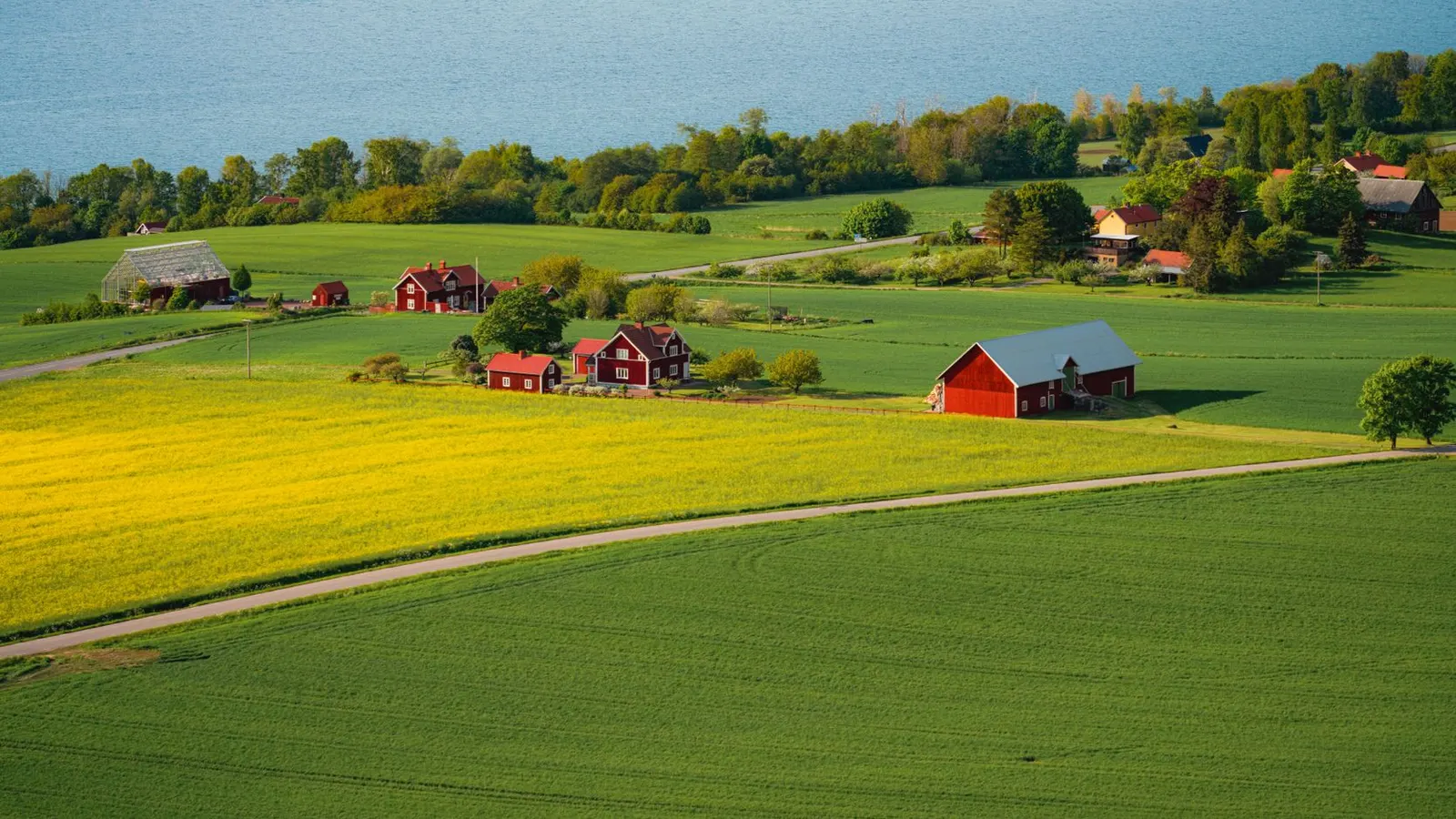
 Damir K . · Pexels License
Country Guide № 167 / 194 · Europe
Sweden
Forest, lakes and archipelago - and a summer the whole country plans around.
“Forest, lakes and archipelago - and a summer the whole country plans around.”
Sweden is long, empty and forested - about seventy per cent woodland, with a hundred thousand lakes and a population concentrated in the southern third. Stockholm is built across fourteen islands at the mouth of a 30,000-island archipelago; Gothenburg faces the North Sea; and above them, a thousand kilometres of Norrland thins out to the reindeer-herding Sámi country of Lapland.
The culture is organised around a short intense summer. Midsummer in late June effectively closes the country for a long weekend, July is the national holiday month, and allemansrätten - the right of public access - means anyone can walk and camp on uncultivated land. The winter version is quieter and colder: Arctic aurora, the ice hotel at Jukkasjärvi, and a darkness that runs six weeks without sunrise in the far north.
Chapter 01
Highlights
The Stockholm archipelago
Thirty thousand islands reached by ferry from the city quays. Vaxholm and Sandhamn are the easy ones; the outer islands take three hours and are empty granite and pine.
The Kungsleden
The King's Trail through Lapland - 440 kilometres of marked route with mountain huts, of which the Abisko to Nikkaluokta section is the classic week. July to September, or on skis in spring.
Gotland
A Baltic island with a walled Hanseatic town at Visby, limestone sea stacks and the country's warmest, driest summer. Ferry from Nynäshamn.
Swedish Lapland in winter
Abisko for the aurora, the ice hotel at Jukkasjärvi, dog sledding and Sámi reindeer herding. Six weeks of polar night at Kiruna and a cold that is genuinely serious.
Chapter 02
Entry requirements for Sweden
Checking your passport…
up to 90 days · free entry
90 days on arrival
Before you fly
The detail
- Maximum stay
- up to 90 days
- Fee
- free entry
- Passport validity
- Most destinations want validity beyond your stay, and some want six months. Check yours against the return date.
- Onward travel
- Airlines may ask for a return or onward ticket at check-in.
- Health
- No vaccinations required. Healthcare is excellent; EHIC/GHIC covers EU and UK visitors. Tick-borne encephalitis is present along the eastern coast and around Stockholm, and vaccination is normal for residents who spend time outdoors. Tap water is excellent. Mosquitoes in Lapland from late June to August are severe enough to change plans over.
- Money
- Cashless, genuinely. Cards and phones everywhere; cash refused in many places. Swedish kronor, not euros. Tipping is not expected. Alcohol above 3.5 % is sold only in state Systembolaget shops with restricted hours - closed Sundays, early on Saturdays - which is worth planning around.
No visa is needed and nothing is filed in advance: a US passport gets 90 days in any rolling 180, and the allowance belongs to the Schengen area rather than to Sweden - days in Denmark, Finland, Norway or anywhere else in the area are the same days. The window rolls backwards from whichever day you count, and arrival and departure each count as a full day, which is how a trip that looks like eighty-eight days turns out to be ninety-two. Since 10 April 2026 the Entry/Exit System has been recording the crossing with a photograph and fingerprints instead of a stamp, so the total is kept automatically and an overstay is found rather than argued about; a fine and a re-entry ban follow. Passports must have been issued within the last ten years and remain valid three months past your intended departure from the area. ETIAS, the authorisation for visa-exempt visitors, has been announced but was not required at the time of writing - recheck at booking. The one thing that surprises people on the ground is the Öresund crossing: Sweden has kept identity checks on arrivals from Denmark since 2015, so the train from Copenhagen involves showing photo identification even though it is an internal Schengen border and there is no passport control as such. Carry the passport on that train rather than leaving it in the hotel.
Check another destination with this passport →
Entry details: Editorial synthesis - Schengen Borders Code, Swedish Migration Agency, Swedish Customs, EU Entry/Exit System rollout (2025–2026) · compiled 16 Sept 2026
Who needs a visa for Sweden
12 common passports| Passport | Requirement | Stay | Process |
|---|---|---|---|
| United States | Visa-free | up to 90 days | No process · €0 / $0 |
| United Kingdom | Visa-free | up to 90 days | No process · €0 / $0 |
| Germany | Visa-free | - | No process · €0 / $0 |
| India | Visa required | - | No Other passports record yet |
| China | Visa required | - | No Other passports record yet |
| Brazil | Visa-free | up to 90 days | No Other passports record yet |
| Nigeria | Visa required | - | No Other passports record yet |
| Indonesia | Visa required | - | No Other passports record yet |
| Philippines | Visa required | - | No Other passports record yet |
| Vietnam | Visa required | - | No Other passports record yet |
| Egypt | Visa required | - | No Other passports record yet |
| Nepal | Visa required | - | No Other passports record yet |
Holding a passport that is not listed? The picker above answers for any of them. See where your passport takes you. Source: Passport Index, updated 14 Aug 2026.
Chapter 03
When to go
BestJun–Aug. AvoidApril, November.
Midsummer, near-endless light, and the country at its happiest.
The band above each month is our editorial verdict - it weighs crowds, prices and access as well as weather. The line is average daily temperature, the bars are monthly rainfall. Select a month for the figures. Climate figures: ERA5 reanalysis via Open-Meteo, 2005–2024 normals.
Chapter 04
What it costs
A day in Sweden
Comfortable · sample day
≈ $140
Line items are real prices we track. The daily budget is an editorial estimate for this level, not their sum.
Where this sits among 244 countries we have costed
Stockholm hotel rates fall sharply in July because the business market disappears, which inverts the usual pattern - the capital is cheapest in the sunniest month. Coastal and archipelago accommodation does the opposite. Lapland has a January-to-March peak for aurora tourism. The weekday dagens lunch is the structural bargain of Swedish eating.
Updated Aug 2026 · Editorial synthesis - SJ published fares, STF hostel and hut tariffs, Statistics Sweden price data (2025–2026) · confidence high
Excludes international flights - they depend on where you fly from.
Chapter 05
Regions to know
5Stockholm & the archipelago
The island capital, Gamla Stan, the Vasa museum, and thirty thousand islands reached by ferry from the quays.
The south
Skåne's castles and beaches, Malmö over the bridge from Copenhagen, and the Österlen coast.
The west coast
Gothenburg, the Bohuslän granite islands, and the seafood and bathing culture along the North Sea shore.
The lakes & Dalarna
Vänern and Vättern, the Göta canal, and Dalarna's red cottages and midsummer traditions.
Lapland & the north
Abisko and the Kungsleden, Kiruna and the ice hotel, Sámi reindeer country and the High Coast.
Chapter 06
Practical guide
Getting there
Stockholm Arlanda (ARN) is the main hub, with Gothenburg and Malmö well served; Malmö is 25 minutes by train from Copenhagen airport, which is often the cheaper gateway to southern Sweden. Trains link Stockholm to Oslo and Copenhagen, and the expanding night-train network reaches Hamburg and Berlin. Ferries run from Finland, Estonia, Poland and Germany.
Getting around
SJ trains cover the country well and cheaply if booked ahead; the overnight train to Abisko and Narvik is the way north. Regional buses fill the gaps. Domestic flights save a day to Lapland. Stockholm has excellent transport plus the archipelago ferries. A car is useful in the interior and Lapland, and unnecessary in the south where the rail network is dense.
Money & costs
Cashless, genuinely. Cards and phones everywhere; cash refused in many places. Swedish kronor, not euros. Tipping is not expected. Alcohol above 3.5 % is sold only in state Systembolaget shops with restricted hours - closed Sundays, early on Saturdays - which is worth planning around.
Safety
Very safe with low crime. Pickpocketing in central Stockholm and Gothenburg is the everyday risk. Gang-related violence has been a significant domestic issue in some suburbs, and while it does not target visitors, it is real and reported. The environmental risks are cold, remoteness in the north, and ticks in the south. Elk and reindeer on rural roads at dusk cause serious accidents.
Health
No vaccinations required. Healthcare is excellent; EHIC/GHIC covers EU and UK visitors. Tick-borne encephalitis is present along the eastern coast and around Stockholm, and vaccination is normal for residents who spend time outdoors. Tap water is excellent. Mosquitoes in Lapland from late June to August are severe enough to change plans over.
SIM & internet
EU roaming applies. Coverage is excellent in the south and good along main routes in the north, with genuine gaps in the mountains. Free wifi is universal. Sweden is among the most digitally organised countries in Europe, which occasionally works against visitors who lack a Swedish personal number.
Chapter 07
Driving
Wildlife is the defining hazard - elk collisions are common and serious, and reindeer wander freely across roads in Lapland. Drive slowly at dawn and dusk. Winter tyres are legally required from December to March and studded tyres are normal in the north.
Rules change - verify with an official source before you rent.
ExplWorld VerifiedNo verified partners here yet - all 6 country seats are open.
Become ExplWorld Verified →Chapter 08
Itineraries through this country
Chapter 09
From the Journal
Chapter 10
Before you go
SwedenChapter 11
Frequently asked questions
Is anything open in July?
Tourism is, and much else is not. July is the national holiday month - many businesses, restaurants outside tourist areas and even some government offices run reduced hours or close entirely. Midsummer weekend in late June is the sharpest version: essentially everything shuts, transport fills, and the cities empty into the countryside.
Do I need cash?
No, and often you cannot use it. Sweden is close to fully cashless - many shops, cafés, museums and buses refuse cash outright, and card or phone payment is assumed everywhere. Bring a card with a PIN. Swish, the domestic payment app, needs a Swedish bank account and is not available to visitors.
What does the right of public access allow?
Allemansrätten lets you walk, cycle, ski, swim and camp for a night on uncultivated land, including private property, staying away from houses and gardens. You may pick berries and mushrooms. You may not light fires during bans, damage anything, or camp in the same place for long. It is a genuine legal right and it underpins how Swedes use the outdoors.