 mbrand85 / stock.adobe.com
Country Guide № 180 / 194 · Oceania
Tuvalu
The least-visited country on earth, on a runway that becomes a football pitch.
“The least-visited country on earth, on a runway that becomes a football pitch.”
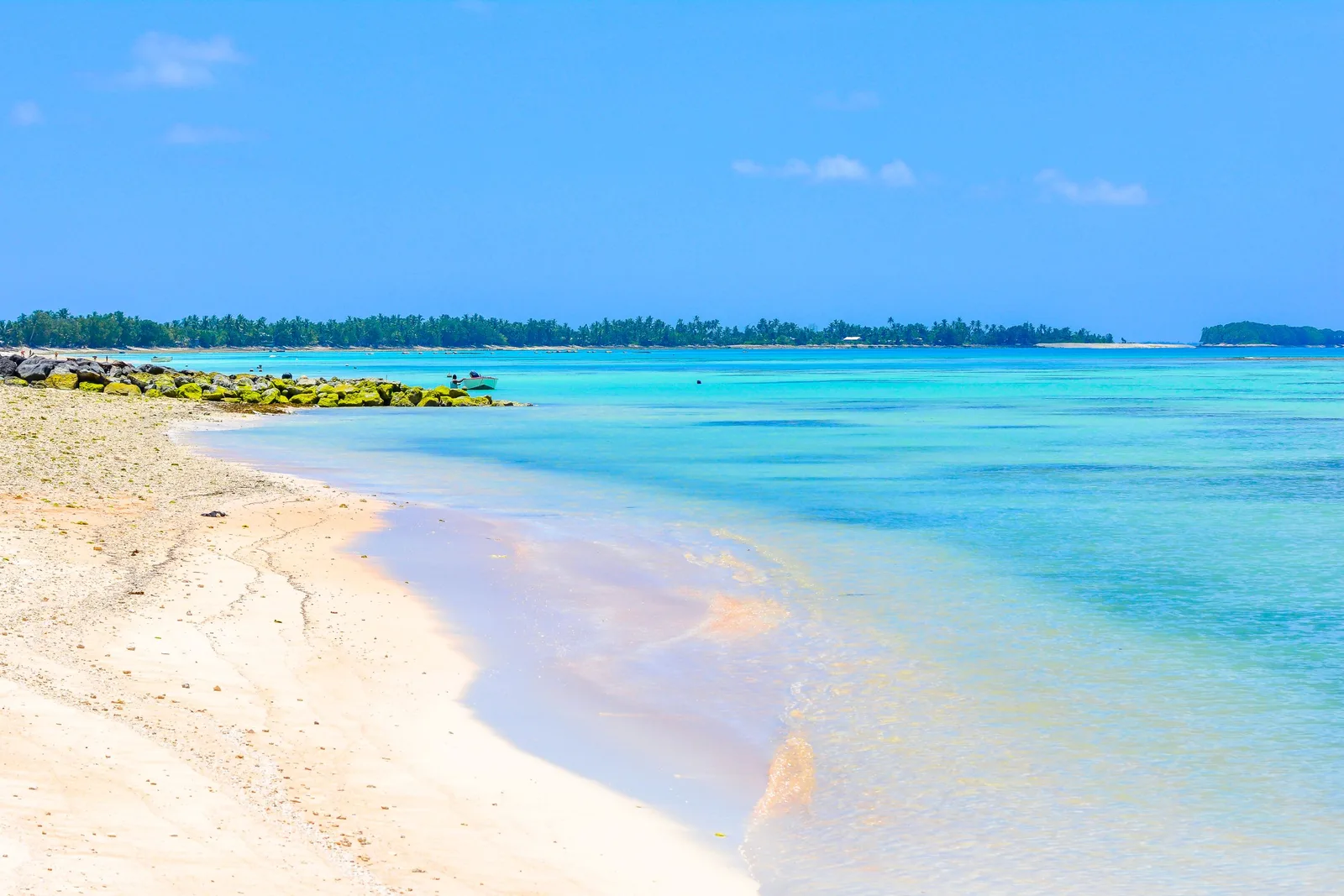
Tuvalu receives fewer visitors than any other country - a few thousand a year, most of them on business - and it is easy to see why: nine atolls totalling 26 square kilometres, two flights a week from Fiji, and almost no accommodation. Funafuti's runway is the widest flat space in the country, so when no aircraft is due it fills with children playing football, motorcycles and people sitting out in the evening cool. A siren clears it before each landing.
The country averages about two metres above sea level and its highest point is 4.6 metres. In 2022 the foreign minister addressed the COP27 conference standing knee-deep in seawater; the government has since begun creating a digital replica of the nation - territory, records and culture - to preserve statehood if the land becomes uninhabitable. Australia signed a treaty in 2023 offering residence to Tuvaluans. Visiting is straightforward if you accept the logistics and go for what the place actually is.
Chapter 01
Highlights
The Funafuti runway
The country's social space - football, volleyball, motorcycles and evening gatherings on the tarmac, cleared by a siren before each of the two weekly flights. Nothing captures the scale of the place better.
Funafuti Conservation Area
Six uninhabited islets and 33 square kilometres of lagoon and reef on the western rim, with turtles, seabirds and coral in good condition, reached by boat from the capital.
The outer atolls
Nanumea, Nui, Vaitupu and the rest, served by the government ships every few weeks - outer-island life with no hotels, where you stay by arrangement with a family.
The climate frontline
King tides that push seawater up through the coral floor into taro pits and gardens, borrow pits from wartime construction, and a reclamation project raising land above the projected sea level.
Chapter 02
Entry requirements for Tuvalu
Checking your passport…
up to 30 days · free entry
30 days on arrival
Before you fly
The detail
- Maximum stay
- up to 30 days
- Fee
- free entry
- Passport validity
- Most destinations want validity beyond your stay, and some want six months. Check yours against the return date.
- Onward travel
- Airlines may ask for a return or onward ticket at check-in.
- Health
- No malaria. Princess Margaret Hospital on Funafuti handles basic care only; anything serious means evacuation to Fiji, and insurance must cover it. Water is rainwater-dependent and can be rationed in drought.
- Money
- Australian dollar, alongside locally minted Tuvaluan coins. Cash only - there are no ATMs that take foreign cards and card acceptance is negligible. Bring Australian dollars in cash for the entire stay.
Tuvalu asks a United States passport for nothing in advance and issues a visitor's permit on arrival at Funafuti for 30 days, free, extendable once you are there. The visa is not the constraint on this trip and it would be misleading to write the row as though it were. Carry the onward ticket and the first accommodation booking in a form you can show on a phone. Across the Pacific these are asked for far more consistently than in most of the world, and they are asked for by the AIRLINE at check-in rather than by Tuvalu at the door - a carrier that lands somebody in a country they have no way out of owns the cost of taking them home, so the refusal comes from a check-in agent hours before anyone official has looked at your passport. Here that clause has unusual force. Fiji Airways flies Suva to Funafuti a few times a week on a turboprop and that is the only scheduled service into the country; there is no alternative carrier, no second airport and no road. A cancellation is not a delay of hours but of days, and an itinerary that connects onto an international departure without several days of slack will eventually fail. Accommodation is the other half of the same problem: the country's stock of rooms is measured in dozens, immigration will ask where you are staying, and there may genuinely be nowhere, so book before you fly rather than on arrival. A yellow fever certificate is required if you have come from a country where the disease is present, and the threshold the International Health Regulations set is a transit of more than twelve hours in an airport of such a country rather than any transit at all - check it against the whole routing rather than the departure airport, because almost nothing in this part of the world is fewer than three flights. Once there, Funafuti is walkable end to end, the runway doubles as the island's public space between flights, cash in Australian dollars is the only money that works - there is no ATM that takes a foreign card - and anything medically serious means an evacuation to Fiji, which the insurance must cover. Reaching an outer atoll means a government ship every few weeks on a schedule that changes, which is a commitment rather than an excursion.
Check another destination with this passport →
Entry details: Editorial synthesis - Tuvalu Immigration entry practice, the Suva–Funafuti schedule (2025–2026) · compiled 18 Sept 2026
Who needs a visa for Tuvalu
12 common passports| Passport | Requirement | Stay | Process |
|---|---|---|---|
| United States | Visa on arrival | - | No process · €0 / $0 |
| United Kingdom | Visa on arrival | - | No process · €0 / $0 |
| Germany | Visa-free | up to 90 days | No process · €0 / $0 |
| India | Visa on arrival | - | No process · €0 / $0 |
| China | Visa on arrival | - | No process · €0 / $0 |
| Brazil | Visa on arrival | - | No process · €0 / $0 |
| Nigeria | Visa on arrival | - | No process · €0 / $0 |
| Indonesia | Visa on arrival | - | No process · €0 / $0 |
| Philippines | Visa on arrival | - | No process · €0 / $0 |
| Vietnam | Visa on arrival | - | No process · €0 / $0 |
| Egypt | Visa on arrival | - | No process · €0 / $0 |
| Nepal | Visa on arrival | - | No process · €0 / $0 |
Holding a passport that is not listed? The picker above answers for any of them. See where your passport takes you. Source: Passport Index, updated 14 Aug 2026.
Chapter 03
When to go
BestMay–Oct.
Dry season opens - steady trades, less humidity.
The band above each month is our editorial verdict - it weighs crowds, prices and access as well as weather. The line is average daily temperature, the bars are monthly rainfall. Select a month for the figures. Climate figures: ERA5 reanalysis via Open-Meteo, 2005–2024 normals.
Chapter 04
What it costs
A day in Tuvalu
Comfortable · sample day
≈ $140
Line items are real prices we track. The daily budget is an editorial estimate for this level, not their sum.
Where this sits among 244 countries we have costed
No tourist season. Accommodation demand comes from aid delegations and government visitors, and a single delegation can book out the country.
Updated Aug 2026 · Editorial synthesis - reported prices and guesthouse sampling (2025–2026) · confidence low
Excludes international flights - they depend on where you fly from.
Chapter 05
Regions to know
5Funafuti
The capital atoll - the runway, the lagoon, the government buildings and almost all the accommodation.
The conservation area
Six uninhabited islets on the western rim of the lagoon, with turtles, seabirds and healthy reef.
The northern atolls
Nanumea, Nanumaga and Niutao, several days by ship from the capital.
The central islands
Nui, Vaitupu - the largest island by area - and Nukufetau, with the wartime airstrip remains.
The south
Nukulaelae and Niulakita, the smallest and least populated of the nine.
Chapter 06
Practical guide
Getting there
Fiji Airways flies Suva–Funafuti a few times a week on an ATR. That is the only scheduled service. Cargo ships call but do not reliably take passengers.
Getting around
Funafuti is walkable or cycled end to end. Motorcycles are the local vehicle. Government ships serve the outer atolls every few weeks with cabin and deck passage, on a schedule that changes.
Money & costs
Australian dollar, alongside locally minted Tuvaluan coins. Cash only - there are no ATMs that take foreign cards and card acceptance is negligible. Bring Australian dollars in cash for the entire stay.
Safety
Very safe, with essentially no crime against visitors. The constraints are logistical: limited food supply between ships, water rationing in drought, and no realistic emergency response beyond basic first aid.
Health
No malaria. Princess Margaret Hospital on Funafuti handles basic care only; anything serious means evacuation to Fiji, and insurance must cover it. Water is rainwater-dependent and can be rationed in drought.
SIM & internet
Tuvalu Telecom; SIMs on Funafuti. Connectivity has historically been satellite-based, slow and expensive, with improvements underway. Expect limited data and no coverage on the outer atolls.
Chapter 07
Driving
Funafuti has about twelve kilometres of road and the vehicle of choice is a motorcycle. Do not drive or walk on the runway when the siren sounds - it is the only alert before an aircraft lands.
Rules change - verify with an official source before you rent.
ExplWorld VerifiedNo verified partners here yet - all 6 country seats are open.
Become ExplWorld Verified →Chapter 08
Itineraries through this country
Chapter 09
From the Journal
Chapter 10
Before you go
TuvaluChapter 11
Frequently asked questions
How do I get there and how long am I stuck?
Fiji Airways flies Suva–Funafuti a few times a week. The schedule effectively fixes your stay at three or four days, or a full week. There is no alternative route in or out, so a cancellation means waiting for the next flight - build slack before any onward international connection.
Where do I stay?
There are only a handful of guesthouses and one small hotel on Funafuti, and they can fill entirely with an aid delegation. Book before you fly. On the outer islands there is no commercial accommodation at all - you stay with a family through the island council, arranged in advance.
What is the .tv domain story?
Tuvalu's country-code domain, .tv, is leased to a commercial operator and has for years produced a substantial share of government revenue - at times close to a tenth of it. It is one of the more unusual national income streams anywhere and Tuvaluans will tell you about it.