Itinerary · Central America · 12 days · Moderate
Reef, Cayo and the South
Caye Caulker→Hol Chan Marine Reserve→Great Blue Hole, Lighthouse Reef→San Ignacio→Xunantunich→Actun Tunichil Muknal, Tapir Mountain Nature Reserve+6 stops
The whole country on three highways and a handful of boats - a marine reserve protected since 1987, an atoll three hours offshore, a burial cave you swim into, the largest Maya city in Belize reached by convoy, the first reserve anywhere set up for jaguars, and the Garifuna and Maya south that most itineraries stop short of.
Belize City, and out to Caye Caulker
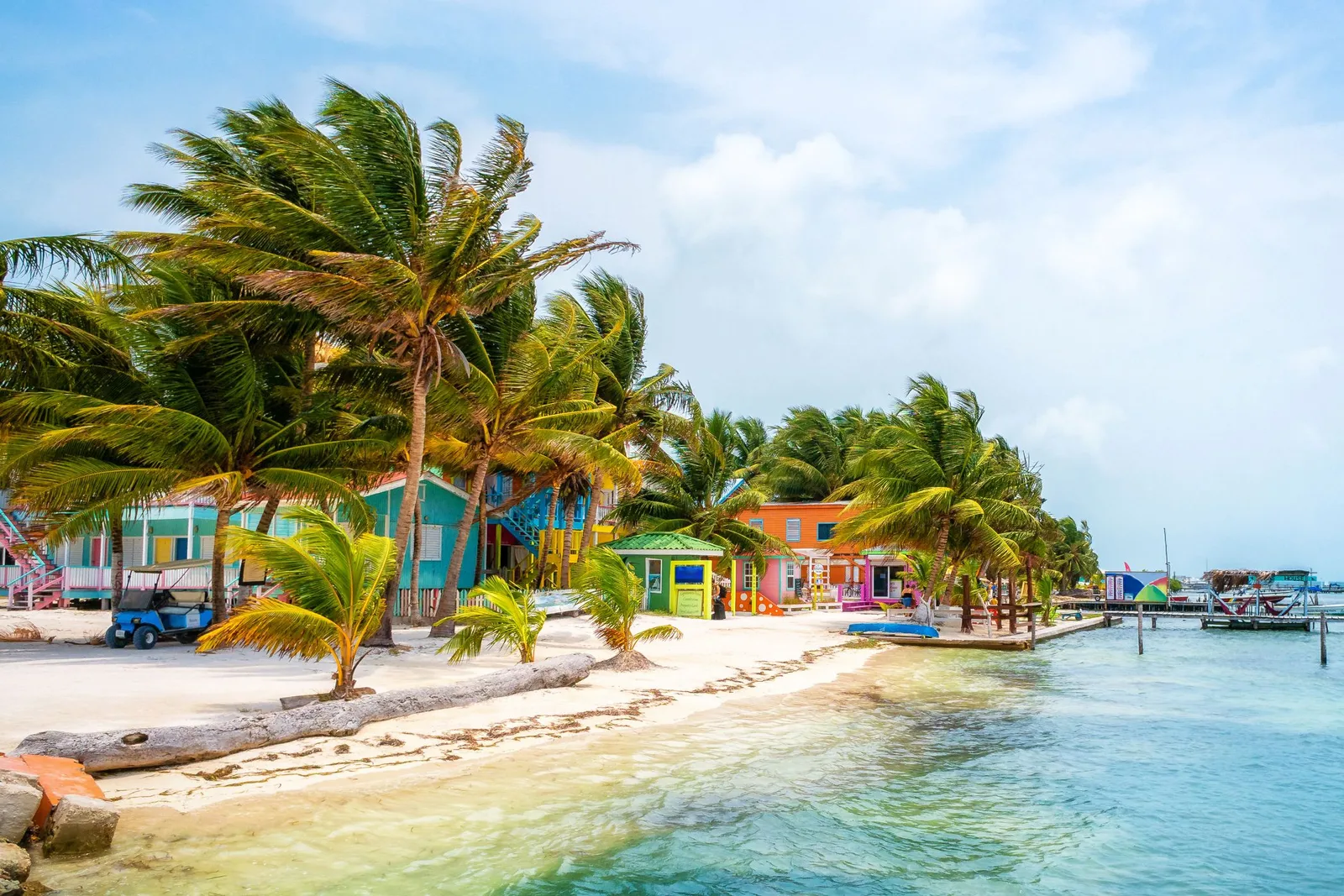
The water-taxi terminals sit together on North Front Street, twenty minutes by fixed-fare taxi from the international airport, and the boats run through the afternoon rather than to a timetable worth cutting fine. Do not plan a day in Belize City on the way through: the Fort George waterfront and the terminals are ordinary in daylight, the Southside is not, and almost everyone treats the place as a transfer. Caye Caulker is eight kilometres of sand with a split through the middle where Hurricane Hattie cut it in 1961, three golf-cart streets, and no cars.
Hol Chan and Shark Ray Alley
Hol Chan is a natural break in the reef off the southern tip of Ambergris Caye and it has been a marine reserve since 1987 - Belize's first, and the reason the grouper and snapper in the channel are the size they are. Shark Ray Alley next door is a former fish-cleaning spot where nurse sharks and southern stingrays learned to turn up for scraps; it is a genuine wildlife encounter and also a fed one, and it is worth knowing which you are looking at. Half-day boats run from Caulker and from San Pedro.
Lighthouse Reef and the Blue Hole
Three hours out and three hours back for a sinkhole 318 metres across and 124 deep. Be honest about it before you pay: the dive drops to forty metres along a wall past stalactites left from when the cave was dry, gives you about eight minutes down there, and shows you very little that is alive. The rest of the day - the wall at Long Caye and the red-footed booby colony on Half Moon Caye, protected as a natural monument since 1982 - is the part that justifies the boat. Snorkellers see essentially nothing of the hole itself and should decide accordingly.
Back to the mainland and west into Cayo
Early boat in, then the George Price Highway west. The Belize Zoo at Mile 29 is worth the stop and is not a normal zoo - it began in 1983 when a documentary crew left its half-tame animals behind, and it still keeps only Belizean species that cannot be released. It is where most visitors see a jaguar. Carry on to San Ignacio, the town everything in the west runs from.
Xunantunich and the town
Out to San José Succotz and across the Mopan on the cable ferry, which is free, takes two cars at a time and stops running in the late afternoon. El Castillo carries a stucco frieze of the sun god and the moon, and from the top you can see the Guatemalan border a few kilometres west. Cahal Pech sits on the hill above San Ignacio itself and takes an hour. Back in town for the Saturday market if the day lands right - it is the largest in the country and it is where the Mennonite farms sell.
Actun Tunichil Muknal
Three river crossings on foot, then a swim into the cave mouth and about an hour of wading upstream in the dark before the passage opens into a chamber with ceramics and fourteen sets of human remains on the floor, calcified into the rock. They are late Classic and most were sacrifices made as the drought deepened. Cameras of every kind have been banned since 2012, after a dropped one broke through a skull; you go in socks past the pottery, with a licensed guide, in a capped group. It is the single best thing in the country and it is not for anyone who dislikes tight spaces.
Mountain Pine Ridge and Caracol
South onto the granite, which is why the pine grows here and the broadleaf forest stops at a line you can see. Rio On Pools and Rio Frio Cave on the way through, then a rough hour and a half more to Caracol, the largest Maya site in Belize - Caana still the tallest built structure in the country, and a city that at its height held more people than Belize City does now. It sits in the Chiquibul near a border Guatemala has claimed since the nineteenth century and which both countries agreed by referendum to put to the International Court of Justice, where it remains. Access has run for years under Belize Defence Force escort in a timed convoy, which exists because the Chiquibul road has a history of armed robberies of tourist vehicles and of incursions by illegal loggers and gold panners from the Guatemalan side; ask in San Ignacio the day before whether it is running that week, because it changes.
The Hummingbird Highway to Hopkins
The best drive in Belize: eighty-odd kilometres over the shoulder of the Maya Mountains with limestone hills on both sides and citrus below. Stop at St Herman's Blue Hole National Park - a cave you climb down into and a cenote to swim in, unrelated to the one offshore beyond the name. Hopkins at the far end is a Garifuna village strung along one sand road; the drumming schools here teach, and Garifuna Settlement Day on 19 November is the day the whole coast turns out.
Cockscomb Basin
Turn inland at Maya Centre, pay at the village, and drive the last ten kilometres of dirt to the sanctuary. The basin was set aside as forest reserve in 1984 and declared a jaguar preserve in 1986 - the first anywhere established for the animal, off the back of Alan Rabinowitz's radio-collar study. You will not see a jaguar. What you get is a well-cut trail network under closed canopy, tracks in the mud if it has rained, and the Ben's Bluff climb for the view back over the Maya Mountains. Take the guides from Maya Centre; the fee goes to the village that gave up its hunting ground.
Placencia
A sand spit twenty-six kilometres long with a village at the end of it and a pedestrian sidewalk down the middle that the village will tell you is the narrowest main street anywhere. This is the base for Gladden Spit, where whale sharks gather to feed on spawning snapper - but the season is roughly March to June around the full moon, permits are limited, and sightings have fallen sharply enough over the past decade that building a trip around them is a mistake. Otherwise: Silk Cayes, a fly-fishing flat with a serious reputation, and more places to eat than anywhere else south of San Pedro, which is also why this is the most expensive night on the route.
South to Punta Gorda
The last stretch of the Southern Highway, through banana and then through nothing much, with Nim Li Punit signposted off to the right - small, quick, and holding the tallest carved stela yet found in Belize at over nine metres. Punta Gorda is the end of the road: a wet, quiet district capital on the Gulf of Honduras with a Wednesday and Saturday market that draws Maya villages down from the hills, and skiffs that cross to Guatemala. It rains here more than anywhere else in the country, roughly four metres a year, and it rains in the dry season too.
Toledo, and the flight out
Inland to Lubaantun, built without mortar in fitted courses and best known for a crystal skull that was never found there - the object was bought at a London auction in 1943 and the story attached afterwards. Then a cacao farm: Toledo grows fine-flavour criollo-hybrid beans, the growers organised as a cooperative in the 1980s to sell direct rather than through brokers, and several farms will walk you through fermentation and drying. Blue Creek or San Antonio for the afternoon if there is time. Tropic Air flies Punta Gorda to Belize City in about an hour, which saves a full day on the bus.
Good to know
English is the official language and Belize is the only country in Central America where that is true, but the street language is Belize Kriol, Spanish is spoken across the north and west, Garifuna along the southern coast, three Mayan languages in Toledo, and Plautdietsch in the Mennonite settlements - a country of 400,000 people running six or seven languages. Most European, North American, Australian and Caribbean nationals get 30 days visa-free on arrival, extendable month by month at an immigration office for around BZ$100; you will be asked for onward travel and, occasionally, for it in writing. The Belize dollar has been pegged at BZ$2 to US$1 since 1976 and both circulate, so the single most useful habit in the country is asking whether a quoted price is Belize or US - a BZ$80 dinner and a US$80 dinner are different meals. Cards work in hotels and larger restaurants and nowhere else worth relying on; carry cash for buses, village guides, market stalls and the whole of Toledo. Leaving overland to Guatemala or Mexico costs a border fee of about BZ$40; the departure tax on flights is normally inside the ticket. Belize was certified malaria-free by the WHO on 21 June 2023, so prophylaxis is no longer the question it was - dengue is, and the mosquito that carries it bites in daylight. The real insect problem is sandflies on the beaches at Hopkins, Placencia and on the cayes, which are worse than mosquitoes at dawn and dusk and which repellent barely touches; long trousers after five o'clock is the actual answer. Tap water in Belize City, Belmopan and the district towns is treated and generally regarded as safe, but almost everyone drinks filtered or bottled, and on the cayes and in villages you should too. Hurricane season runs 1 June to 30 November and peaks from mid-August to mid-October; this is not an abstraction here, since Hurricane Hattie flattened Belize City in 1961 and is the reason the capital was moved eighty kilometres inland to Belmopan in 1970 - check the National Meteorological Service rather than a forecast app, and understand that the cayes evacuate. Belize City has one of the higher homicide rates in the hemisphere, concentrated on the Southside in specific streets, and states of emergency have been declared over gang violence more than once; the waterfront, the Marine Terminal and the museum quarter are unremarkable by day, the bus terminal on West Collet Canal is not a place to walk to with luggage, and nobody should be wandering south or west of Albert Street after dark. Nothing else on this route carries that warning. Buses are retired American school buses run by private operators with no published timetable you can trust - turn up and ask - while tourist shuttles cost five to ten times as much and are what most people end up using between Cayo and the south. Driving is on the right, four trunk highways plus the newly paved Coastal Road are effectively the whole network, every village has unmarked speed bumps, and you should not drive after dark. Book ATM cave a few days ahead: entries are capped, only licensed guides may take you, and it closes when the river is high. Do not touch or stand on coral anywhere on the reef, and note that the Belize Barrier Reef Reserve System was on UNESCO's List of World Heritage in Danger from 2009 until June 2018 - the reef is doing better than it was, and it is not fixed.
Shorter or longer?
From San Ignacio it is an hour to the Benque crossing and about two more to Flores, which puts Tikal within reach for three or four extra days. Take the earliest shuttle, carry the Belize exit fee in cash, and come back the same way rather than looping north through Mexico.
Caye Caulker and Cayo and nothing else - Hol Chan, the offshore day, ATM and Xunantunich, out from Belize City. Loses the Garifuna coast, Cockscomb and Toledo, which is most of what makes Belize more than a reef, but it is the version that fits a week honestly.
Practical guide
Visa check for this route
Budget
Mid-range · per person · sharing a double room. Excludes international flights - they depend on where you fly from.
Editorial estimates · checked August 2026
Country guides
Trip essentials
The connectivity placement is our own eSIM store. No affiliate link on this list. How we choose these →