Itinerary · Europe · 12 days · Easy
East on Regional Trains
Berlin→Bernauer Strasse, Berlin→Potsdam→Dessau-Roßlau→Lutherstadt Wittenberg→Leipzig+6 stops
Berlin to the Polish border on one monthly ticket and no fast trains - Bauhaus Dessau, Luther's Wittenberg, Leipzig, Weimar and Buchenwald, Dresden and the sandstone country, ending in the town the war forgot to destroy.
Berlin
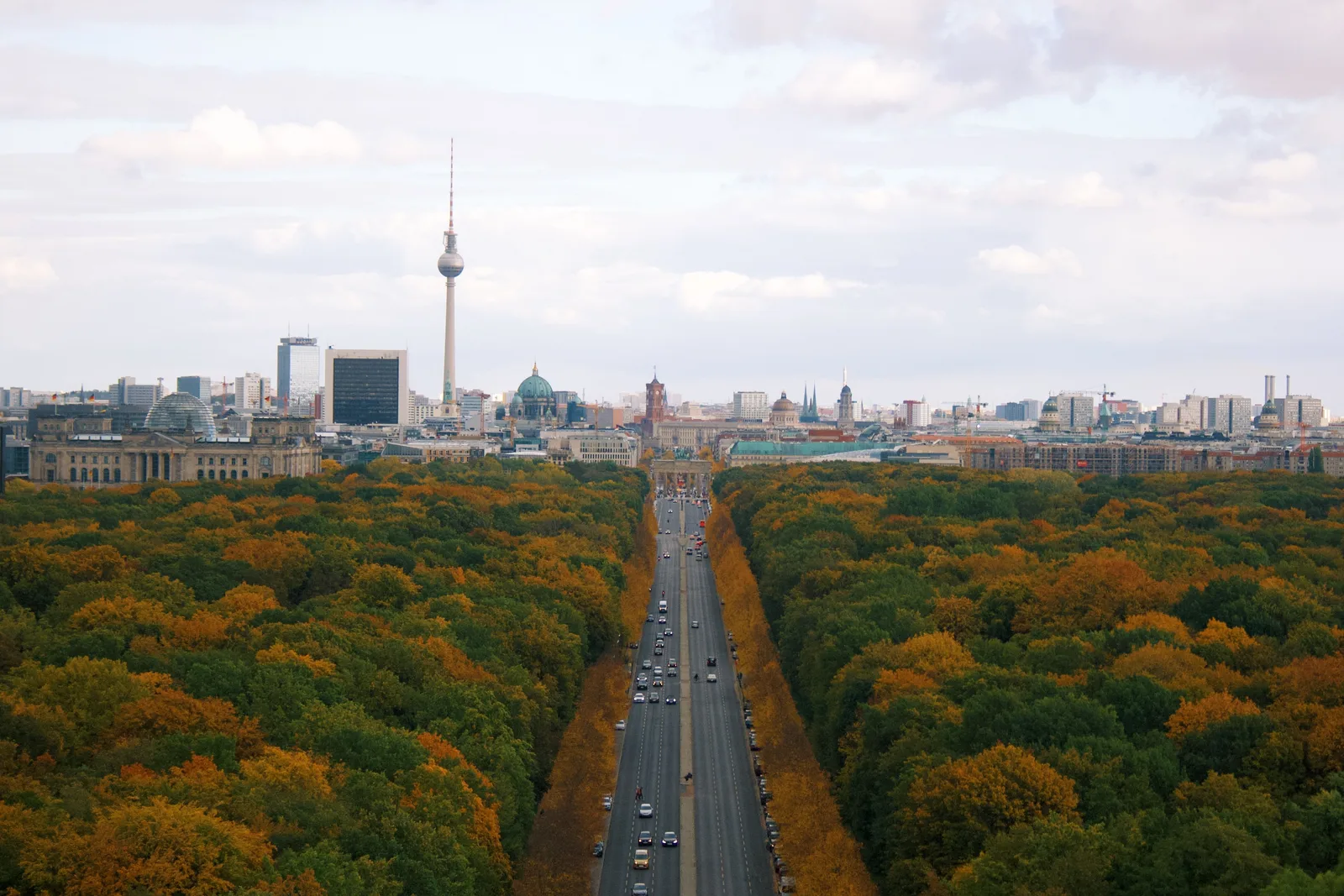
Arrive and buy the Deutschlandticket before anything else - it covers every bus, tram, U-Bahn and S-Bahn from this point on. Then walk: Mitte, the Spree, and the Tiergarten if the weather allows.
Berlin, the twentieth century
Bernauer Strasse for the Wall memorial, which is the only place the whole death strip is still legible, then the Topography of Terror and the Stasi headquarters in Lichtenberg. A heavy day and the reason most people come.
Potsdam
Forty minutes out on the S-Bahn, inside the ticket. Sanssouci and its terraced vines, then Cecilienhof, where Truman, Stalin and Attlee divided the continent over seventeen days in 1945 and the table is still in the room.
Dessau and the Bauhaus
The school moved here from Weimar in 1925 and Gropius built it the building it is famous for. Sleep in the students' studio block if it is free: the Prellerhaus rents rooms, and the furniture is as uncomfortable as the theory promised.
Lutherstadt Wittenberg
Half an hour up the Elbe. The Schlosskirche door where the ninety-five theses went up in 1517 is a bronze replacement cast in 1858; the original burned. The town has been a pilgrimage site for five centuries and handles it calmly.
Leipzig
The Nikolaikirche held Monday peace prayers through the 1980s; on 9 October 1989 seventy thousand people walked out of them past armed police who had been issued live ammunition and did not use it. A month later, to the day, the Wall was open.
Plagwitz and the canal
West to the old industrial quarter. The Spinnerei was Europe's largest cotton mill and is now studios and galleries; the Karl-Heine canal runs past it and you can hire a boat or a bike. This is where Leipzig's rent argument is happening.
Weimar and Buchenwald
Goethe's house, the Bauhaus's founding city, and eight kilometres up the Ettersberg the camp the SS built in 1937 and named after the beech wood so as not to implicate the town. Bus 6 goes there from the station. Go in that order.
Erfurt
Fifteen minutes further and a better place to sleep. The Krämerbrücke carries the longest run of inhabited houses on any bridge in Europe, and the Old Synagogue below it has standing walls from the eleventh century - the oldest surviving synagogue building on the continent.
East to Dresden
The day the ticket costs you something. An ICE would do this in two hours; regional trains take a bit over three with a change at Leipzig. Take the window seat, buy a coffee at Leipzig, and accept it.
Saxon Switzerland
S-Bahn up the Elbe to Kurort Rathen, a cable ferry that crosses on the current alone, and the climb to the Bastei bridge in the sandstone towers. Longer walks run on from there towards the Czech border.
Görlitz
The easternmost town in Germany, barely touched by bombing, with something like four thousand listed buildings and a film industry that rents them by the week. Walk over the Neisse bridge into Zgorzelec for lunch; the ticket stops at the river.
Good to know
The Deutschlandticket runs by calendar month, not by thirty days, so a trip crossing the turn of a month needs two of them - and it is a rolling subscription that must be cancelled by the 10th or it renews. It is personalised and digital, and it is not valid on ICE, IC, EC or Flixtrain, not for a single stop; travelling without a valid ticket is a €60 fine collected on the spot. Sunday closing is set state by state rather than federally, but it applies almost everywhere and it includes supermarkets, so shop on Saturday or eat at a main station, which is the standing exemption. Buchenwald's exhibition buildings close on Mondays although the site itself stays open. In Saxon Switzerland check the national park's own trail list rather than a map: the 2022 fire on the Czech border closed paths for seasons afterwards and some diversions became permanent.
Shorter or longer?
Walk over the bridge at Görlitz into Zgorzelec and carry on to Wrocław and Kraków - three or four more days, and a reminder that this was one region until 1945.
Berlin, Dresden and the sandstone country only. Cuts the Bauhaus towns and Thuringia, and removes the one long transfer day entirely.
Practical guide
Visa check for this route
Budget
Mid-range · per person · sharing a double room. Excludes international flights - they depend on where you fly from.
Editorial estimates · checked August 2026
Country guides
Trip essentials
The connectivity placement is our own eSIM store. No affiliate link on this list. How we choose these →