 Masood Aslami · Pexels License
Country Guide № 064 / 194 · Europe
Germany
Sixteen states, no single capital of anything, and a rail network that ties it together.
“Sixteen states, no single capital of anything, and a rail network that ties it together.”
Germany has no single centre. Berlin is the capital but Frankfurt holds the money, Munich the industry, Hamburg the port and Cologne the media - a consequence of centuries as separate states, and the reason the country feels different every two hours on the train. Bavaria and Schleswig-Holstein have less in common than France and Belgium do.
For visitors that means a country you assemble rather than tour. Berlin for twentieth-century history and nightlife; Bavaria for the Alps, the castles and the beer gardens; the Rhine and Mosel for castles and Riesling; the Baltic and North Sea coasts for a summer nobody outside Germany talks about. The rail network makes almost all of it doable without a car, and the Deutschlandticket makes regional travel remarkably cheap.
Chapter 01
Highlights
Berlin's twentieth century
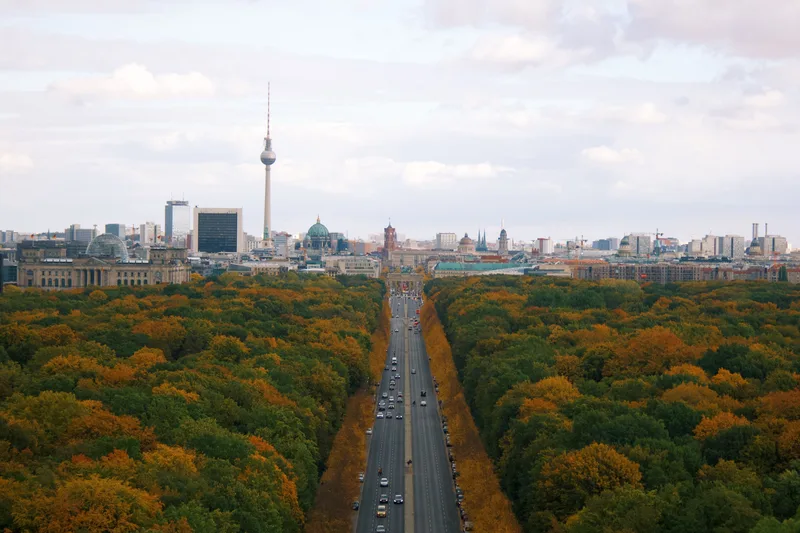
The Wall Memorial at Bernauer Strasse, the Topography of Terror, the Stasi museum and the Holocaust memorial - a city that documents its own history more unsparingly than any other.
The Bavarian Alps
Neuschwanstein and the Zugspitze, the Partnach gorge, and hut-to-hut walking around Berchtesgaden with the Königssee below.
The Rhine and Mosel
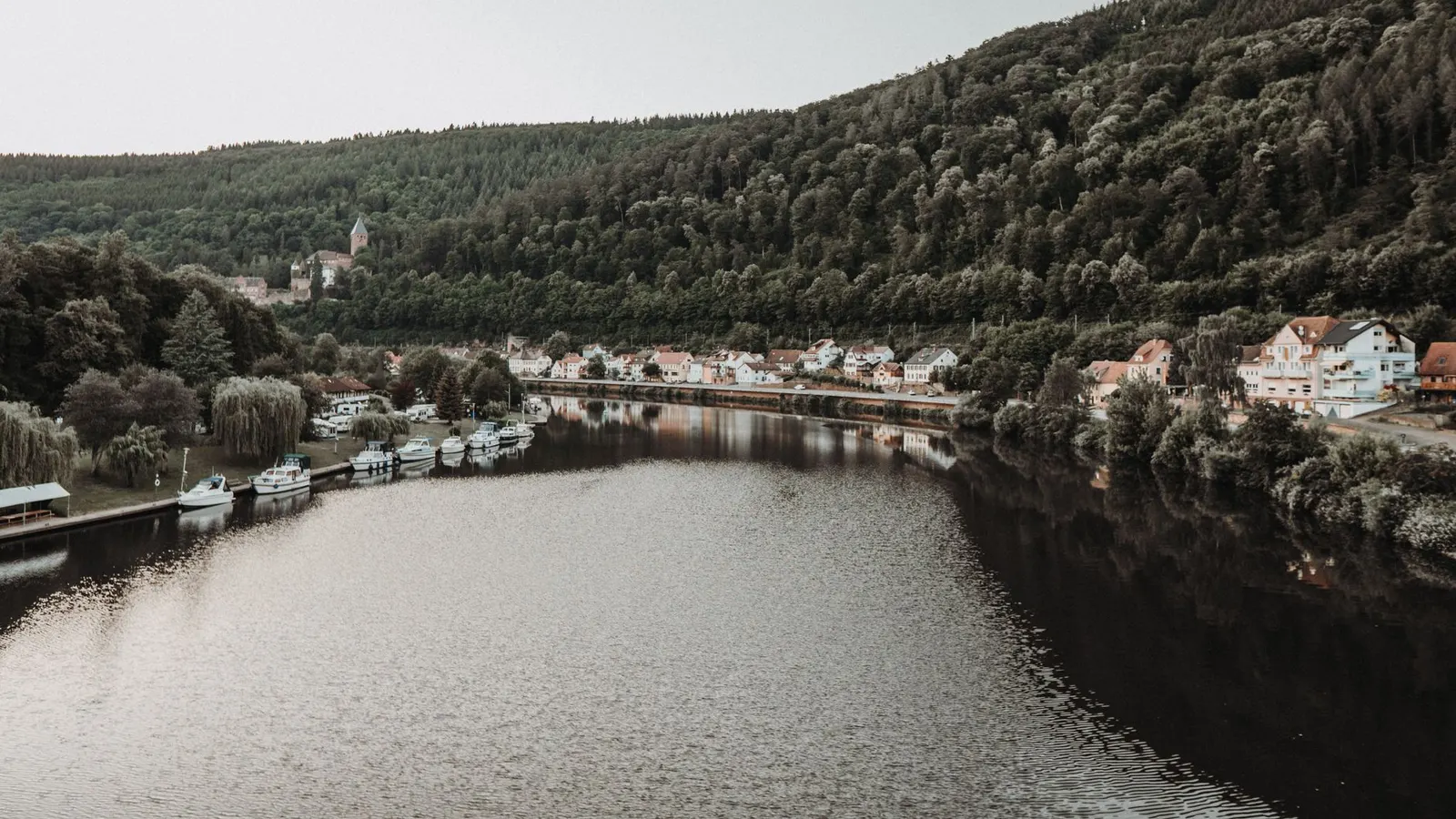
Castles on terraced slopes between Bingen and Koblenz, and the Mosel looping through steeper, quieter Riesling country. Best by boat, bicycle or the slow train.
Saxony and the east
Dresden's rebuilt baroque centre, Leipzig's music and warehouses, and Saxon Switzerland's sandstone towers an hour from both.
Chapter 02
Entry requirements for Germany
Checking your passport…
up to 90 days · free entry
90 days on arrival
Before you fly
The detail
- Maximum stay
- up to 90 days
- Fee
- free entry
- Passport validity
- Most destinations want validity beyond your stay, and some want six months. Check yours against the return date.
- Onward travel
- Airlines may ask for a return or onward ticket at check-in.
- Health
- No vaccinations required. Healthcare is excellent; EHIC/GHIC covers EU and UK visitors for state care. Pharmacies (Apotheke) are strictly separate from drugstores and many common medicines are pharmacy-only. Tap water is safe and good. Tick-borne encephalitis is present in southern forests and vaccination is advised for extended outdoor stays in Bavaria and Baden-Württemberg.
- Money
- Carry cash. Card acceptance is improving but far from universal, and foreign credit cards are refused in places that take domestic debit. ATMs at Sparkasse and Volksbank are usually fee-free; standalone Euronet machines charge heavily. Tipping is rounding up or about 5–10 %, stated aloud when you pay rather than left on the table.
Germany asks nothing of a United States passport beyond the passport: 90 days in any rolling 180, shared across the twenty-nine-country Schengen area rather than counted per country, so the days you spent in Prague or Vienna are already gone from the German ninety. The count rolls - pick any date, look back 180 days, add up every day anywhere in the area. Germany reintroduced temporary checks on several of its internal Schengen land borders in 2024 and has extended them repeatedly, so carry your passport on a train from Poland, Czechia, Austria or the Netherlands: the checks are occasional, the fine for having nothing to show is not. The Entry/Exit System has been fully operational since 10 April 2026 - facial image and fingerprints on the first crossing, no more stamps, and an automatic record that makes overstaying a documented fact rather than a gamble. Registration with a local authority (the Anmeldung) is a residence obligation, not a visitor one; a tourist staying in hotels has nothing to file. ETIAS, the authorisation announced to sit in front of these ninety days, was not required at the time of writing, and its start has been postponed more than once. Your passport must remain valid three months beyond the day you intend to leave the Schengen area - not the day you leave this country, which on a longer trip is an earlier date.
Check another destination with this passport →
Entry details: Editorial synthesis - Schengen Borders Code, German Federal Ministry of the Interior internal border-control notices, EU Entry/Exit System rollout (2025–2026) · compiled 16 Sept 2026
Who needs a visa for Germany
11 common passports| Passport | Requirement | Stay | Process |
|---|---|---|---|
| United States | Visa-free | up to 90 days | No process · €0 / $0 |
| United Kingdom | Visa-free | up to 90 days | No process · €0 / $0 |
| India | Visa required | - | No Other passports record yet |
| China | Visa required | - | No Other passports record yet |
| Brazil | Visa-free | up to 90 days | No Other passports record yet |
| Nigeria | Visa required | - | No Other passports record yet |
| Indonesia | Visa required | - | No Other passports record yet |
| Philippines | Visa required | - | No Other passports record yet |
| Vietnam | Visa required | - | No Other passports record yet |
| Egypt | Visa required | - | No Other passports record yet |
| Nepal | Visa required | - | No Other passports record yet |
Holding a passport that is not listed? The picker above answers for any of them. See where your passport takes you. Source: Passport Index, updated 14 Aug 2026.
Chapter 03
When to go
BestMay–Sep. AvoidNovember.
Green, mild and long-dayed - the season opens properly.
The band above each month is our editorial verdict - it weighs crowds, prices and access as well as weather. The line is average daily temperature, the bars are monthly rainfall. Select a month for the figures. Climate figures: ERA5 reanalysis via Open-Meteo, 2005–2024 normals.
Chapter 04
What it costs
A day in Germany
Comfortable · sample day
≈ $113
Line items are real prices we track. The daily budget is an editorial estimate for this level, not their sum.
Where this sits among 244 countries we have costed
Trade fairs are the thing that moves German hotel prices, not the season - a Messe week in Frankfurt, Hanover, Cologne or Munich can triple room rates in a random month. Oktoberfest does the same to Munich for two weeks. Christmas market season lifts the small historic towns. The Deutschlandticket price is fixed nationally.
Updated Aug 2026 · Editorial synthesis - Deutsche Bahn published fares, Deutschlandticket tariff, Destatis price data (2025–2026) · confidence high
Excludes international flights - they depend on where you fly from.
Chapter 05
Regions to know
5Berlin & the east
The capital and its twentieth-century sites, plus Potsdam's palaces and the lakes of Brandenburg.
Bavaria & the Alps
Munich and its beer gardens, Neuschwanstein, the Zugspitze and Berchtesgaden's lakes and peaks.
The Rhine, Mosel & southwest
Castle-lined river valleys, Riesling country, the Black Forest and Heidelberg's old town.
The north & the coasts
Hamburg's port and warehouses, the Baltic beaches, and the North Sea tidal flats of the Wadden Sea.
Saxony & the centre
Dresden and Leipzig, the sandstone towers of Saxon Switzerland, and the Harz mountains.
Chapter 06
Practical guide
Getting there
Frankfurt (FRA) and Munich (MUC) are the major hubs, with Berlin (BER), Düsseldorf, Hamburg and Cologne well connected across Europe. High-speed rail links to Paris, Brussels, Amsterdam, Zurich, Vienna and Copenhagen, and the night-train network has expanded again with ÖBB Nightjet.
Getting around
ICE trains between the major cities - book Sparpreis fares months ahead for a fraction of the flexible price. Regional trains and all city transport are covered by the Deutschlandticket. Long-distance buses (Flixbus) are cheaper and slower. City transport is excellent everywhere and runs on an honour system with ticket inspections; travelling without a validated ticket is a €60 fine. Cycling infrastructure is good and long-distance bike routes are well signposted.
Money & costs
Carry cash. Card acceptance is improving but far from universal, and foreign credit cards are refused in places that take domestic debit. ATMs at Sparkasse and Volksbank are usually fee-free; standalone Euronet machines charge heavily. Tipping is rounding up or about 5–10 %, stated aloud when you pay rather than left on the table.
Safety
Very safe. Pickpocketing at major stations and in Berlin nightlife areas is the main risk. Bicycle theft is endemic in cities. Political demonstrations are frequent and generally orderly. The one thing that catches visitors out is the rules culture - jaywalking, cycling on footpaths and being loud on a Sunday all attract comment, and the last of those is regulated.
Health
No vaccinations required. Healthcare is excellent; EHIC/GHIC covers EU and UK visitors for state care. Pharmacies (Apotheke) are strictly separate from drugstores and many common medicines are pharmacy-only. Tap water is safe and good. Tick-borne encephalitis is present in southern forests and vaccination is advised for extended outdoor stays in Bavaria and Baden-Württemberg.
SIM & internet
EU roaming covers European SIMs. Mobile coverage is good in cities and noticeably worse in rural areas and on trains than in neighbouring countries. Free public wifi is less common than elsewhere in Europe, partly for historical legal reasons.
Chapter 07
Driving
About half the autobahn network has no general speed limit, but the 130 km/h advisory speed matters legally - exceed it and your liability in an accident increases regardless of fault. Low-emission zones (Umweltzone) cover most city centres and require a windscreen sticker; rentals usually have one, but confirm it.
Rules change - verify with an official source before you rent.
ExplWorld VerifiedNo verified partners here yet - all 6 country seats are open.
Become ExplWorld Verified →Chapter 08
Itineraries through this country
Chapter 09
From the Journal
Chapter 10
Before you go
GermanyChapter 11
Frequently asked questions
What is the Deutschlandticket and should I get one?
A monthly subscription - around €58 - covering all local and regional transport nationwide: buses, trams, U-Bahn, S-Bahn and regional trains, but not the fast ICE and IC services. If you are staying a week or more and moving between cities on regional trains, it pays for itself quickly. It is a rolling subscription, so cancel it before the next month.
Are the trains as good as their reputation?
The network is superb and the punctuality is not. Deutsche Bahn has had persistent delay problems on long-distance services, with a substantial share of ICE trains arriving late. Book ahead for the cheap Sparpreis fares, leave slack around connections, and know that a delayed DB train entitles you to compensation.
Do I need cash?
More than elsewhere in Western Europe. Card acceptance has improved a great deal but bakeries, small restaurants, market stalls and some bars remain cash-only, and many places take German girocards but not foreign credit cards. Carry €50 or so and check before ordering.