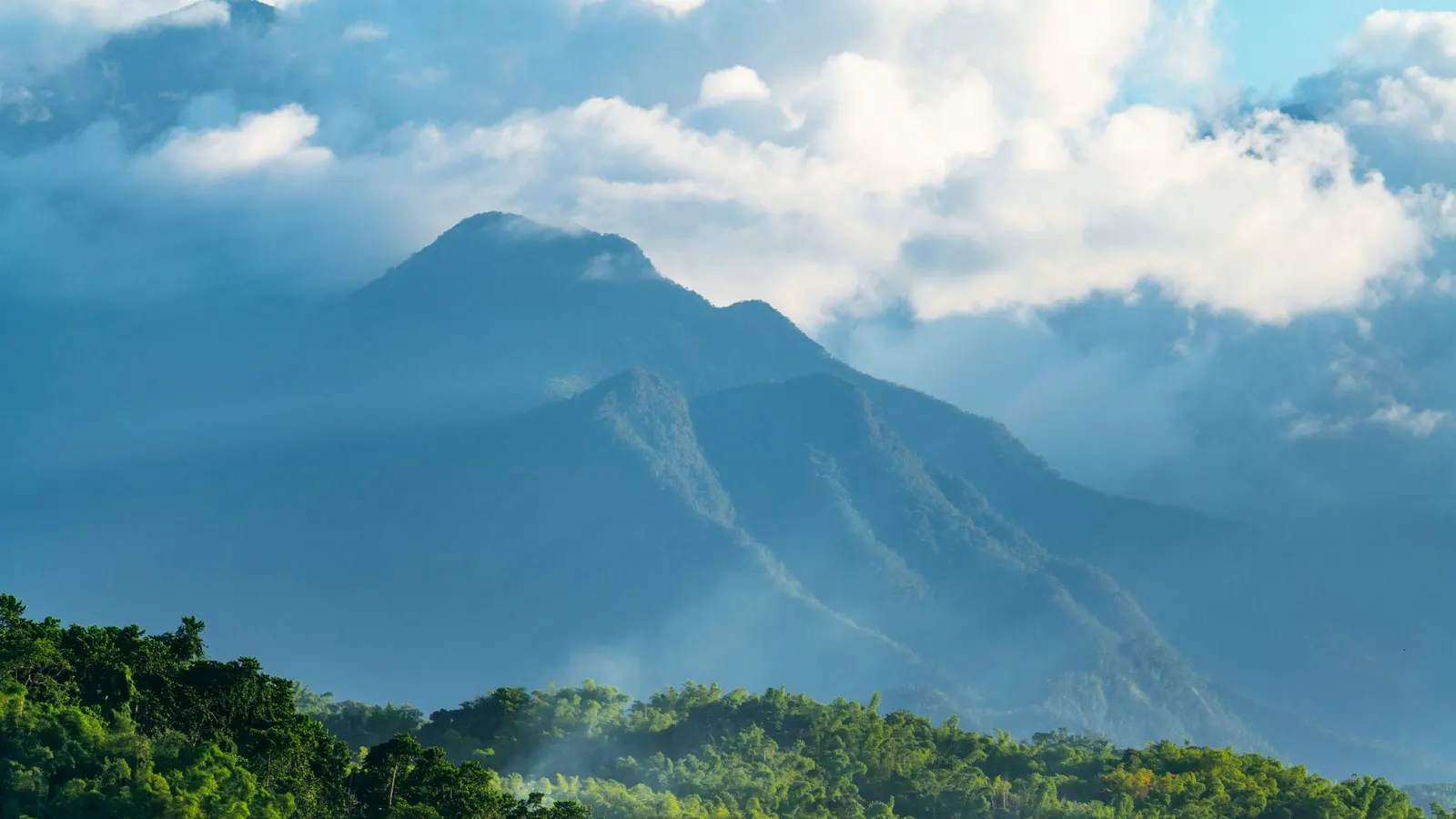
 Sean Witter · Pexels License
Itinerary · Caribbean · 13 days · Moderate
The Peak and the Cockpit Country
Kingston→Port Royal→Holywell, Blue Mountains→Blue Mountain Peak→Port Antonio→Berrydale, Rio Grande valley+7 stops
A loop of the island that starts in Kingston rather than avoiding it - the Blue Mountains and the 2,256-metre peak climbed in the dark, the east end and the Rio Grande, the north coast as far as Falmouth, then inland to the Maroon town of Accompong and down to the south coast. It deliberately skips the all-inclusive strip in the west, which is a different holiday and does not need a route.
Kingston
Arrive, get a local SIM, and give the day to the city instead of driving straight out of it, which is what most visitors do. The National Gallery on Ocean Boulevard holds the Edna Manley sculptures and the Kapo collection and is the single best hour in the country for understanding what Jamaica thinks of itself. Then 56 Hope Road for the Bob Marley Museum - the house he bought in 1975, bullet holes from the 1976 shooting still in the wall - and Trench Town Culture Yard, which is visited with the yard's own guides and is worth doing that way.
Port Royal and Devon House
Out along the Palisadoes past the airport to the spit at the end. Port Royal was the richest town in the English Caribbean until 7 June 1692, when an earthquake and the wave behind it dropped about two thirds of it - thirty-three of its fifty-one acres - into the harbour in minutes. Fort Charles, finished in 1656, is still standing and Nelson walked its platform in 1779; the Giddy House beside it is an artillery store tipped onto its side - by the 1907 earthquake, not the famous one, whatever the guide says. Fried fish and festival at the waterfront, then back into town for Devon House, built in 1881 by George Stiebel, who made a fortune in Venezuelan gold and became the first black millionaire in the Caribbean.
Up into the Blue Mountains
An hour of switchbacks out of Papine and the temperature drops about ten degrees. Newcastle at 1,200 metres is a British hill camp of 1841 still used by the Jamaica Defence Force, and you drive through the parade ground. Holywell, in the national park above Irish Town, has short trails through cloud forest and the view back down over the whole city and harbour. Blue Mountain coffee is a legal designation, not a marketing one - only beans grown between roughly 910 and 1,700 metres in four parishes may use the name, and the estates around Irish Town will walk you through why the price is what it is.
Blue Mountain Peak
The road above Mavis Bank to Penlyne Castle is genuinely bad and needs four-wheel drive; most people are driven up. From Whitfield Hall it is about ten kilometres and a thousand metres of climb to the summit at 2,256 metres, three to four hours at a steady pace, and groups leave between one and two in the morning so as to be on top at first light - after about nine the cloud usually shuts the view for the day. It is close to five degrees up there before the sun arrives, which is not the packing list anyone brings to Jamaica. On a handful of clear mornings a year you can see Cuba.
Round the east end to Port Antonio
The B1 down the northern side of the range from Section to Buff Bay is the short way and has spent much of the last decade landslipped, half-repaired or closed outright; ask locally the evening before rather than trusting a map. If it is shut - assume it is - the answer is back down to Papine and around the east end on the A4 through Morant Bay, Bath and Long Bay, which is three and a half hours and the better coastline anyway. Port Antonio is a working banana and fishing port that had a brief film-star decade and never turned into a resort.
The Rio Grande
Bamboo rafts poled standing up carried bananas down this river to the coast long before anyone sold a ticket for it; Errol Flynn, who bought Navy Island in the late 1940s and lived here, is credited with staging the first raft races and turning the trade into a business. It runs from Berrydale down to Rafters Rest at St Margaret's Bay, about three hours, one raft to two passengers, and the man doing the work has a licence number on the bow. Afterwards, Reach Falls up the coast road - a river gorge you walk up rather than a staircase of platforms - or Winnifred Beach at Fairy Hill, which is public, community-run and has been fighting off development since the 1990s.
Blue Hole and the Rio Grande valley
A slower day. The Blue Lagoon at San San is a drowned karst sinkhole about 55 metres deep where cold fresh water meets the sea and the temperature changes as you swim through it; go early, before the boat operators. Then drive inland up the Rio Grande valley to Moore Town, seat of the Windward Maroons and the one that holds the Colonel on this side of the island, and on past Cornwall Barracks towards Millbank and Bowden Pen at the head of the valley, where the road gives up and becomes riverbed. This is Nanny Town country, and the start of the long trail over the Blue Mountains that the runaway communities used.
West along the north coast to Ocho Rios
The A4 runs the whole way with the sea on your right. Stop at Port Maria for the bay and at Oracabessa, where Ian Fleming built Goldeneye in 1946 and wrote all fourteen Bond books in it between January and March each year. Ocho Rios itself is a cruise town and behaves like one: two or three ships in port turns Dunn's River Falls into a queue, and the day to climb it is a day with nothing docked. Check the port schedule, which is public, before deciding what to do with the afternoon.
Discovery Bay and Falmouth
Half an hour west and the hillsides turn red. At Discovery Bay a conveyor runs bauxite from the mines behind the coast out onto a loading pier, and the ore leaves the island unrefined for a plant in Louisiana - the second industry, visible from the main road, that almost no itinerary mentions. Green Grotto Caves next door were used by the Spanish, then by runaways, then by rum smugglers. Then Falmouth: laid out on a grid in 1769 on the profits of sugar and slavery, and one of the most complete Georgian towns anywhere in the Caribbean, though much of it is propped up rather than restored. Stay for the Luminous Lagoon after dark, where the dinoflagellates in the water light up around anything that moves through them.
Into Cockpit Country - Accompong
South off the coast into limestone karst: conical hills and closed sinkholes repeating for hundreds of square kilometres, almost impossible to cross and historically impossible to police, which is exactly why it mattered. Accompong, in the hills of St Elizabeth, has governed itself since Cudjoe signed a treaty with the British on 1 March 1739 ending the First Maroon War - 1,500 acres, freedom from the plantations, and obligations that included returning other runaways, which the community still argues about. It elects a Colonel. Visits are arranged through the community rather than turned up at, there is a small contribution at the gate, and 6 January is the annual celebration and the one crowded day of the year. Break the drive at Windsor Great Cave, which is on the northern rim and reached from Sherwood Content rather than from Accompong - there is no road across the middle. The Troy–Windsor trail that does cross it is a serious walk on foot and needs a local guide, not a map.
Black River, YS Falls and the south coast
Down to the Great Morass, the largest wetland on the island, where American crocodiles are protected and boats run upriver from Black River town among mangroves and herons. The town itself has a row of decaying wooden merchant houses and claims the island's first electric light, in 1893. Inland, YS Falls is a cascade in cattle pasture with far fewer people on it than Dunn's River, and Appleton has been distilling in the Nassau valley since 1749 by its own account. Then the A2 west through Bamboo Avenue - four kilometres of arched bamboo near Lacovia, thinned by the 2025 storm - and south to Treasure Beach, a string of fishing settlements that has spent thirty years refusing to become a resort.
Treasure Beach and Pelican Bar
A boat from Parottee or Treasure Beach out to a sandbar a kilometre offshore where a man called Floyd built a bar on stilts out of driftwood in 2001. It has been flattened and rebuilt repeatedly - Ivan, Sandy, Beryl in July 2024 - and Melissa took it again in October 2025, so whether it is standing on the morning you want it is a telephone call to Treasure Beach, not an assumption. When it is, the water around it is waist-deep and the fish is cooked while you wait. Back on land, Lovers' Leap up at Southfield is a cliff of about 520 metres, 1,700 feet, straight into the sea with a lighthouse on top, and the drive there through the St Elizabeth farming country is the least Caribbean-looking landscape on the island.
Mandeville and the road back
Up onto the Manchester plateau at 600 metres, which is cool, orderly and full of houses built with money earned abroad. Outside Williamsfield stand the Kirkvine works, an alumina refinery opened in 1952 and idle since 2009 - the beginning and the end of the story on one hillside. From there the A2 and Highway 2000 run back to Kingston in about two hours. Spanish Town on the way has the oldest Anglican cathedral outside England on its Georgian square and one of the worst violence problems in the country immediately around it: stop in daylight, park on the square, do not wander, and if that is not a trade you want, drive past.
Good to know
Most European, North American and Commonwealth passports enter without a visa for a stay of up to 90 days, but everyone, visa or not, has to file the Jamaica Immigration and Customs (C5) form online before travelling - do it in the five days before departure and keep the code on your phone, because the desk asks for it before it asks for anything else. Departure tax and the tourism enhancement fee are already inside your airfare. The currency is the Jamaican dollar. US dollars are accepted almost everywhere on the tourist coast, at a rate set by whoever is taking them and with the change handed back in Jamaican, so draw JMD from a bank ATM and pay in it. Cards work in hotels, supermarkets and the larger attractions and nowhere else: route taxis, jerk pans, the gate at Accompong and the man who poles the raft are all cash. Accommodation carries a reduced 10 per cent GCT and most other things 15; hotels usually add a service charge as well, in which case do not tip twice. Hire cars are expensive here by regional standards and the compulsory insurance is most of the reason - book weeks ahead for December and Easter. Driving is on the left. The north coast highway is good road and Highway 2000 between Kingston and Ocho Rios is better, though its tolls make it the dearest tarmac on the island, so keep small notes for the gantries. Everything else is potholed, unlit, unfenced and shared with goats, and the standing advice is the one Jamaicans give each other: do not drive the interior after dark. Shared route taxis, which carry red licence plates, run everywhere for a few hundred dollars a leg and are how most of the island actually moves; the white-plate cars offering you the same trip are unlicensed and uninsured. Hurricane season runs from 1 June to 30 November with the risk concentrated between August and October, and this matters more than usual at the moment: Hurricane Melissa came ashore in Westmoreland on 28 October 2025 as a Category 5, the strongest landfall in the island's recorded history, and the damage was worst across the west and south-west - St Elizabeth, Westmoreland and Hanover. Days ten to twelve of this route run through St Elizabeth, and the western variant runs through the parish that took the eye. Reconstruction has been quick in some places and slow in others. Confirm by telephone with anywhere you intend to stay or visit in that half of the island rather than trusting a listings page, and treat the Black River boat operators, the south-coast bars and the small guesthouses at Treasure Beach as things to check the week you travel, not the month you book. Tap water from the National Water Commission is treated and drunk by residents in Kingston, Mandeville, Ocho Rios and the other main towns; small rural systems, and anywhere in the days after a storm, are a different question, and bottled water is cheap. There is no malaria and no yellow fever requirement unless you arrive from a country with transmission, but dengue does circulate - Jamaica declared an outbreak in 2023 - so use repellent morning and evening, particularly in the coastal towns. Cannabis was decriminalised in 2015: possession of up to two ounces is a ticketable offence rather than a criminal one and Rastafari have a religious exemption, but it is not legal for a visitor to buy, and carrying any quantity out of the country is a customs offence at both ends. It will be offered to you on the north coast roughly hourly. On safety, the number people quote is the national homicide rate and it is genuinely among the highest in the Americas; it is also concentrated to an extraordinary degree in a small number of communities in West Kingston, Spanish Town and the inland fringe of Montego Bay, mostly between people who know each other, and the government has repeatedly declared states of public emergency in those areas. Travellers are rarely the target. Downtown Kingston by day is a normal working city and the National Gallery is in the middle of it; the garrison communities behind the waterfront are not somewhere to walk unaccompanied at any hour, which is why Trench Town is visited with the Culture Yard's own guides. Nobody in Kingston walks after dark anywhere they would not drive. For Blue Mountain Peak, take a guide, take a fleece, and accept that the road above Mavis Bank is not one to drive yourself in a rental you are liable for.
Shorter or longer?
Three or four days from Falmouth: Montego Bay for the Hip Strip and the flights home, then Negril for Seven Mile Beach and the West End cliffs at Rick's Café. It is the busiest and most heavily built part of the island, and the caveat is bigger here than anywhere else on the route - Melissa came ashore in Westmoreland on 28 October 2025 and Negril, Savanna-la-Mar and the Hanover coast took the worst of it. Some of it reopened within months and some of it has not. Check what is actually running before you add the days, and give the inland fringe of Montego Bay the same wide berth locals give it.
Kingston, the Blue Mountains with the peak, and Port Antonio with the Rio Grande, then back the way you came. Keeps the mountains, the city and the best river on the island; cuts the north coast, Cockpit Country and the south entirely - and cuts the hire car down to the days that need one.
Practical guide
Visa check for this route
Budget
Mid-range · per person · sharing a double room. Excludes international flights - they depend on where you fly from.
Editorial estimates · checked August 2026
Country guides
Trip essentials
The connectivity placement is our own eSIM store. No affiliate link on this list. How we choose these →