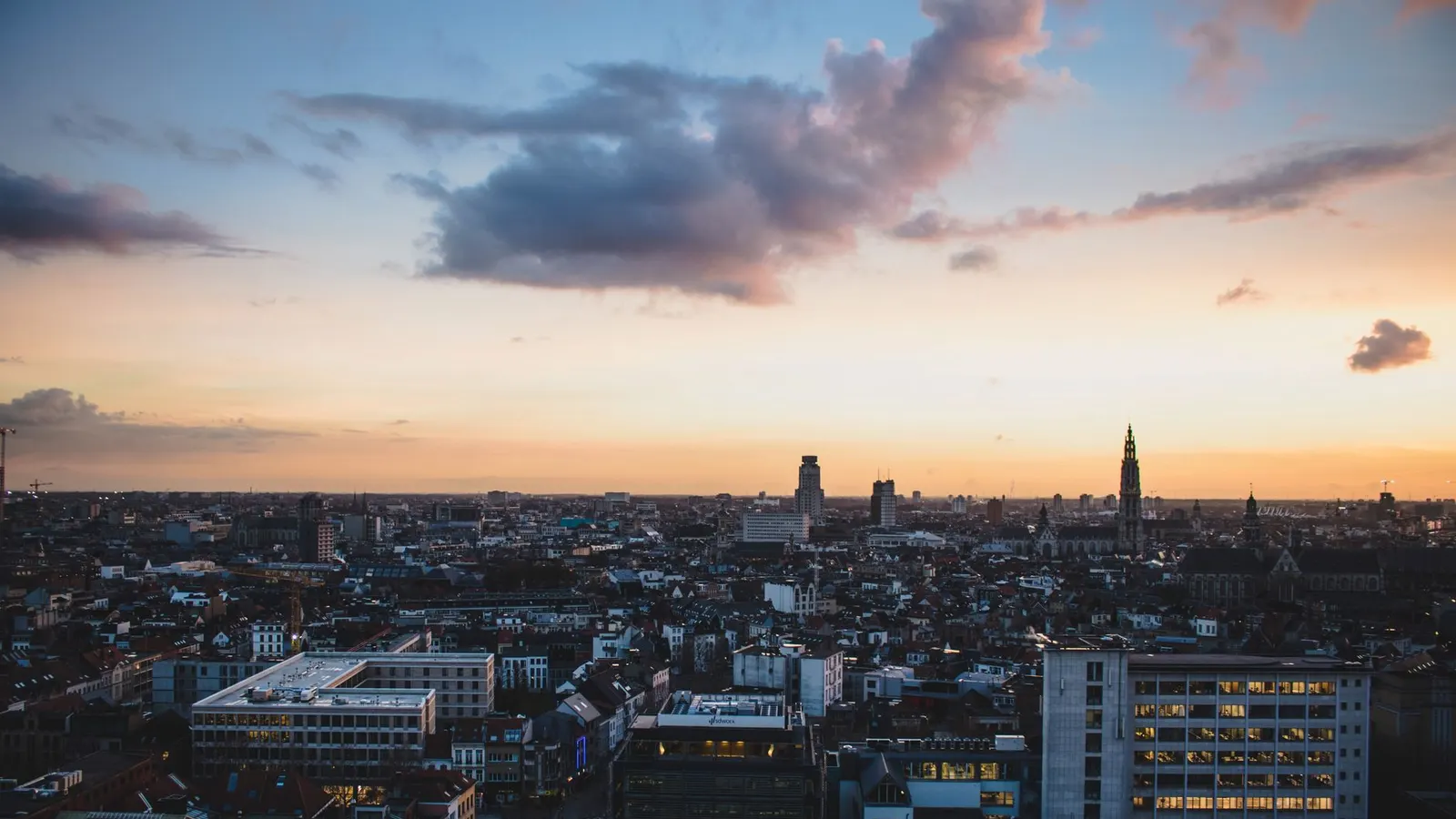
 Ayşe7 · Pexels License
Country Guide № 017 / 194 · Europe
Belgium
Two languages, one country, and more beer styles than anywhere on earth.
“Two languages, one country, and more beer styles than anywhere on earth.”
Belgium is regularly written off as a stopover between Paris and Amsterdam, which is a mistake that takes about a day in Ghent to correct. The Flemish cities - Bruges, Ghent, Antwerp, Leuven - hold a concentration of medieval and Renaissance architecture that survived because the region's wealth peaked early and then quietly declined. Brussels, meanwhile, is a genuinely strange and rewarding capital: art nouveau, comic-strip murals, EU bureaucracy and the best chips in Europe.
The country runs on a linguistic fault line - Dutch-speaking Flanders in the north, French-speaking Wallonia in the south, officially bilingual Brussels in between, and a small German-speaking community in the east. It is a real political tension and, for a visitor, mostly a matter of which language to open with. The other thing to know is the beer: Trappist abbey ales, lambics fermented with wild yeast, and a brewing culture on the UNESCO intangible heritage list.
Chapter 01
Highlights
Ghent
The medieval city Bruges gets mistaken for, with a working university population that keeps it alive after six. The Van Eyck altarpiece in St Bavo's is the single greatest painting in the country.
Bruges out of season
Canals, belfry and Flemish Primitives - spectacular, and overwhelmed by day-trippers from April to October. Stay the night and have the early morning to yourself.
Belgian beer
Trappist ales from six Belgian abbeys, spontaneously fermented lambic and gueuze from the Zenne valley, and café culture built around them. Cantillon in Brussels is a working museum.
The Ardennes and the Western Front
Forested hills, caves and castles in the south - plus the Ypres Salient and the Menin Gate, where the Last Post has sounded every evening since 1928.
Chapter 02
Entry requirements for Belgium
Checking your passport…
up to 90 days · free entry
90 days on arrival
Before you fly
The detail
- Maximum stay
- up to 90 days
- Fee
- free entry
- Passport validity
- Most destinations want validity beyond your stay, and some want six months. Check yours against the return date.
- Onward travel
- Airlines may ask for a return or onward ticket at check-in.
- Health
- No vaccinations required. Healthcare is excellent; EHIC/GHIC covers EU and UK visitors. Pharmacies are widespread. Tap water is safe. Nothing here requires special preparation.
- Money
- Cards are widely accepted, with the same Dutch-style quirk that some places take domestic debit but not foreign credit cards - carry a debit card. Cash is still useful in smaller cafés. Tipping is not expected; service is included. Note that many museums and attractions close on Mondays.
No visa: a US passport is admitted for 90 days in any rolling 180, and Belgium is a country where that arithmetic is easy to lose track of, because most arrivals are by train from Paris, Amsterdam or Cologne and pass no border at all. The days are counted across the whole Schengen area whatever route you took into it, the window rolls, and the day you arrive and the day you leave are each a whole day. Since 10 April 2026 the Entry/Exit System has recorded external crossings with a photograph and fingerprints in place of the stamp, so the count is kept by a database and an overstay is found automatically - a fine, and a bar on returning. Your passport must have been issued within the last ten years and be valid three months beyond your intended departure from the area. ETIAS has been announced for visa-exempt travellers and was not required at the time of writing; recheck at booking. Belgian hotels are obliged to register every guest, which is why identification is taken at check-in and why it is not optional. The trap peculiar to Brussels is at Midi station: the United Kingdom operates its border control on the platform there, so a Eurostar passenger is checked for a UK Electronic Travel Authorisation before boarding rather than on arrival in London - a US citizen without one does not get on the train.
Check another destination with this passport →
Entry details: Editorial synthesis - Schengen Borders Code, Belgian Immigration Office guidance, UK Home Office Electronic Travel Authorisation guidance, EU Entry/Exit System rollout (2025–2026) · compiled 16 Sept 2026
Who needs a visa for Belgium
12 common passports| Passport | Requirement | Stay | Process |
|---|---|---|---|
| United States | Visa-free | up to 90 days | No process · €0 / $0 |
| United Kingdom | Visa-free | up to 90 days | No process · €0 / $0 |
| Germany | Visa-free | - | No process · €0 / $0 |
| India | Visa required | - | No Other passports record yet |
| China | Visa required | - | No Other passports record yet |
| Brazil | Visa-free | up to 90 days | No Other passports record yet |
| Nigeria | Visa required | - | No Other passports record yet |
| Indonesia | Visa required | - | No Other passports record yet |
| Philippines | Visa required | - | No Other passports record yet |
| Vietnam | Visa required | - | No Other passports record yet |
| Egypt | Visa required | - | No Other passports record yet |
| Nepal | Visa required | - | No Other passports record yet |
Holding a passport that is not listed? The picker above answers for any of them. See where your passport takes you. Source: Passport Index, updated 14 Aug 2026.
Chapter 03
When to go
BestMay–Jun, September. AvoidJan–Feb, November.
Warm, green and long-dayed - the season opens.
The band above each month is our editorial verdict - it weighs crowds, prices and access as well as weather. The line is average daily temperature, the bars are monthly rainfall. Select a month for the figures. Climate figures: ERA5 reanalysis via Open-Meteo, 2005–2024 normals.
Chapter 04
What it costs
A day in Belgium
Comfortable · sample day
≈ $119
Line items are real prices we track. The daily budget is an editorial estimate for this level, not their sum.
Where this sits among 244 countries we have costed
Brussels hotel prices follow the business and EU calendar rather than tourism - weekends and August are cheaper than midweek in October. Bruges and Ghent rise from April to October and over the Christmas markets. Rail fares are fixed, and the half-price weekend return is a standing discount rather than a promotion.
Updated Aug 2026 · Editorial synthesis - SNCB published fares, Statbel price data, hotel rate sampling (2025–2026) · confidence high
Excludes international flights - they depend on where you fly from.
Chapter 05
Regions to know
5Brussels
The capital - the Grand Place, art nouveau houses, comic-strip murals and the EU quarter.
Flanders
Ghent, Bruges, Antwerp and Leuven - medieval cores, Flemish Primitives and the best beer cafés.
The Flemish coast & Westhoek
The North Sea coast with its tram line end to end, and the Ypres Salient battlefields and memorials inland.
Wallonia & the Meuse
Namur and Dinant on the river, Liège's markets, and the industrial heritage sites of the Sambre-Meuse valley.
The Ardennes
Forested hills, caves, castles and the Battle of the Bulge sites around Bastogne.
Chapter 06
Practical guide
Getting there
Brussels (BRU) is the main airport, with Charleroi (CRL) serving low-cost carriers an hour south. Eurostar reaches London in two hours and Amsterdam and Paris in around ninety minutes; Brussels-Midi is a genuine European rail hub. Given the distances, arriving by train from any neighbouring country is usually faster than flying.
Getting around
SNCB trains cover the whole country cheaply, with no need to book ahead. Weekend return tickets are half price. City transport in Brussels, Antwerp and Ghent is good; Ghent and Antwerp are best on foot or by bike. A car helps only in the Ardennes. Note that Belgium is small enough that basing in one city and day-tripping works for almost any itinerary.
Money & costs
Cards are widely accepted, with the same Dutch-style quirk that some places take domestic debit but not foreign credit cards - carry a debit card. Cash is still useful in smaller cafés. Tipping is not expected; service is included. Note that many museums and attractions close on Mondays.
Safety
Safe, with pickpocketing around Brussels-Midi station, the Grand Place and on the metro the main issue. Some Brussels neighbourhoods have a poor reputation that is largely overstated, though the area immediately around Midi station is genuinely worth normal caution at night. Bike theft is common.
Health
No vaccinations required. Healthcare is excellent; EHIC/GHIC covers EU and UK visitors. Pharmacies are widespread. Tap water is safe. Nothing here requires special preparation.
SIM & internet
EU roaming applies. Coverage is comprehensive. Free wifi is common, though Belgium lags slightly behind the Netherlands on public connectivity.
Chapter 07
Driving
Brussels is a low-emission zone with camera enforcement and foreign vehicles must register in advance online - a common and avoidable fine. Antwerp and Ghent have their own zones. Ghent's centre is largely car-free. The rural priority-to-the-right rule still applies at unmarked junctions and surprises visitors.
Rules change - verify with an official source before you rent.
ExplWorld VerifiedNo verified partners here yet - all 6 country seats are open.
Become ExplWorld Verified →Chapter 08
Itineraries through this country
Chapter 09
From the Journal
Chapter 10
Before you go
BelgiumChapter 11
Frequently asked questions
Which language should I speak?
English, honestly, which is widely spoken and neutral. In Flanders, opening in French can land badly; in Wallonia, Dutch will not help you. Brussels is officially bilingual and English is common. Nobody minds a visitor speaking English - the sensitivity is between the two communities, not toward outsiders.
Is Bruges worth it given the crowds?
Yes, if you sleep there. The day-trip volume from cruise ships and coaches is genuinely oppressive between ten and five, and the town is empty and beautiful outside those hours. If you can only day-trip, go to Ghent instead - comparable architecture, a fraction of the crowd, better food.
How do I get around?
Trains, which are cheap and reach everywhere in a country this size - Brussels to Bruges is an hour, to Antwerp 40 minutes. Punctuality is mediocre but distances are short enough that it rarely matters. City transport is good. The Ardennes are the one region where a car genuinely helps.