 Vijay Aditya M · Pexels License
Country Guide № 099 / 194 · Europe
Luxembourg
A fortress city on a gorge, and free public transport across the whole country.
“A fortress city on a gorge, and free public transport across the whole country.”
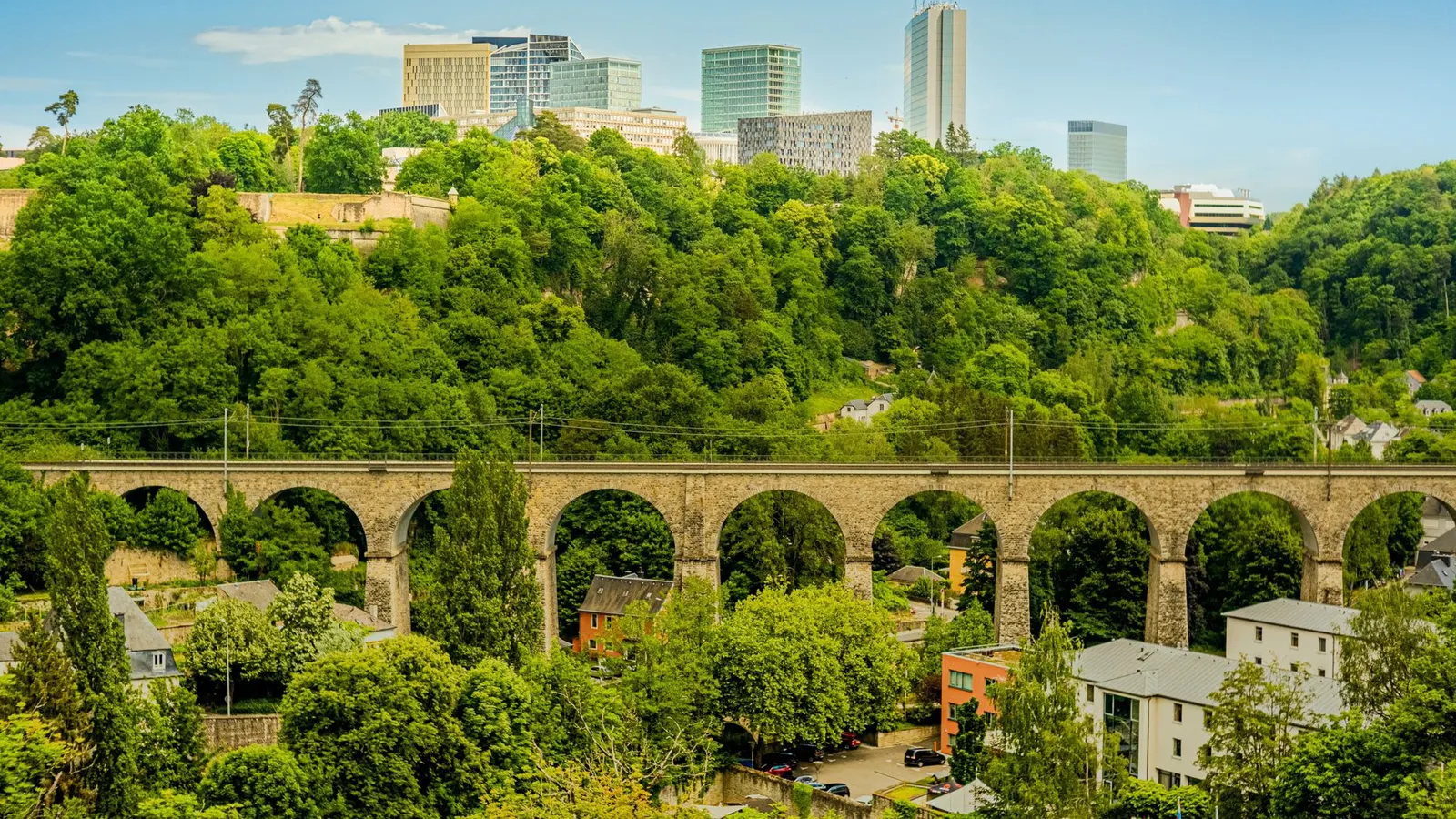
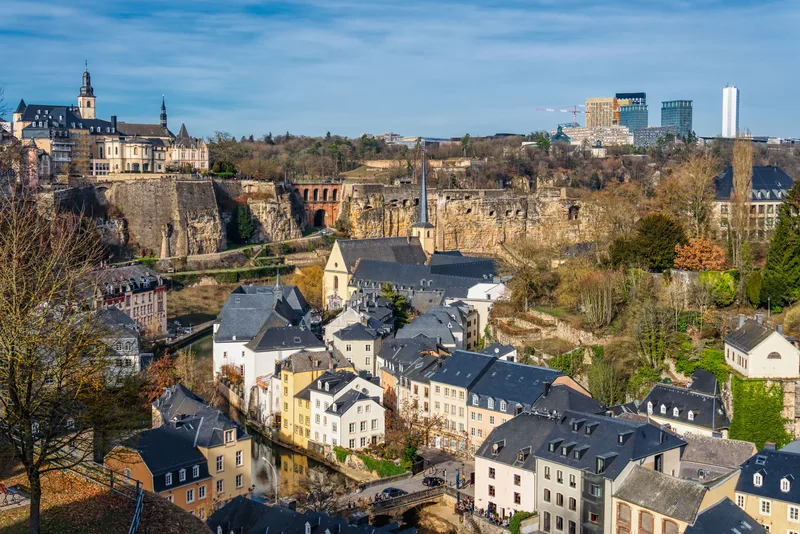
Luxembourg City is built on and around a gorge, with the old fortifications - the Bock casemates, tunnels cut through the rock - running under the whole centre. It was one of the most fortified places in Europe until the 1867 treaty required its demolition, and what survives is UNESCO-listed and genuinely dramatic to walk.
The country beyond it is small, wooded and quietly rewarding: the Mullerthal's sandstone formations, the Moselle wine villages, and the Ardennes with Vianden's castle and the Battle of the Bulge sites. In 2020 Luxembourg became the first country in the world to make all public transport free for everyone, residents and visitors alike, which changes how you move around it entirely.
Chapter 01
Highlights
The Bock casemates and the Chemin de la Corniche
Tunnels cut into the rock beneath the old city, and a clifftop walk once called the most beautiful balcony in Europe, looking down on the Grund quarter in the gorge.
The Mullerthal
Sandstone rock formations, narrow ravines and waterfalls in a forest region marketed as Little Switzerland, with 112 kilometres of well-marked trail.
Vianden
A restored hilltop castle above a river town, reached by chairlift for the view, in the Ardennes an hour north of the capital.
The Moselle wine route
Terraced riesling and crémant producers along the German border, with cellar visits and a river you can cycle beside for forty kilometres.
Chapter 02
Entry requirements for Luxembourg
Checking your passport…
up to 90 days · free entry
90 days on arrival
Before you fly
The detail
- Maximum stay
- up to 90 days
- Fee
- free entry
- Passport validity
- Most destinations want validity beyond your stay, and some want six months. Check yours against the return date.
- Onward travel
- Airlines may ask for a return or onward ticket at check-in.
- Health
- No vaccinations required. Healthcare is excellent; EHIC/GHIC covers EU and UK visitors. Tap water is excellent. Tick-borne encephalitis is present in forests. Nothing else requires preparation.
- Money
- Euro. Cards are accepted everywhere. Tipping is rounding up or around 5–10 %. Fuel and tobacco are cheaper than in the surrounding countries, which is why the petrol stations on the borders are always busy.
No visa and no fee for a United States passport: 90 days in any rolling 180, and the allowance belongs to the twenty-nine-country Schengen area rather than to Luxembourg - which is fitting, since the agreement that created the area was signed in 1985 in the Luxembourgish village of Schengen, on a boat on the Moselle. All three land borders are internal crossings with no controls, and the country is small enough to drive across in an hour, so a visitor based here who breakfasts in Trier and dines in Metz has crossed two frontiers and noticed neither; every day of it comes out of the same ninety. The window rolls: count backwards 180 days from any date and add up every day you were anywhere in the area, arrival and departure days included. The airport at Findel is the only external border, so if you arrived by train from Paris or Brussels your biometric enrolment happened there rather than here. Since 10 April 2026 the Entry/Exit System has been fully operational, after a phased start in October 2025: your first crossing records a facial image and fingerprints, the passport is no longer stamped, and the count is now kept by a machine rather than by an officer finding the right inky page. The declaration of arrival at the commune, which Luxembourg requires within eight days, is a residence obligation for stays over three months and not a visitor one - a tourist in a hotel has nothing to file. ETIAS was announced but not required at the time of writing; check when you book. Your passport must be valid three months beyond your intended departure from the Schengen area.
Check another destination with this passport →
Entry details: Editorial synthesis - Schengen Borders Code (Regulation 2016/399), Luxembourg Guichet.lu guidance, EU Entry/Exit System rollout (2025–2026) · compiled 17 Sept 2026
Who needs a visa for Luxembourg
12 common passports| Passport | Requirement | Stay | Process |
|---|---|---|---|
| United States | Visa-free | up to 90 days | No process · €0 / $0 |
| United Kingdom | Visa-free | up to 90 days | No process · €0 / $0 |
| Germany | Visa-free | - | No process · €0 / $0 |
| India | Visa required | - | No Other passports record yet |
| China | Visa required | - | No Other passports record yet |
| Brazil | Visa-free | up to 90 days | No Other passports record yet |
| Nigeria | Visa required | - | No Other passports record yet |
| Indonesia | Visa required | - | No Other passports record yet |
| Philippines | Visa required | - | No Other passports record yet |
| Vietnam | Visa required | - | No Other passports record yet |
| Egypt | Visa required | - | No Other passports record yet |
| Nepal | Visa required | - | No Other passports record yet |
Holding a passport that is not listed? The picker above answers for any of them. See where your passport takes you. Source: Passport Index, updated 14 Aug 2026.
Chapter 03
When to go
BestMay–Sep. AvoidJan–Feb, November.
Warm, green and long-dayed - the season opens.
The band above each month is our editorial verdict - it weighs crowds, prices and access as well as weather. The line is average daily temperature, the bars are monthly rainfall. Select a month for the figures. Climate figures: ERA5 reanalysis via Open-Meteo, 2005–2024 normals.
Chapter 04
What it costs
A day in Luxembourg
Comfortable · sample day
≈ $140
Line items are real prices we track. The daily budget is an editorial estimate for this level, not their sum.
Where this sits among 244 countries we have costed
Hotel prices are driven by the business and EU-institution calendar rather than tourism, so weekends and August are cheaper than midweek in October - the inverse of most of Europe. The Christmas market weeks are the one seasonal lift. Transport is free in every month.
Updated Aug 2026 · Editorial synthesis - Luxembourg national transport policy, STATEC price data, hotel rate sampling (2025–2026) · confidence high
Excludes international flights - they depend on where you fly from.
Chapter 05
Regions to know
5Luxembourg City
The fortress capital - casemates, the Corniche walk, the Grund in the gorge and the modern Kirchberg quarter.
The Mullerthal
Sandstone ravines and waterfalls in forest, with Echternach's abbey and a well-marked long-distance trail.
The Ardennes
Vianden and Clervaux castles, forested hills, and the Battle of the Bulge museums and cemeteries.
The Moselle
Terraced riesling and crémant vineyards along the German border, with cellar visits and river cycling.
The Minett & the south
The former iron-ore basin, now a UNESCO biosphere, with red-rock landscapes and industrial heritage at Esch.
Chapter 06
Practical guide
Getting there
Luxembourg (LUX) has moderate European service; many visitors arrive by train from Brussels, Paris, Trier or Metz, or fly into Frankfurt-Hahn, Brussels or Cologne. The TGV reaches Paris in two hours and trains to Trier and Metz take under an hour.
Getting around
All public transport is free - trains, trams and buses, nationwide. The tram links the airport, the station and Kirchberg. Trains reach Vianden's valley, Echternach and the Moselle. A car is genuinely unnecessary unless you want remote Ardennes trailheads. Cycling routes along the rivers are excellent.
Money & costs
Euro. Cards are accepted everywhere. Tipping is rounding up or around 5–10 %. Fuel and tobacco are cheaper than in the surrounding countries, which is why the petrol stations on the borders are always busy.
Safety
Among the safest countries in the world with very low crime. The area immediately around the railway station has a visible drug-related street scene and is the one place worth ordinary caution at night. Otherwise there is nothing here that needs planning around.
Health
No vaccinations required. Healthcare is excellent; EHIC/GHIC covers EU and UK visitors. Tap water is excellent. Tick-borne encephalitis is present in forests. Nothing else requires preparation.
SIM & internet
EU roaming applies. Coverage and broadband are among the best in Europe. Free wifi is widespread, including on public transport.
Chapter 07
Driving
The motorway limit drops to 110 km/h in wet conditions and is camera-enforced. Fuel is cheaper than in Belgium, France and Germany, which is why border stations queue. Parking in Luxembourg City is expensive and the free transport makes driving in pointless.
Rules change - verify with an official source before you rent.
ExplWorld VerifiedNo verified partners here yet - all 6 country seats are open.
Become ExplWorld Verified →Chapter 08
Itineraries through this country
Chapter 09
From the Journal
Chapter 10
Before you go
LuxembourgChapter 11
Frequently asked questions
Is public transport really free?
Yes - all trains, trams and buses nationwide, for everyone, since 2020. Only first-class rail requires a ticket. You simply board. It makes a car unnecessary for most itineraries and is the single most useful thing to know about visiting.
How long do I need?
Two days for the capital, four to five to add the Mullerthal, Vianden and the Moselle. The country is 82 kilometres long, so everything is a day trip from Luxembourg City if you prefer to stay put.
How expensive is it?
Accommodation and eating are expensive - this is one of the wealthiest countries in the world and prices reflect it. A restaurant main runs €22–28, a mid-range hotel €140. Free transport and free entry to some sites offset it partly. Staying across the border in Trier or Metz is a common workaround.