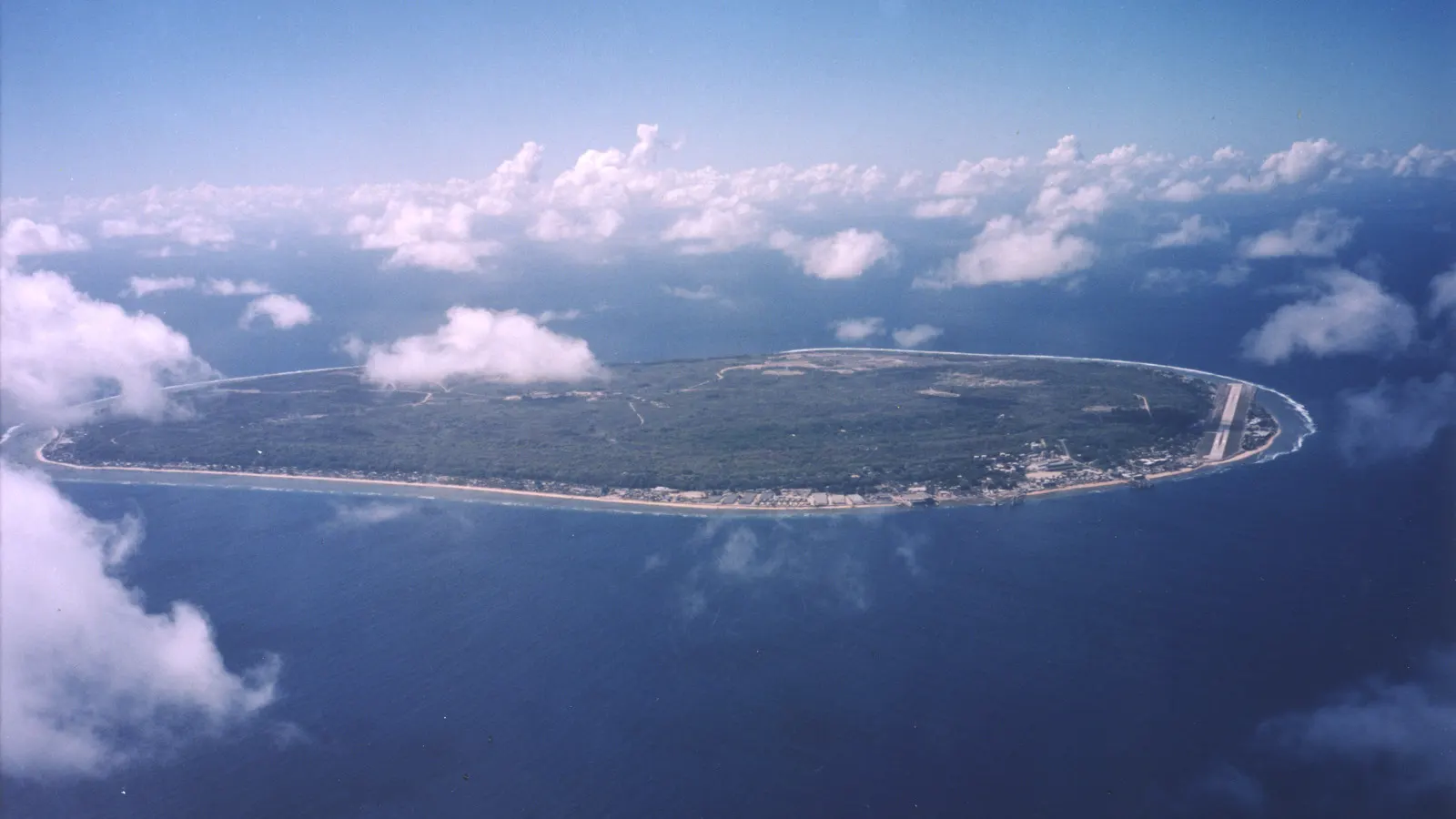
 U.S. Department of Energy's Atmospheric Radiation Measurement Program · Public domain
Country Guide № 110 / 194 · Oceania
Micronesia
Nan Madol's basalt city, Chuuk's sunken fleet and 600 islands across 2,700 kilometres.
“Nan Madol's basalt city, Chuuk's sunken fleet and 600 islands across 2,700 kilometres.”
The Federated States of Micronesia is four states - Yap, Chuuk, Pohnpei and Kosrae - spread across 2,700 kilometres of the western Pacific, with about 600 islands and 100,000 people. They share a country and very little else: the languages, cultures and even the appearance of the islands differ sharply between them.
Nan Madol, off Pohnpei, is a city of nearly a hundred artificial islets built from columnar basalt logs on a reef between roughly 1200 and 1600, and it is UNESCO-listed and unlike anything else in the Pacific. Chuuk Lagoon holds the Japanese fleet sunk in Operation Hailstone in February 1944 - around sixty ships and hundreds of aircraft, many intact with cargo in the holds - and is the most significant wreck-diving site in the world. Yap still uses rai stone money and has manta cleaning stations. Getting between them means the United island-hopper, which is a trip in itself.
Chapter 01
Highlights
Nan Madol
Nearly a hundred artificial islets of stacked basalt columns built on a reef off Pohnpei between about 1200 and 1600 - a megalithic city with canals for streets, UNESCO-listed and reached by boat at high tide.
Chuuk Lagoon
The Japanese fleet destroyed in February 1944 lies in a lagoon 60 kilometres across - around sixty ships and hundreds of aircraft, many upright with cargo, aircraft and personal effects in place. The premier wreck-diving site on earth.
Yap
Stone money discs up to four metres across still in use for ceremonial exchange, village stone paths, traditional dance, and manta ray cleaning stations in the channels that are among the most reliable anywhere.
Kosrae
The greenest and least-visited state - Lelu's basalt ruins, mangrove channels, hard-coral reefs in exceptional condition and a strict Sunday observance.
Chapter 02
Entry requirements for Micronesia
Checking your passport…
free entry
Before you fly
The detail
- Fee
- free entry
- Passport validity
- Most destinations want validity beyond your stay, and some want six months. Check yours against the return date.
- Onward travel
- Airlines may ask for a return or onward ticket at check-in.
- Health
- No malaria. Dengue outbreaks occur. Medical facilities are limited in every state; evacuation to Guam or Honolulu is the plan for anything serious. There is a recompression chamber in Chuuk, which matters given the diving.
- Money
- US dollar. Cash dominates outside hotels and dive shops. ATMs in the state centres; nothing on the outer islands. Bring dollars in small denominations.
Under the Compact of Free Association a United States citizen may enter the Federated States of Micronesia, reside there and work there without a visa or a permit - an entitlement drawn from a treaty rather than a stamp granted at a counter, which is why no allowance in days is stored against this row. Where a US passport is nonetheless processed as an ordinary visitor the standard grant is the same 30 days everyone else receives, so read what the officer writes and do not assume it says more. Carry the onward ticket and the first accommodation booking in a form you can show on a phone. Across the Pacific these are asked for far more consistently than in most of the world, and they are asked for by the AIRLINE at check-in rather than by Micronesia at the door - a carrier that lands somebody in a country they have no way out of owns the cost of taking them home, so the refusal comes from a check-in agent hours before anyone official has looked at your passport. The four states each run their own affairs and the differences are real rather than ceremonial. Chuuk requires a permit to dive the lagoon wrecks, arranged through the operator you are diving with; the wrecks hold unexploded ordnance and human remains and are treated as a war grave, so nothing is taken from them. Yap expects visitors to observe village protocol - permission asked before walking on land, swimming from a beach or photographing anybody - and the expectation is not a formality. Pohnpei's Nan Madol is on private customary land and entry is paid to the landowner. Medical care is limited in every state and anything serious means an evacuation to Guam or Honolulu, which for once is a short hop rather than a long one; insurance still has to cover it. Money is the US dollar, mostly in cash, in small notes, because the outer islands have no ATM and the state centres have very few.
Check another destination with this passport →
Entry details: Editorial synthesis - Compact of Free Association entry and residence provisions, FSM Immigration and state-level requirements (2025–2026) · compiled 18 Sept 2026
Who needs a visa for Micronesia
12 common passports| Passport | Requirement | Stay | Process |
|---|---|---|---|
| United States | Visa-free | up to 30 days | No process · €0 / $0 |
| United Kingdom | Visa-free | up to 30 days | No process · €0 / $0 |
| Germany | Visa-free | up to 90 days | No process · €0 / $0 |
| India | Visa-free | up to 30 days | No process · €0 / $0 |
| China | Visa-free | up to 30 days | No process · €0 / $0 |
| Brazil | Visa-free | up to 30 days | No process · €0 / $0 |
| Nigeria | Visa-free | up to 30 days | No process · €0 / $0 |
| Indonesia | Visa-free | up to 30 days | No process · €0 / $0 |
| Philippines | Visa-free | up to 30 days | No process · €0 / $0 |
| Vietnam | Visa-free | up to 30 days | No process · €0 / $0 |
| Egypt | Visa-free | up to 30 days | No process · €0 / $0 |
| Nepal | Visa-free | up to 30 days | No process · €0 / $0 |
Holding a passport that is not listed? The picker above answers for any of them. See where your passport takes you. Source: Passport Index, updated 14 Aug 2026.
Chapter 03
When to go
BestDec–Apr.
Dry season; the best diving visibility.
The band above each month is our editorial verdict - it weighs crowds, prices and access as well as weather. The line is average daily temperature, the bars are monthly rainfall. Select a month for the figures. Climate figures: ERA5 reanalysis via Open-Meteo, 2005–2024 normals.
Chapter 04
What it costs
A day in Micronesia
Comfortable · sample day
≈ $173
Line items are real prices we track. The daily budget is an editorial estimate for this level, not their sum.
Where this sits among 244 countries we have costed
Visitor numbers are low year-round and driven by dive charters rather than season. Flight availability, not weather, is what constrains a trip.
Updated Aug 2026 · Editorial synthesis - dive operator and accommodation sampling (2025–2026) · confidence medium
Excludes international flights - they depend on where you fly from.
Chapter 05
Regions to know
5Pohnpei
Nan Madol, Sokehs Rock, Kepirohi waterfall, sakau kava culture and the capital at Palikir.
Chuuk
The lagoon, the sunken fleet, Weno town and the outer atolls beyond.
Yap
Stone money, village paths and dance, manta cleaning stations and the traditional outer islands.
Kosrae
The greenest state - Lelu ruins, mangrove channels, hard-coral reefs and Sunday stillness.
The outer islands
Atolls across all four states reached by field-trip ships every few weeks - among the most isolated inhabited places on earth.
Chapter 06
Practical guide
Getting there
United's island-hopper connects Guam and Honolulu with all four states; Nauru Airlines and Asia Pacific Airlines serve some routes. Every itinerary routes through Guam or Honolulu, and both mean US transit rules.
Getting around
Flights between the states on the hopper. Within each state, taxis and shared vehicles; roads are limited and often poor. Boats reach the outer islands on irregular field-trip ship schedules.
Money & costs
US dollar. Cash dominates outside hotels and dive shops. ATMs in the state centres; nothing on the outer islands. Bring dollars in small denominations.
Safety
Generally safe, with some alcohol-related trouble in Chuuk after dark. The hazards are marine: currents, deep wreck diving that demands proper training, and remoteness. Chuuk's wrecks contain unexploded ordnance and human remains - treat them accordingly.
Health
No malaria. Dengue outbreaks occur. Medical facilities are limited in every state; evacuation to Guam or Honolulu is the plan for anything serious. There is a recompression chamber in Chuuk, which matters given the diving.
SIM & internet
FSM Telecom; SIMs in the state centres. Coverage is limited and data is slow and expensive by any standard. The outer islands have none.
Chapter 07
Driving
Roads are short, potholed and slow, with 25 mph limits typical. Very few visitors drive; hotels and dive shops provide transfers. Pohnpei's circumferential road is the longest stretch in the country.
Rules change - verify with an official source before you rent.
ExplWorld VerifiedNo verified partners here yet - all 6 country seats are open.
Become ExplWorld Verified →Chapter 08
Itineraries through this country
Chapter 09
From the Journal
Chapter 10
Before you go
MicronesiaChapter 11
Frequently asked questions
How do I get around between the states?
The United island-hopper - a Boeing 737 that runs Honolulu–Majuro–Kwajalein–Kosrae–Pohnpei–Chuuk–Guam, landing five or six times in a day. It is the only realistic way to combine states, it operates a few times a week in each direction, and a cancellation can strand you for days. Build slack into any itinerary.
Do I need permission to visit sites?
Frequently. Land, reefs and sites are customarily owned - Nan Madol charges a fee to the traditional owner, Yap villages expect permission and a small gift, and diving in Chuuk requires a permit. Your guide or dive shop handles it, but never wander onto land or a beach without asking.
What are the entry rules?
Most nationalities enter visa-free for 30 days on arrival, and US citizens may live and work there indefinitely under the Compact of Free Association. Each state has its own additional rules - Chuuk requires a dive permit, and Yap asks visitors to respect specific village protocols.