 thorl5 · Pexels License
Country Guide № 138 / 194 · Europe
Portugal
Atlantic light, tiled facades and the best value in Western Europe.
“Atlantic light, tiled facades and the best value in Western Europe.”
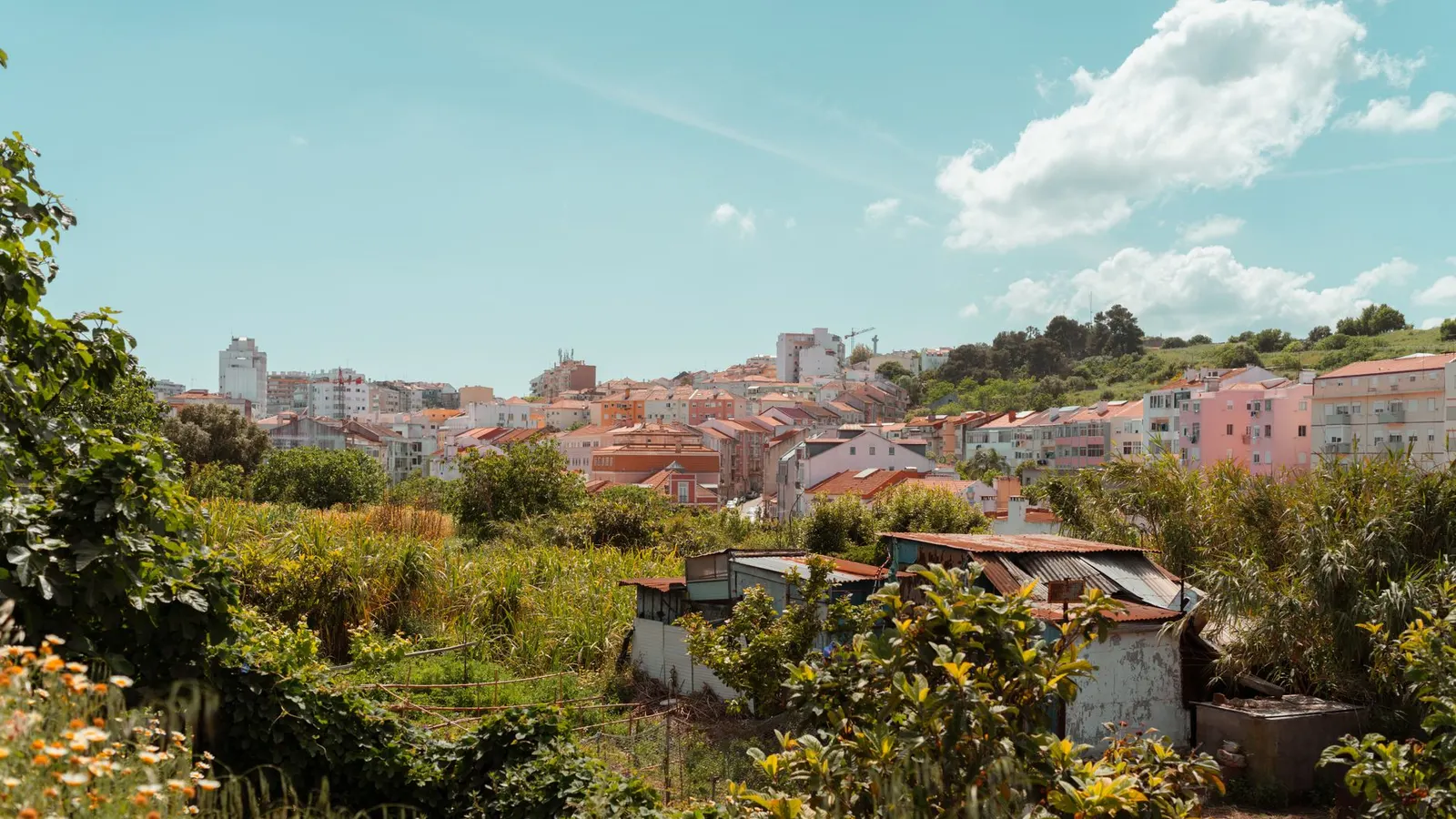
Portugal is small enough to drive end to end in six hours and varied enough that you would not want to. The north is granite, terraced vineyards and rain; the Alentejo is cork oak and wheat under enormous skies; the Algarve is limestone cliffs and the country's only genuinely crowded coast. Lisbon and Porto have both become substantially more expensive since 2015, and both are still cheaper than Madrid or Barcelona.
The Atlantic is the organising fact. It gives the country its light, its cold clear water, its surf - Nazaré holds the record for the largest wave ever surfed - and its two island groups. Madeira is a subtropical mountain with levada walks along irrigation channels; the Azores are nine green volcanic islands in the middle of the ocean with whales offshore.
Chapter 01
Highlights
Lisbon and Sintra
Tiled facades, the 28 tram, miradouro viewpoints and fado in Alfama - with Sintra's palaces in the hills forty minutes away by train. Book Pena Palace ahead.
The Douro valley
Terraced vineyards cut into schist above the river, port lodges in Vila Nova de Gaia, and a rail line that runs along the water for the last hour into Pocinho.
The Azores
Nine volcanic islands with crater lakes, hot springs and reliable whale watching - resident sperm whales year-round and migrating blues in spring.
The Alentejo coast
Cliffs, empty beaches and the Rota Vicentina walking route between Porto Covo and Cape St Vincent. The Algarve's coastline without the Algarve's crowds.
Chapter 02
Entry requirements for Portugal
Checking your passport…
up to 90 days · free entry
90 days on arrival
Before you fly
The detail
- Maximum stay
- up to 90 days
- Fee
- free entry
- Passport validity
- Most destinations want validity beyond your stay, and some want six months. Check yours against the return date.
- Onward travel
- Airlines may ask for a return or onward ticket at check-in.
- Health
- No vaccinations required. Healthcare is good and EHIC/GHIC covers EU and UK visitors. Tap water is safe. The Atlantic sun is stronger than the air temperature suggests. Summer wildfire smoke can affect air quality in the centre and north.
- Money
- Cards are accepted almost everywhere. Multibanco ATMs are ubiquitous and charge nothing for EU cards. Tipping is minimal - rounding up. The couvert of bread, olives and cheese brought unasked to your table is charged for; sending it back is normal and not rude.
Portugal asks a United States passport for nothing but the passport: 90 days in any rolling 180, and those ninety are the Schengen area’s rather than Portugal’s - time already spent in Spain, France or anywhere else in the twenty-nine countries comes out of the same total. Madeira and the Azores are fully inside the area, so a flight to Funchal or Ponta Delgada involves no separate formality and no new clock. Since 10 April 2026 the Entry/Exit System has been fully operational: your first crossing takes a facial image and fingerprints, the passport is not stamped afterwards, and the ninety days count themselves, which matters most to the sort of visitor who used to lose track between a spring and an autumn trip. Lisbon and Porto both run automated gates, but a first biometric registration is done in person, so allow time on the first arrival of a season rather than on the second. An overstay is a fine and can carry a ban from the whole area. ETIAS, the online authorisation announced for visa-exempt visitors, was not required at the time of writing - whatever the paid lookalike sites suggest, check when you book. Your passport must be valid at least three months beyond the date you intend to leave the Schengen area.
Check another destination with this passport →
Entry details: Editorial synthesis - Schengen Borders Code, Portuguese AIMA entry guidance, EU Entry/Exit System rollout (2025–2026) · compiled 16 Sept 2026
Who needs a visa for Portugal
12 common passports| Passport | Requirement | Stay | Process |
|---|---|---|---|
| United States | Visa-free | up to 90 days | No process · €0 / $0 |
| United Kingdom | Visa-free | up to 90 days | No process · €0 / $0 |
| Germany | Visa-free | - | No process · €0 / $0 |
| India | Visa required | - | No Other passports record yet |
| China | Visa required | - | No Other passports record yet |
| Brazil | Visa-free | up to 90 days | No Other passports record yet |
| Nigeria | Visa required | - | No Other passports record yet |
| Indonesia | Visa required | - | No Other passports record yet |
| Philippines | Visa required | - | No Other passports record yet |
| Vietnam | Visa required | - | No Other passports record yet |
| Egypt | Visa required | - | No Other passports record yet |
| Nepal | Visa required | - | No Other passports record yet |
Holding a passport that is not listed? The picker above answers for any of them. See where your passport takes you. Source: Passport Index, updated 14 Aug 2026.
Chapter 03
When to go
BestApr–Jun, Sep–Oct. AvoidAugust.
Warm, green and quiet - an excellent month.
The band above each month is our editorial verdict - it weighs crowds, prices and access as well as weather. The line is average daily temperature, the bars are monthly rainfall. Select a month for the figures. Climate figures: ERA5 reanalysis via Open-Meteo, 2005–2024 normals.
Chapter 04
What it costs
A day in Portugal
Comfortable · sample day
≈ $92
Line items are real prices we track. The daily budget is an editorial estimate for this level, not their sum.
Where this sits among 244 countries we have costed
The Algarve doubles in July and August and is genuinely cheap in November and February. Lisbon and Porto have risen sharply since 2015 and now hold their prices through spring and autumn, dipping only in deep winter. Madeira is counter-seasonal and busiest at New Year; the Azores peak in July and August for whale watching and hiking.
Updated Aug 2026 · Editorial synthesis - CP published fares, Parques de Sintra tariffs, INE price data (2025–2026) · confidence high
Excludes international flights - they depend on where you fly from.
Chapter 05
Regions to know
5Lisbon & the centre
The capital, Sintra's palaces, Cascais and the surf coast at Ericeira and Peniche.
Porto & the north
The river city, the Douro valley's terraced vineyards, Braga and Guimarães, and the Peneda-Gerês national park.
The Alentejo
Cork oak plains, the walled town of Évora, Marvão on its crag and an almost empty Atlantic coast.
The Algarve
Limestone cliffs and coves west of Lagos, Sagres at the end of Europe, and the quieter eastern lagoons at Tavira.
Madeira & the Azores
A subtropical mountain island with levada walks; and nine mid-Atlantic volcanic islands with crater lakes and whales.
Chapter 06
Practical guide
Getting there
Lisbon (LIS), Porto (OPO) and Faro (FAO) are served heavily by low-cost carriers from across Europe; Funchal (FNC) and Ponta Delgada (PDL) reach the islands. Overnight and daytime trains link Lisbon to Madrid and Porto to Vigo. The islands are a two-hour flight from the mainland.
Getting around
The Lisbon–Porto rail corridor is fast and comfortable; Alfa Pendular is the express. Regional lines reach the Douro and the Algarve, and the Douro line itself is one of the most scenic in Europe. Buses (Rede Expressos) fill the rest. A car is worth it for the Alentejo, the interior and the Algarve's western beaches. City transport is good in Lisbon and Porto; the Lisbon trams are transport and attraction at once.
Money & costs
Cards are accepted almost everywhere. Multibanco ATMs are ubiquitous and charge nothing for EU cards. Tipping is minimal - rounding up. The couvert of bread, olives and cheese brought unasked to your table is charged for; sending it back is normal and not rude.
Safety
One of the safest countries in Europe. Pickpocketing on Lisbon's 28 tram and in Porto's centre is the main risk, alongside persistent but harmless drug touts in Lisbon's Baixa. The genuine hazard is the Atlantic - rip currents and shore breaks kill swimmers every year, beaches are flagged, and the flags mean what they say. Wildfires affect the interior in summer.
Health
No vaccinations required. Healthcare is good and EHIC/GHIC covers EU and UK visitors. Tap water is safe. The Atlantic sun is stronger than the air temperature suggests. Summer wildfire smoke can affect air quality in the centre and north.
SIM & internet
EU roaming covers European SIMs; others should buy an eSIM. Coverage is comprehensive including on the islands. Free wifi is standard and Portugal has unusually good connectivity for its size - part of why it attracts remote workers.
Chapter 07
Driving
The electronic-only toll roads are the classic Portugal rental trap - several motorways have no cash option at all, and the fine arrives months later. Take the transponder. Lisbon and Porto have steep, narrow old-town streets where a small car is a real advantage.
Rules change - verify with an official source before you rent.
ExplWorld VerifiedNo verified partners here yet - all 6 country seats are open.
Become ExplWorld Verified →Chapter 08
Itineraries through this country
Chapter 09
From the Journal
Chapter 10
Before you go
PortugalChapter 11
Frequently asked questions
Lisbon or Porto?
Both - they are three hours apart by train and completely different. Lisbon is bigger, hillier and more international; Porto is denser, cheaper, more atmospheric and the base for the Douro. A week gives you three days each and a day trip. If forced to choose, Porto for a first short visit, Lisbon for a longer one.
Is the Algarve worth it?
The cliffs and coves between Lagos and Sagres are genuinely beautiful, and the central strip around Albufeira is package-resort development. Go west of Lagos or east of Faro to Tavira, and go outside July and August. The Alentejo coast just north is what the Algarve was thirty years ago.
How cheap is it really?
Cheaper than Spain outside the two big cities and noticeably cheaper than France or Italy. A proper lunch runs €10–14, a glass of wine €2, an espresso 80 cents. Lisbon accommodation has risen sharply - it is now the expensive part of an otherwise inexpensive country.