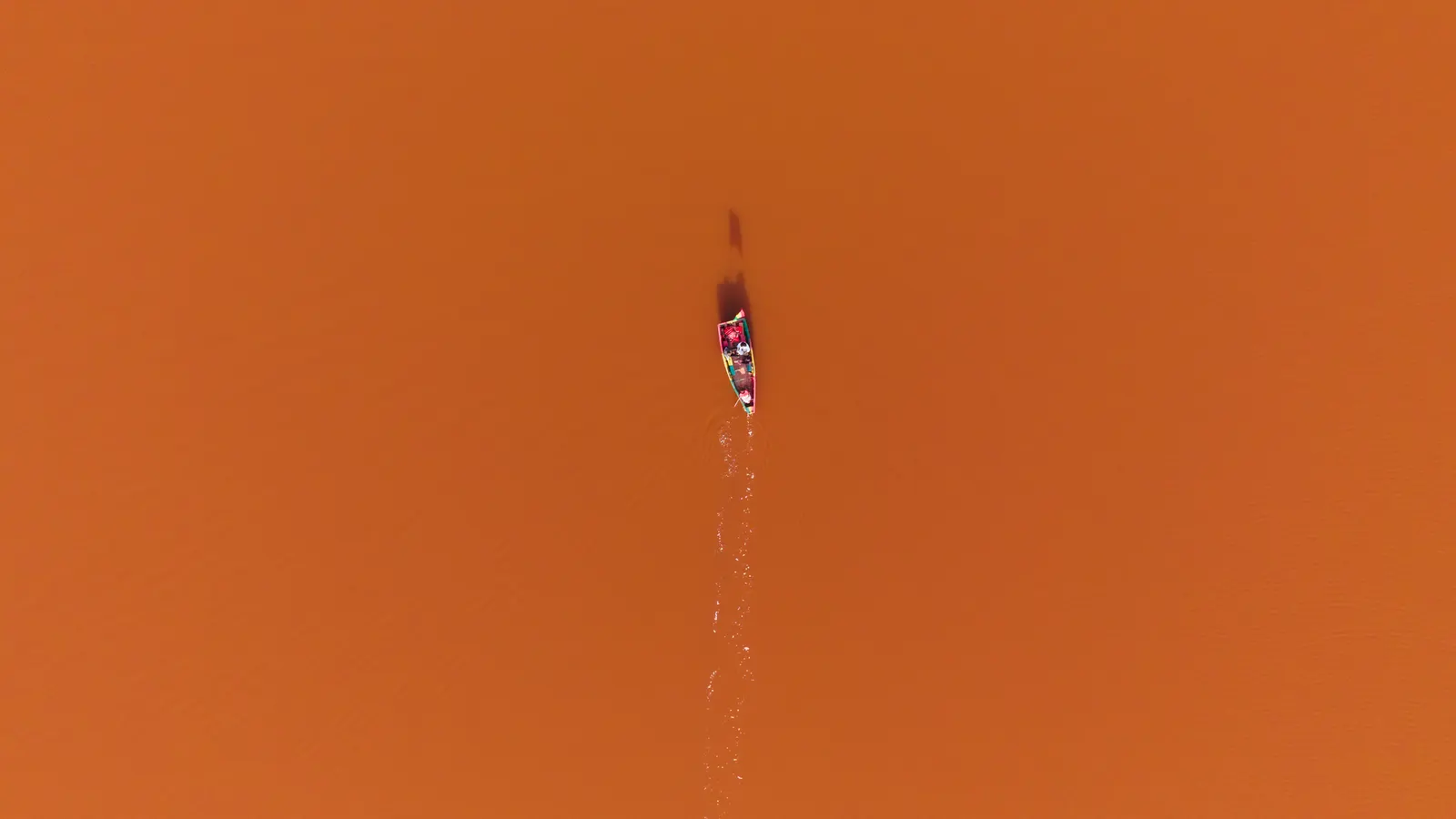
 Christopher Junior · Pexels License
Country Guide № 151 / 194 · Africa
Senegal
Teranga, mbalax and the westernmost point of the African mainland.
“Teranga, mbalax and the westernmost point of the African mainland.”
Senegal built a national identity around teranga - a Wolof word for hospitality that functions as a social contract - and travellers feel it immediately. Dakar is the most musically important city in West Africa, the home of mbalax and of Youssou N'Dour, and its clubs still run until dawn. Offshore, Gorée Island holds the House of Slaves; up the coast, Saint-Louis is a decaying colonial grid on a river island that once governed all of French West Africa.
The country is compact enough to see properly in two weeks. South of Dakar the Sine-Saloum delta braids into mangroves and bird islands; further south again, past the Gambia, the Casamance is greener, wetter and culturally distinct. French is essential outside the capital and Wolof gets you further than either. The dry season runs November to May and is the only sensible time to come.
Chapter 01
Highlights
Gorée Island
A twenty-minute ferry from Dakar to a car-free island of ochre colonial houses and the House of Slaves with its Door of No Return. Historians dispute the volume of trade that passed through here; nobody disputes what it represents.
Saint-Louis
The old capital of French West Africa, on an island in the Senegal river, linked by the Faidherbe bridge. Peeling balconies, a serious jazz festival in May and the Langue de Barbarie sandspit alongside.
Sine-Saloum delta
Mangrove channels, shell-mound islands and enormous bird colonies where the Saloum river meets the Atlantic. Pirogue trips from Toubacouta or Ndangane; the best birding is December to April.
Lac Rose and the Lompoul dunes
The salt lake north of Dakar turns pink when the algae bloom and the salt harvesters are at work, and the Lompoul dunes an hour further on give you Saharan scenery without leaving the coast.
Chapter 02
Entry requirements for Senegal
Checking your passport…
up to 90 days · free entry
90 days on arrival
Before you fly
The detail
- Maximum stay
- up to 90 days
- Fee
- free entry
- Passport validity
- Most destinations want validity beyond your stay, and some want six months. Check yours against the return date.
- Onward travel
- Airlines may ask for a return or onward ticket at check-in.
- Health
- Malaria year-round nationwide. Yellow fever certificate required from endemic countries. Bottled water. Private clinics in Dakar are adequate; anything serious means evacuation.
- Money
- The CFA franc is pegged to the euro at a fixed rate, which makes budgeting unusually predictable. ATMs are common in Dakar, Saint-Louis and Mbour; cards work in hotels and larger restaurants. Carry cash everywhere else.
An American passport enters Senegal without a visa for up to 90 days. There is nothing to apply for, nothing to pay and no online form - a rare thing in this part of the world, and the reason Dakar is the easiest first arrival in West Africa. Senegal briefly reintroduced a tourist visa between 2013 and 2015, abolished it again, and has left the position alone since. The passport must be valid for six months; the officer at Blaise Diagne may ask for proof of onward travel and an address, and the airline will certainly ask for the former at check-in. A yellow fever certificate is demanded from anyone arriving from a country where the disease is endemic and is checked at the border - it is worth carrying regardless, because it is asked for at the land crossings into and out of the neighbouring countries far more readily than at the airport. The 90 days is a single continuous stay rather than a rolling allowance, and an extension is applied for in Dakar at the Direction de la Police de l’Air et des Frontières. Crossing overland to The Gambia or Guinea-Bissau and back is routine and the Senegalese re-entry stamp is free; the "fees" asked for at some road posts are not, and the answer is to ask for a receipt.
Check another destination with this passport →
Entry details: Editorial synthesis - Senegalese Ministry of Foreign Affairs entry rules, Direction de la Police de l’Air et des Frontières (2025–2026) · compiled 18 Sept 2026
Who needs a visa for Senegal
12 common passports| Passport | Requirement | Stay | Process |
|---|---|---|---|
| United States | Visa-free | up to 90 days | No process · €0 / $0 |
| United Kingdom | Visa-free | up to 90 days | No process · €0 / $0 |
| Germany | Visa-free | up to 90 days | No process · €0 / $0 |
| India | Visa-free | up to 90 days | No Other passports record yet |
| China | Visa on arrival | - | No Other passports record yet |
| Brazil | Visa-free | up to 90 days | No Other passports record yet |
| Nigeria | Visa-free | up to 90 days | No Other passports record yet |
| Indonesia | Visa required | - | No Other passports record yet |
| Philippines | Visa on arrival | - | No Other passports record yet |
| Vietnam | Visa required | - | No Other passports record yet |
| Egypt | Visa on arrival | - | No Other passports record yet |
| Nepal | Visa on arrival | - | No Other passports record yet |
Holding a passport that is not listed? The picker above answers for any of them. See where your passport takes you. Source: Passport Index, updated 14 Aug 2026.
Chapter 03
When to go
BestNov–Mar. AvoidJun–Sep.
Dry, warm days, cool nights - peak season.
The band above each month is our editorial verdict - it weighs crowds, prices and access as well as weather. The line is average daily temperature, the bars are monthly rainfall. Select a month for the figures. Climate figures: ERA5 reanalysis via Open-Meteo, 2005–2024 normals.
Chapter 04
What it costs
A day in Senegal
Comfortable · sample day
≈ $76
Line items are real prices we track. The daily budget is an editorial estimate for this level, not their sum.
Where this sits among 244 countries we have costed
Petite Côte resort rates rise from December to February with the European winter trade; Dakar business hotels are steady year-round.
Updated Aug 2026 · Editorial synthesis - market price sampling and published tariffs (2025–2026) · confidence medium
Excludes international flights - they depend on where you fly from.
Chapter 05
Regions to know
5Dakar and Cap-Vert
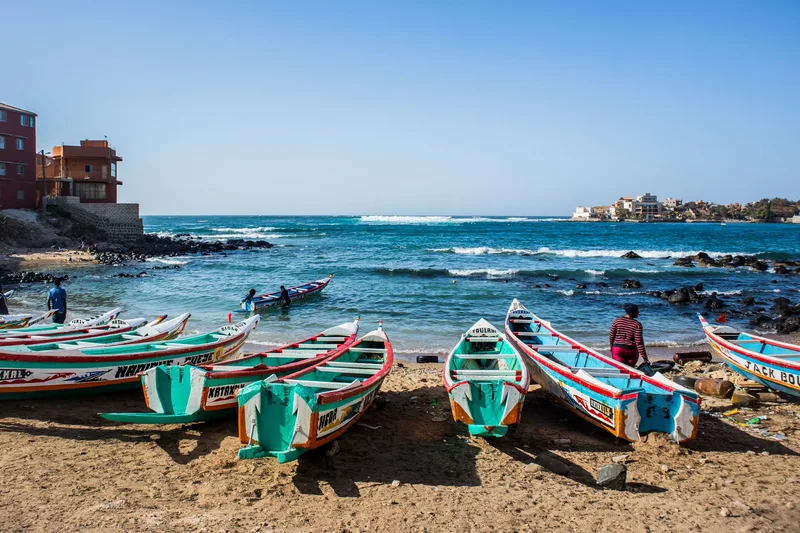
The capital, Gorée, the African Renaissance Monument, Ngor and Yoff surf beaches and Lac Rose to the north.
Saint-Louis and the north
The colonial river city, Djoudj bird sanctuary near the Mauritanian border and the Lompoul dunes on the way back south.
The Petite Côte
Saly, Somone and Joal-Fadiouth - resort beaches an hour and a half from Dakar, and the shell island of Fadiouth.
Sine-Saloum
Mangrove delta, pirogue trips, bird colonies and quiet island lodges.
Casamance
The green south beyond the Gambia - Ziguinchor, the Cap Skirring beaches, Diola villages and palm forest.
Chapter 06
Practical guide
Getting there
Blaise Diagne International, about 45 km from Dakar, is a growing hub with Air France, Brussels Airlines, Turkish, Iberia, TAP, Royal Air Maroc and Delta plus dense West African links. Land borders with Mauritania, Mali, Guinea and the Gambia are open.
Getting around
Sept-place shared Peugeots are the classic inter-city option - cramped, cheap and everywhere. Air Senegal flies Dakar–Ziguinchor and Cap Skirring. The TER commuter rail links central Dakar to Diamniadio, and Dakar Dem Dikk buses cover the city.
Money & costs
The CFA franc is pegged to the euro at a fixed rate, which makes budgeting unusually predictable. ATMs are common in Dakar, Saint-Louis and Mbour; cards work in hotels and larger restaurants. Carry cash everywhere else.
Safety
Dakar has real pickpocketing and phone-snatching, particularly around Place de l'Indépendance, the Medina and the beaches at night. Casamance saw a long low-level separatist conflict - it has been quiet for years, but check advisories and avoid the border zones with Guinea-Bissau.
Health
Malaria year-round nationwide. Yellow fever certificate required from endemic countries. Bottled water. Private clinics in Dakar are adequate; anything serious means evacuation.
SIM & internet
Orange, Free and Expresso; SIMs need passport registration and are sold at the airport. 4G is good in Dakar and along the coast, thinner inland and in the Casamance.
Chapter 07
Driving
Dakar traffic is dense and assertive. Outside the motorway, roads are mixed and night driving is risky - unlit carts and vehicles are common. Police checkpoints are frequent and routine.
Rules change - verify with an official source before you rent.
ExplWorld VerifiedNo verified partners here yet - all 6 country seats are open.
Become ExplWorld Verified →Chapter 08
Itineraries through this country
Chapter 09
From the Journal
Chapter 10
Before you go
SenegalChapter 11
Frequently asked questions
Do I need French?
Effectively yes. Outside Dakar hotels and a handful of tour operators, English is rare. Basic French covers transport, food and negotiation; Wolof greetings - "nanga def", "maangi fi" - open doors disproportionately.
How do I get to the Casamance?
Three options. Flying Dakar–Ziguinchor takes an hour. The overnight ferry from Dakar takes about fifteen hours and is comfortable. Driving means crossing the Gambia twice, with two border formalities each way - slow, and only worth it if you want to stop in Gambia anyway.
Is malaria a real concern?
Yes, nationwide and year-round, with the peak from July to November after the rains. Prophylaxis is standard advice. A yellow fever certificate is required for arrivals from endemic countries and is recommended for everyone.