 Anas Mohamed Nuski · Pexels License
Country Guide № 164 / 194 · Asia
Sri Lanka
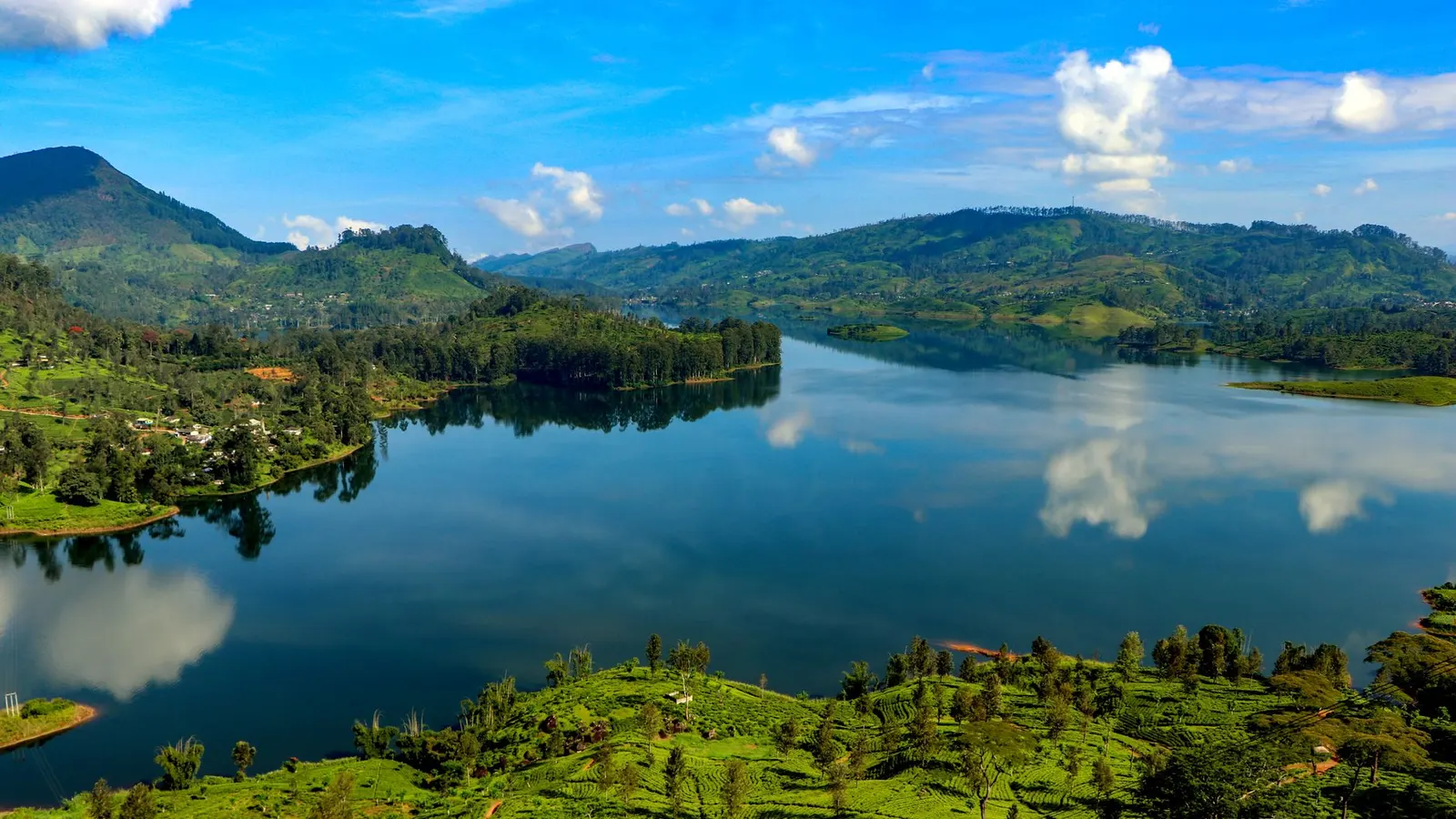
Tea hills, ruined capitals and leopards, all within a four-hour drive.
“Tea hills, ruined capitals and leopards, all within a four-hour drive.”
Sri Lanka's advantage is compression. In a fortnight you can walk a ruined capital at dawn, ride the hill-country train through tea estates, track leopards in a dry-zone park and finish on a south-coast beach - with no internal flights and no leg longer than about five hours. Few countries offer that range at that scale.
The country has been through a great deal recently: the 2019 attacks, the pandemic, and the 2022 economic collapse with its fuel queues and blackouts. It has stabilised, tourism has recovered, and visitor numbers are back near their pre-crisis peak. What has not changed is the two-monsoon system, which means there is always a coast that works - you just have to pick the right one.
Chapter 01
Highlights
The Kandy to Ella train
Seven hours through tea estates and cloud forest, doors open, for a few euros. Book a reserved seat days ahead or take second class unreserved and stand for the good part.
Sigiriya and Polonnaruwa
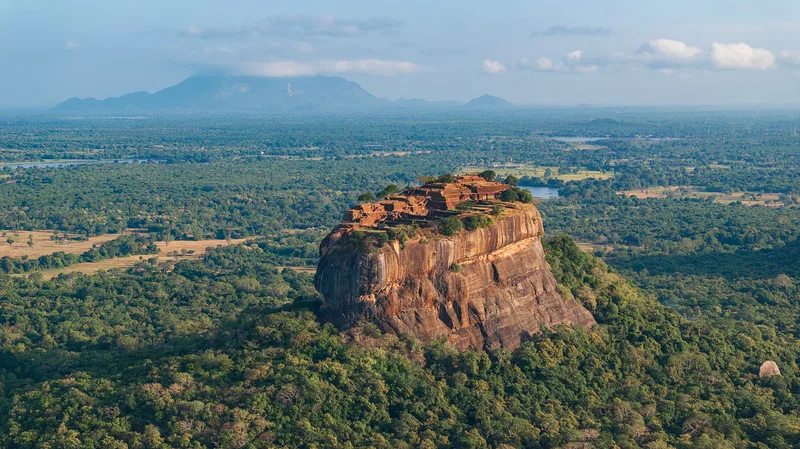
A fifth-century palace on top of a 200-metre rock with frescoes halfway up, and a ruined medieval capital best cycled at first light. The Cultural Triangle is worth three days.
Yala and Wilpattu
Yala has the highest leopard density measured anywhere and the crowds that come with it; Wilpattu is bigger, quieter and better for a slow safari. Go at dawn, book a private jeep.
Galle Fort
A Dutch-walled town on the south coast with ramparts you can walk at sunset, plus the beaches and whale watching at Mirissa an hour east.
Chapter 02
Entry requirements for Sri Lanka
Checking your passport…
up to 30 days · €46 / $50 · travel authorisation
30 days on arrival
Official portal only
Paid look-alike sites charge for a process that is free or cheap on the government portal. Use the link below and nothing else.
www.immigration.gov.lk →Before you fly
The detail
- Maximum stay
- up to 30 days
- Process
- travel authorisation
- Fee
- €46 / $50
- Processing time
- Processing takes 1–3 days - apply with room to spare.
- Passport validity
- Most destinations want validity beyond your stay, and some want six months. Check yours against the return date.
- Onward travel
- Airlines may ask for a return or onward ticket at check-in.
- Arrival form
- ETA approval, printed or on your phone; airlines check it before boarding.
- Health
- Hepatitis A, typhoid and tetanus are standard; rabies and Japanese encephalitis for rural stays. Dengue is common and periodically epidemic - repellent is the practical defence. Malaria was eliminated in 2016 and the country remains malaria-free. Do not drink tap water. Private hospitals in Colombo are good; rural facilities are basic. Insurance covering water sports and safari activity is worth checking.
- Money
- Cash for most transactions; cards work in hotels, larger restaurants and supermarkets. ATMs are widespread and charge €2–3. The rupee moved sharply during the 2022 crisis and has since stabilised, but prices in older guides are badly out of date - assume everything has changed. Tipping around 10 % is normal, and drivers expect a daily tip on top of the rate.
A US passport needs an Electronic Travel Authorisation before boarding: around US$50 for the 30-day double-entry tourist ETA, usually approved within a day and often within the hour. Reach the application from the Department of Immigration and Emigration at immigration.gov.lk rather than from a search result - Sri Lanka has attracted more commercial lookalikes than almost any country in Asia, several of them charging double for the identical document, and the scheme itself changed platform in 2024 after a contested outsourcing, so a bookmark from an earlier trip and half the links you will be offered point somewhere that is not the department. The fee is the part to re-check rather than to budget: it has been waived for lists of large source markets and then restored more than once in two years, so take what the portal actually charges on the day. The stay can be extended to 90 days at the Department of Immigration in Colombo for a further fee, which is much cheaper than leaving and coming back. Passport valid six months, and both an onward ticket and an address for the first night are asked for on the form and sometimes again at the desk. A yellow fever certificate is required only if you are arriving from an endemic country.
Check another destination with this passport →
Entry details: Editorial synthesis - Sri Lanka Department of Immigration and Emigration ETA portal, US State Department country information (2025–2026) · compiled 15 Sept 2026
Who needs a visa for Sri Lanka
12 common passports| Passport | Requirement | Stay | Process |
|---|---|---|---|
| United States | Visa on arrival | - | eTA · €46 / $50 · 1–3 d |
| United Kingdom | Visa on arrival | - | eTA · €46 / $50 · 1–3 d |
| Germany | Visa on arrival | - | eTA · €46 / $50 · 1–3 d |
| India | Visa on arrival | - | eTA · €46 / $50 · 1–3 d |
| China | Visa on arrival | - | eTA · €46 / $50 · 1–3 d |
| Brazil | Visa on arrival | - | eTA · €46 / $50 · 1–3 d |
| Nigeria | Visa required | - | Not this passport's route |
| Indonesia | Visa on arrival | - | eTA · €46 / $50 · 1–3 d |
| Philippines | Visa on arrival | - | eTA · €46 / $50 · 1–3 d |
| Vietnam | Visa on arrival | - | eTA · €46 / $50 · 1–3 d |
| Egypt | Visa on arrival | - | eTA · €46 / $50 · 1–3 d |
| Nepal | Visa on arrival | - | eTA · €46 / $50 · 1–3 d |
Holding a passport that is not listed? The picker above answers for any of them. See where your passport takes you. Source: Passport Index, updated 14 Aug 2026.
Chapter 03
When to go
BestDec–Mar. AvoidOct–Nov.
Peak season on the south and west coasts; dry and warm.
The band above each month is our editorial verdict - it weighs crowds, prices and access as well as weather. The line is average daily temperature, the bars are monthly rainfall. Select a month for the figures. Climate figures: ERA5 reanalysis via Open-Meteo, 2005–2024 normals.
Chapter 04
What it costs
A day in Sri Lanka
Comfortable · sample day
≈ $49
Line items are real prices we track. The daily budget is an editorial estimate for this level, not their sum.
Where this sits among 244 countries we have costed
The two monsoons split the island's high seasons: the south and west peak December to March, the east May to September, and each side discounts sharply when the other is in season. Christmas and New Year on the south coast are the single biggest spike. Site entry fees, train fares and food are fixed year-round; the foreigner tariff at UNESCO sites is a substantial and unavoidable line item.
Updated Aug 2026 · Editorial synthesis - Central Cultural Fund tariffs, Sri Lanka Railways fares, operator sampling (2025–2026) · confidence medium
Excludes international flights - they depend on where you fly from.
ExplWorldSri Lanka
The whole island in one document: the routes we publish, expanded - what a day costs, when to move, and what we would skip.
ExplWorld eBook
Sri Lanka, end to end
Placeholder edition - the finished book is being written.
01Every route we publish through the island, day by day, with the transport named
02What a day actually costs, at three levels, with the street prices behind the figures
03When to go, coast by coast - the two monsoons do not arrive together
04The entry rules as they stand, and where they are checked
€5 / $5Included with MAX
A PDF, delivered the moment the payment clears - by asking for it now you accept that it is not returned or refunded. The guide on this page stays free either way.
Chapter 05
Regions to know
5The Cultural Triangle
Sigiriya's rock fortress, the ruined capitals of Anuradhapura and Polonnaruwa, and the cave temples at Dambulla.
The hill country
Kandy's tooth temple, tea estates around Nuwara Eliya, and Ella with the train line that gets there.
The south coast
Galle Fort's Dutch ramparts, the surf and whale watching at Mirissa and Weligama, and Yala's leopards inland.
The east coast
Trincomalee's harbour, Arugam Bay's point break and Pasikuda's calm water - May to September.
The north
Jaffna's Tamil culture, islands reachable by causeway, and the empty wilderness of Wilpattu on the way up.
Chapter 06
Practical guide
Getting there
Colombo Bandaranaike (CMB) takes direct flights from a few European cities and frequent one-stop connections via the Gulf, Istanbul, Delhi and Singapore. Mattala in the south is barely used. Nearly everyone arrives at Colombo and starts either north into the Cultural Triangle or south along the coast.
Entry formalities
ETA approval, printed or on your phone; airlines check it before boarding.
Getting around
Trains for the scenic legs - Kandy–Ella above all, plus the coastal line south from Colombo. Buses are cheap, frequent and uncomfortable. A car with driver at €45–60 a day is the standard choice for a full loop and includes the driver's costs. Tuk-tuks locally, ideally through the PickMe app. Self-drive is possible with a temporary local permit but rarely worth the paperwork.
Money & costs
Cash for most transactions; cards work in hotels, larger restaurants and supermarkets. ATMs are widespread and charge €2–3. The rupee moved sharply during the 2022 crisis and has since stabilised, but prices in older guides are badly out of date - assume everything has changed. Tipping around 10 % is normal, and drivers expect a daily tip on top of the rate.
Safety
Petty theft, overcharging and the usual gem and tuk-tuk scams are the everyday issues. The genuine hazards are the sea - rip currents on the south and west coasts kill swimmers every year and most beaches are unpatrolled - and the roads, where overtaking on blind bends is standard. Wildlife safaris carry their own risk: elephants near roads in the dry zone are dangerous and a number of fatalities occur annually. Standing advisories are minimal, but confirm before travelling to the far north if that is on your route.
Health
Hepatitis A, typhoid and tetanus are standard; rabies and Japanese encephalitis for rural stays. Dengue is common and periodically epidemic - repellent is the practical defence. Malaria was eliminated in 2016 and the country remains malaria-free. Do not drink tap water. Private hospitals in Colombo are good; rural facilities are basic. Insurance covering water sports and safari activity is worth checking.
SIM & internet
Dialog and Mobitel tourist SIMs cost €5–10 at the airport; eSIM works. 4G covers the whole tourist circuit including the hill country. Wifi is standard in accommodation. Power cuts have largely ended since the crisis but a power bank is still sensible. WhatsApp is universal.
Chapter 07
Driving
The permit paperwork plus the driving culture is why most visitors hire a driver instead. If you do drive, avoid night journeys - unlit vehicles, pedestrians and animals on the road are all common.
Rules change - verify with an official source before you rent.
ExplWorld VerifiedNo verified partners here yet - all 6 country seats are open.
Become ExplWorld Verified →Chapter 08
Itineraries through this country
Chapter 09
From the Journal
Chapter 10
Before you go
Sri LankaChapter 11
Frequently asked questions
Which coast when?
The southwest monsoon runs May to September, so the south and west coasts are best December to March. The northeast monsoon runs October to January, making Trincomalee, Arugam Bay and the east best May to September. The Cultural Triangle and hill country sit between and are workable most of the year, wettest around October and November.
Is it safe now, after the economic crisis?
Yes, for travel purposes. The fuel shortages, blackouts and protests of 2022 have passed, tourism infrastructure is functioning and visitor numbers have recovered. Ordinary caution applies - petty theft, tuk-tuk overcharging, rip currents on the south coast - and the security situation is calm. Check current advisories before booking, as anywhere.
How should I get around?
The trains are the pleasure and cover Colombo, Kandy, Ella, Jaffna and the south coast cheaply; the hill-country line is a destination in itself. Buses go everywhere, cost almost nothing and are crowded and fast. Most visitors hire a car with a driver for €45–60 a day, which for a two-week loop is the practical choice and less than it sounds when split. Tuk-tuks work locally - use PickMe for metered fares.