 kilinson / stock.adobe.com
Country Guide № 192 / 194 · Middle East
Yemen
Tower houses, a dragon-blood forest and one of the world's worst humanitarian crises.
Advisory - travel not recommended · checked 26 Sept 2026
Foreign ministries advise against all travel to Yemen. The country is in an ongoing armed conflict and one of the world's largest humanitarian crises, with kidnapping risk, landmine contamination and no meaningful consular assistance. Standard scores are suspended while this alert is active.
Official advisory →Every advisory in force →“Tower houses, a dragon-blood forest and one of the world's worst humanitarian crises.”
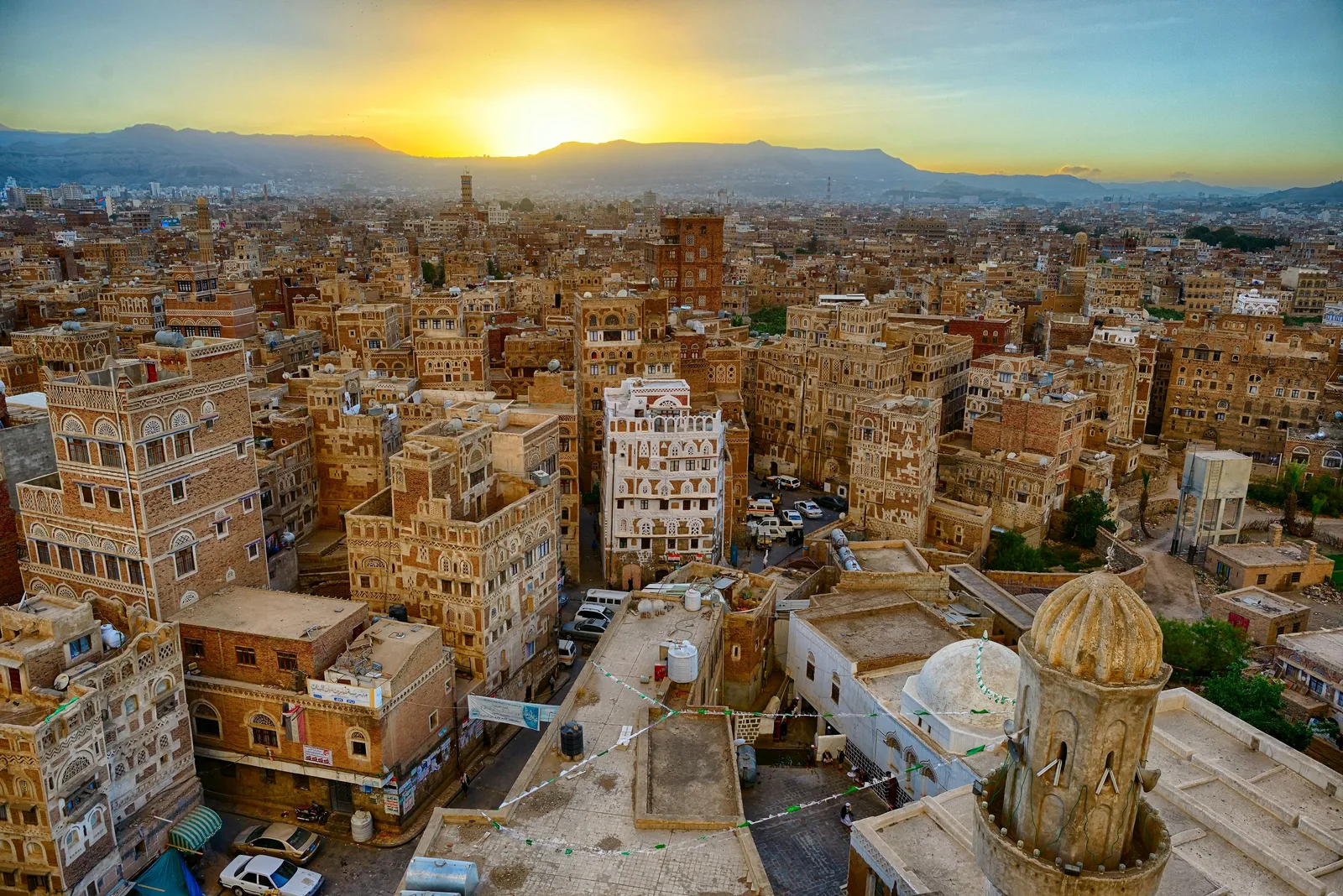
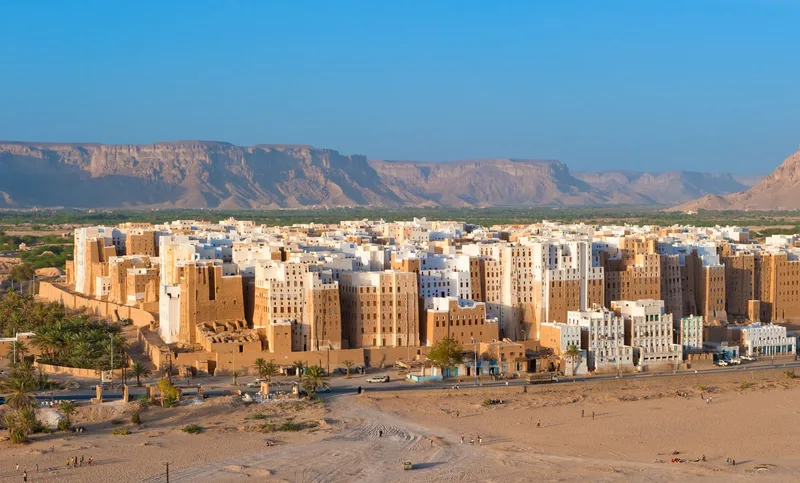
Yemen has architecture found nowhere else - Sana'a's old city of decorated tower houses, some of them centuries old and still lived in, and Shibam's sixteenth-century mudbrick high-rises, called the Manhattan of the desert. Socotra, four hundred kilometres offshore, has flora so isolated that a third of its plant species exist nowhere else, including the dragon-blood tree.
The country has been at war since 2015 and is one of the largest humanitarian crises in the world, with famine conditions in parts of it and infrastructure destroyed. Every foreign ministry advises against all travel. Kidnapping of foreigners has a long history here and continues. Socotra is administered separately and a small number of tour operators run trips there by charter flight from the UAE, which is a genuinely different proposition from the mainland - and still one that carries an advisory.
Chapter 01
Highlights
Socotra
An island of dragon-blood trees, bottle trees and endemic birds, UNESCO-listed, with a third of its plants found nowhere else. Reached by charter flight from Abu Dhabi and camped rather than hotelled.
Sana'a old city
Tower houses of mudbrick and gypsum decoration, some over four hundred years old and still inhabited, in a walled city that is UNESCO-listed and has been damaged by airstrikes and flooding.
Shibam
Sixteenth-century mudbrick tower blocks up to eight storeys high in the Hadhramaut valley - the oldest example of vertical urban planning anywhere, and UNESCO-listed in danger.
The Hadhramaut
A wadi system of palm oases, whitewashed towns at Seiyun and Tarim, and a caravan history that connected the frankincense trade to the Indian Ocean.
Chapter 02
Entry requirements for Yemen
Advisory - travel not recommended · checked 26 Sept 2026
Foreign ministries advise against all travel to Yemen. The country is in an ongoing armed conflict and one of the world's largest humanitarian crises, with kidnapping risk, landmine contamination and no meaningful consular assistance. Standard scores are suspended while this alert is active.
Official advisory →Every advisory in force →Checking your passport…
up to 30 days · €100 / $108 · embassy application
30 days on arrival
Before you fly
The detail
- Maximum stay
- up to 30 days
- Process
- embassy application
- Fee
- €100 / $108
- Processing time
- Processing takes 14–60 days - apply with room to spare.
- Passport validity
- Most destinations want validity beyond your stay, and some want six months. Check yours against the return date.
- Onward travel
- Airlines may ask for a return or onward ticket at check-in.
- Arrival form
- Visa arranged by a local sponsor or operator; Socotra permits are handled separately by the operator.
- Health
- Yemen has had large cholera outbreaks and the health system has largely collapsed; malaria and dengue are present. Routine vaccinations plus hepatitis A and B, typhoid, cholera consideration and rabies. There is no dependable medical care and no evacuation route. On Socotra there is a small hospital and nothing more. Bring everything you might need.
- Money
- Cash in US dollars, brought in. The rial has collapsed and operates at different rates in areas under different control, which is one of the more concrete illustrations of the country's division. No foreign card works anywhere. On Socotra, everything is prepaid through the operator.
There is no ordinary tourist visa for Yemen and a United States passport is not an exception to that. Entry to the mainland rests on a sponsor - an employer, an organisation or an approved operator - and on a security clearance, and it is not a proposition for an independent traveller in any sense the word usually carries. Visas are issued by the internationally recognised government, which controls Aden and Seiyun; Sanaa and its airport are under the control of the de facto authorities, who have detained foreign nationals including United Nations and aid staff, and a visa issued by one side is not a document the other recognises. Socotra is a separate question and is the only part of Yemen that receives visitors in any number: operators arrange the permit and a charter flight, usually from Abu Dhabi, and the island has been largely insulated from the mainland conflict. That permit is arranged by the operator rather than applied for at a mission, which is why anyone considering it should be talking to an operator that has actually run trips recently rather than reading an older account. The figure shown here is an approximation of the order of a consular fee rather than a published schedule; the sponsor’s and the operator’s costs are separate and much larger. The United States has had no embassy in Sanaa since 2015 and provides no consular services anywhere in Yemen: nobody is coming. Standard insurance will not cover any part of a trip here, including Socotra, and evacuation cover for the mainland is effectively unobtainable. An Israeli passport is not admitted to Yemen, and evidence of a visit to Israel in any other passport - an Israeli stamp, an entry or exit card, or a stamp from the Jordanian or Egyptian side of a land crossing that serves only Israel - has been treated as grounds for refusal. Israel stopped stamping passports at Ben Gurion years ago, which removes the commonest form of that evidence and none of the others. And one thing that is not a visa rule and matters more than one of them. An advisory is not the border’s answer and the border’s answer is not permission: whatever Yemen asks for at the counter, it is your own ministry’s current advice that decides what your insurer will cover and what a consulate could do for you, and that advice is revised far more often than any account of visa procedure. Read it in the days before you travel rather than the months before, and read the regional detail rather than the headline. Every foreign ministry advises against all travel to Yemen and several name Socotra explicitly within that advice, which is worth knowing before an operator’s brochure implies otherwise.
Check another destination with this passport →
Entry details: Editorial synthesis - Yemeni mission guidance, Socotra operator practice, foreign-ministry advisories (2025–2026) · compiled 18 Sept 2026
Who needs a visa for Yemen
12 common passports| Passport | Requirement | Stay | Process |
|---|---|---|---|
| United States | Visa required | - | Embassy visit · €100 / $108 · 14–60 d |
| United Kingdom | Visa required | - | Embassy visit · €100 / $108 · 14–60 d |
| Germany | Visa required | - | Embassy visit · €100 / $108 · 14–60 d |
| India | Visa required | - | Embassy visit · €100 / $108 · 14–60 d |
| China | Visa required | - | Embassy visit · €100 / $108 · 14–60 d |
| Brazil | Visa required | - | Embassy visit · €100 / $108 · 14–60 d |
| Nigeria | Visa required | - | Embassy visit · €100 / $108 · 14–60 d |
| Indonesia | Visa required | - | Embassy visit · €100 / $108 · 14–60 d |
| Philippines | Visa required | - | Embassy visit · €100 / $108 · 14–60 d |
| Vietnam | Visa required | - | Embassy visit · €100 / $108 · 14–60 d |
| Egypt | Visa on arrival | - | Embassy visit · €100 / $108 · 14–60 d |
| Nepal | Visa required | - | Embassy visit · €100 / $108 · 14–60 d |
Holding a passport that is not listed? The picker above answers for any of them. See where your passport takes you. Source: Passport Index, updated 14 Aug 2026.
Chapter 03
When to go
BestOct–Mar. AvoidMay–Sep.
Cool and dry; the best season on Socotra and in the highlands.
The band above each month is our editorial verdict - it weighs crowds, prices and access as well as weather. The line is average daily temperature, the bars are monthly rainfall. Select a month for the figures. Climate figures: ERA5 reanalysis via Open-Meteo, 2005–2024 normals.
Chapter 04
What it costs
A day in Yemen
Comfortable · sample day
≈ $97
Line items are real prices we track. The daily budget is an editorial estimate for this level, not their sum.
Where this sits among 244 countries we have costed
Socotra has a hard operating season: the southwest monsoon from roughly June to September brings winds severe enough to close the island to visitors entirely, and charters do not run. October to April is the whole year. Mainland pricing is not a market in any ordinary sense.
Updated Aug 2026 · Editorial synthesis - Socotra operator quotations, charter fares, permit costs (2025–2026) · confidence low
Excludes international flights - they depend on where you fly from.
Chapter 05
Regions to know
5Socotra
The island of dragon-blood trees, endemic flora and empty beaches, administered separately and reached by charter.
Sana'a & the highlands
The tower-house old city, the mountain villages of Haraz and Kawkaban, and terraced agriculture at 2,000 metres.
The Hadhramaut
Shibam's mudbrick towers, Seiyun and Tarim, and the wadi oases running toward the Omani border.
Aden & the south
The volcanic crater port, the colonial-era waterfront, and the coastline running east.
The Tihama & the Red Sea
The coastal plain with its African-influenced architecture, Zabid's UNESCO-listed old town and the Hodeidah port.
Chapter 06
Practical guide
Getting there
Sana'a airport has operated intermittently under restrictions; Aden and Seiyun take limited flights. Socotra is reached by charter from Abu Dhabi, typically weekly and arranged through the operator. Overland entry from Oman has been used at times and from Saudi Arabia is not a route for visitors. Every arrangement depends on the current situation.
Entry formalities
Visa arranged by a local sponsor or operator; Socotra permits are handled separately by the operator.
Getting around
On the mainland, by arrangement with a local operator and with security considerations governing every movement; front lines and checkpoints divide the country between different authorities. On Socotra, by 4WD with a local driver and guide, camping at the beaches and in the wadis - there is very little built accommodation.
Money & costs
Cash in US dollars, brought in. The rial has collapsed and operates at different rates in areas under different control, which is one of the more concrete illustrations of the country's division. No foreign card works anywhere. On Socotra, everything is prepaid through the operator.
Safety
Kidnapping of foreign nationals is the specific and documented risk on the mainland, alongside armed conflict, airstrikes, landmines and unexploded ordnance. There is no consular assistance and no evacuation infrastructure. Socotra has been comparatively insulated from the fighting, but it is remote, has minimal medical facilities and no realistic evacuation option beyond a scheduled charter.
Health
Yemen has had large cholera outbreaks and the health system has largely collapsed; malaria and dengue are present. Routine vaccinations plus hepatitis A and B, typhoid, cholera consideration and rabies. There is no dependable medical care and no evacuation route. On Socotra there is a small hospital and nothing more. Bring everything you might need.
SIM & internet
Mobile networks function intermittently on the mainland and are subject to shutdowns and to control by different authorities. Socotra has limited and slow connectivity, with satellite the practical option for anything reliable. Assume you are offline.
Chapter 07
Driving
On the mainland, checkpoints operated by different authorities and active front lines govern all movement. On Socotra the roads are limited, mostly unpaved beyond the main route, and a 4WD with a local driver is both required and sensible.
Rules change - verify with an official source before you rent.
ExplWorld VerifiedNo verified partners here yet - all 6 country seats are open.
Become ExplWorld Verified →Chapter 08
Itineraries through this country
Chapter 09
From the Journal
Chapter 10
Before you go
YemenChapter 11
Frequently asked questions
Is Socotra genuinely visitable?
A small number of operators run trips there on charter flights from Abu Dhabi, and it has been largely insulated from the mainland war. It still carries an all-travel advisory from most governments, ordinary insurance will not cover it, and there is no consular presence. People go, in small numbers, camping and with local guides. That is a description, not a recommendation.
What about the mainland?
Every foreign ministry advises against all travel. The war continues, kidnapping of foreigners has a long and current history, unexploded ordnance and mines are widespread, and much of the country is in humanitarian crisis. There is essentially no consular assistance. A handful of journalists and aid workers operate there with organisational security; independent travel is not a reasonable proposition.
What does the humanitarian situation mean for a visitor?
That the country is not in a position to host tourism and that resources - food, fuel, medical supplies, water - are scarce for the people who live there. Anyone who does go should understand that they are consuming from a constrained supply, and should be travelling with an operator that sources responsibly rather than one that does not think about it.