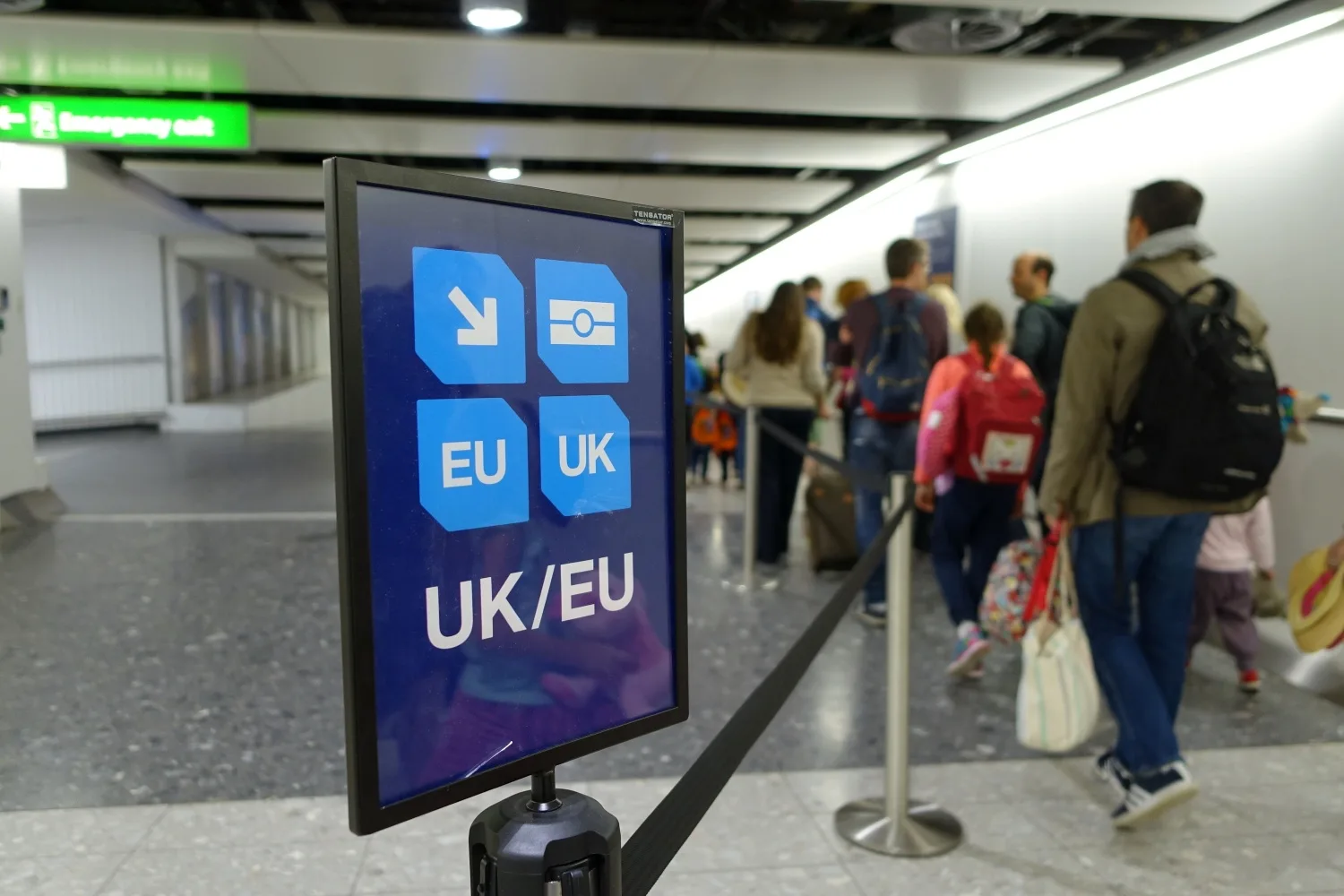
 1000 Words / stock.adobe.com
Report · Borders & Mobility
The Window Moves With You
Ninety days in any hundred-and-eighty. Not per visit, not per half-year, and it does not reset when you leave. The rolling window is stated in one line and miscounted by almost everyone who relies on it.
The short-stay rule for the Schengen area is stated in one line and misunderstood by almost everyone who relies on it. Ninety days in any hundred-and-eighty-day period. Not ninety days per visit; not ninety days per calendar half-year; not ninety days that reset when you leave. It is a rolling window, and the arithmetic it demands is the reason so many otherwise careful travellers overstay by accident.
What "rolling" means
Pick any day on which you are inside the area. Look back over that day and the 179 days before it. Count every day you were physically present in the area during that window, including the day you arrived and the day you left - both count as whole days, however brief, so a flight landing at 23:40 has used a day. If the total exceeds ninety, you are in breach on that day. The test is applied on every day of presence, not once per trip and not at the border only.
The consequence people miss is that the allowance regenerates gradually rather than all at once - the earliest days drop out of the window one at a time, exactly 180 days after each was used. Someone who spent January to March inside the area gets January’s days back through July, one per day, not as a block in April. A full ninety-day block followed by a full ninety-day absence does, in fact, permit another consecutive ninety - but with zero margin on every single day of it, because each new day spent is covered only by one old day expiring.
This is why the pattern that feels natural - three months in, three months out, repeat - works only if the blocks are exact and the travel days are counted correctly, and breaches immediately the moment a trip runs a few days long or a return is brought forward. A pattern that is legal with zero margin is a pattern that one cancelled flight makes illegal.
The window moves with you. Every day abroad returns exactly one day, and it returns it 180 days late.
What counts as presence
Every day inside the Schengen area on any short-stay basis counts, regardless of which country. The area is a single space for this purpose: three weeks in Spain and three weeks in Poland are six weeks against the same allowance, and crossing an internal border neither resets nor records anything. Days spent in an EU country outside Schengen do not count against it, and days spent in a Schengen state under a national long-stay visa or residence permit are governed by that permit instead, not by the short-stay rule.
Transit airside without entering does not count. Being refused entry does not count. Days spent in the area while a residence application is pending depend entirely on the national rule under which you were permitted to remain, which is a question for that country rather than for the general rule.
The bilateral visa-waiver agreements that predate Schengen are the genuine complication. Several member states have old treaties with particular countries that some authorities read as granting additional time beyond the ninety days, on a bilateral basis, for that state alone. The interpretation is not uniform between member states, it has been litigated, the Commission and some national authorities disagree about it, and relying on it without confirming the position in writing with the specific member state is a bad idea - the person who applies the rule to you is a border officer, not a treaty lawyer.
The consequences of getting it wrong
They scale with the length of the overstay and with the officer’s discretion, and the discretion is narrowing as the record improves. A short overstay may produce a warning, a fine, or a note. A longer one can produce an entry ban of one to several years, recorded against the passport and enforced across the whole area rather than by the state that imposed it. An overstay discovered at a later entry attempt is worse than one declared at exit.
The knock-on effects are the ones people underestimate. A recorded overstay is a question on subsequent visa applications for other countries entirely, and answering it wrongly is a separate and more serious problem than the overstay was.
How to count without getting it wrong
Keep a dated list of every entry and exit, and recalculate before booking rather than at the airport. Use one of the official calculators - the European Commission publishes one - and re-run it for your intended departure date as well as your arrival date, because the breach can occur mid-trip on a day you had not thought about. Build in a margin of several days: strikes, cancellations, volcanic ash and illness have all turned a compliant itinerary into an overstay, and "my flight was cancelled" is a mitigation rather than a defence.
If you are close to the limit and something goes wrong, go to the immigration authority before the deadline rather than after it. Several member states can extend a stay for force majeure on evidence - whether and how depends entirely on the state you are in - and none will do it retrospectively for someone who has already overstayed.
Sources
- European Commission short-stay calculator
The official calculator of travel days under the 90/180 rule - search “Schengen calculator of travel days”; run it for the intended departure date as well as arrival.
- Schengen Borders Code, Regulation (EU) 2016/399, Article 6
The legal text of the ninety-days-in-any-180 rule, on EUR-Lex.