 Pavel Losevsky / stock.adobe.com
Report · Travel & Money · Borders & Mobility
Thirty Units and a Closed Window
Most of the world folded departure tax into the ticket. In the places that did not, a small cash payment at a specific window in a specific currency stands between a passenger and their flight - and the desk closes before the gate does.
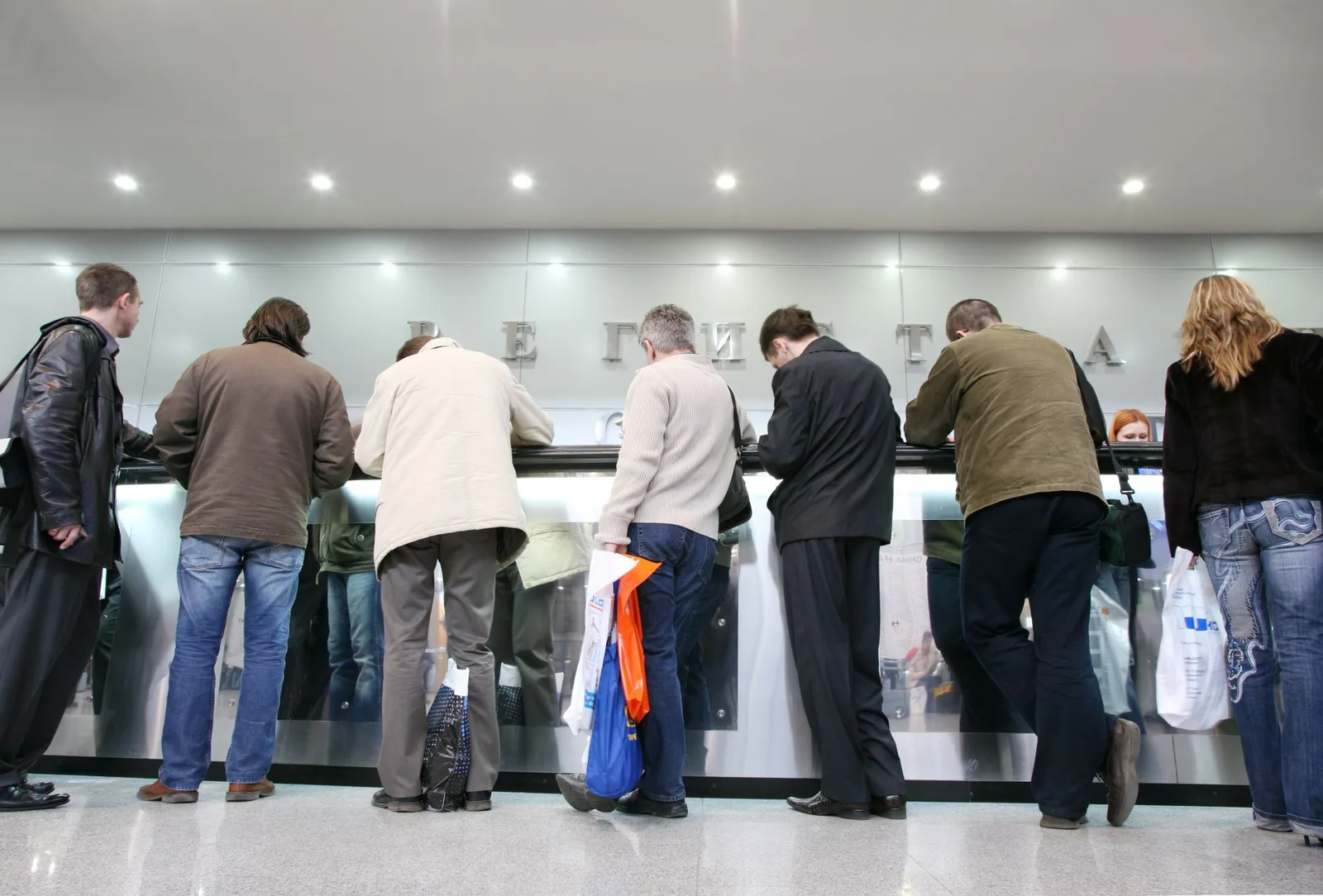
Most of the world folded its departure tax into the ticket decades ago. A minority did not, and in those places you cannot board without paying a charge at the airport itself - in cash, in a specific currency, at a specific window, sometimes before you can check in. It is a small amount of money attached to a very large consequence, and it is the most avoidable way to miss a flight.
Why the counter survives
Collecting through the ticket requires an agreement with the airlines and a settlement mechanism that returns the money to the aviation authority. Where the authority is small, where carriers are few, or where the government wants the revenue in hard currency and directly rather than through a foreign airline’s accounting department, the counter is simply easier. Several countries have both: the tax is in the ticket for scheduled international flights and payable at the desk for charters, regional carriers or departures from secondary airports.
The charge also comes in more than one flavour, and they stack. There is the departure tax proper, a passenger service or airport development charge, and - increasingly - an environmental or tourism levy on top. Some are payable by everyone; some exempt transit passengers, children, diplomats, crew or holders of a residence permit, and the exemption is only granted if you can evidence it at the window.
It is thirty units of currency standing between a passenger and a flight, and the desk that takes it closes before the gate does.
The currency problem
This is where it bites. A number of these charges are payable in United States dollars only, or in local currency only, and the airport exchange counter is on the wrong side of the barrier or has a queue longer than the check-in. Card acceptance at these desks is inconsistent and the terminal being out of service is not a rare event - these are frequently the least-maintained payment points in the building.
The traveller who spent their last local notes on a taxi to the airport, on the reasonable assumption that they were leaving the country and would not need them, is the classic case. The second classic case is the traveller who has the money in the correct currency but only in a large denomination, at a window with no change.
Where else the same trap appears
Two related charges deserve identical treatment even though they are not departure taxes. Overland border crossings frequently levy an exit fee, in cash, at a window with no alternative and often with no signage in any language you read. And reciprocity fees, where they still exist, are charged to nationals of specific countries - the amount mirrors what that country charges the issuing state’s citizens - some at an airport counter on arrival, some as a mandatory online prepayment the airline checks before boarding.
Ferry terminals and small international airports are the other recurring locations. In all of these the amount is trivial, the alternative is nonexistent, and the failure mode is a missed departure with no refund.
The rule to travel by
Before the outbound flight, check whether the country you are entering charges on departure, in what currency, and whether it is included in your ticket. Airlines list this inconsistently and travel agents frequently do not know; the airport authority’s own site is the more reliable source, and a recent traveller report is the more current one.
If it is a counter payment, set that exact amount aside on arrival, in the required currency, in small notes, in a separate pocket of the bag, and do not spend it under any circumstances. Add a margin, because these charges are revised without much notice. Keep the receipt - some airports check it at more than one point, and the second check is usually the one at the gate.
Sources
- The airport authority of the departure airport
Whether a departure charge is collected at a counter, in which currency and from whom is published by the airport operator - airlines list it inconsistently.