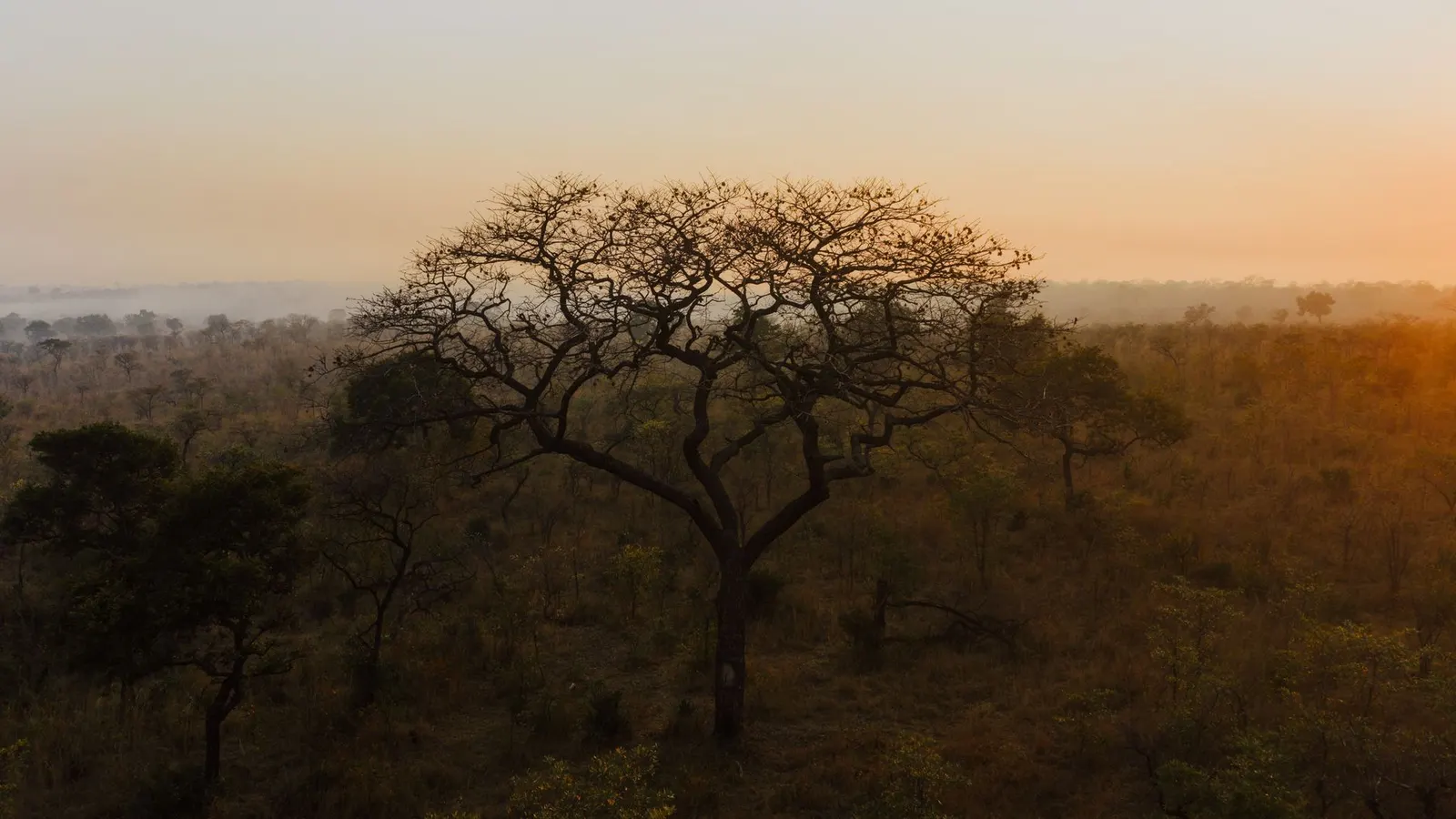
 K · Pexels License
Country Guide № 033 / 194 · Africa
Central African Republic
Dzanga Bai, where a hundred forest elephants gather in one clearing - behind a conflict advisory.
Advisory - travel not recommended · checked 26 Sept 2026
The US and Australia advise against ALL travel to the Central African Republic, and the UK against all travel outside Bangui and all but essential travel to the capital itself. Armed groups control substantial territory, banditry affects intercity roads and violence recurs in Bangui. The Dzanga-Sangha reserve in the southwest has stayed comparatively stable and is reached by charter or via Cameroon, but the country around it has not. Standard scores are suspended while this alert is active.
Official advisory →Every advisory in force →“Dzanga Bai, where a hundred forest elephants gather in one clearing - behind a conflict advisory.”
Dzanga Bai in the southwestern rainforest is a mineral clearing where up to a hundred forest elephants gather at once, watched from a wooden platform a few metres away - an experience with no equivalent anywhere. The surrounding Dzanga-Sangha reserve also has habituated western lowland gorillas, and BaAka trackers whose knowledge of the forest underpins the whole operation. It is UNESCO-listed and, remarkably, has kept functioning through everything.
The rest of the country has been in conflict since 2013. Armed groups control large areas, the state has limited reach outside Bangui, and most governments advise against all travel. The Dzanga-Sangha reserve is reached by charter flight from Bangui or overland from Cameroon and has operated as an island of stability, which is why it appears here at all. Nothing about this country is casual travel.
Chapter 01
Highlights
Dzanga Bai
A forest clearing where up to a hundred forest elephants gather at once to drink mineral-rich water, watched from a platform. Sitatunga, bongo and forest buffalo use it too. There is nothing comparable in Africa.
Dzanga-Sangha gorillas
Habituated western lowland gorilla groups tracked on foot with BaAka guides through dense forest - a different and harder experience than the mountain gorilla parks further east.
BaAka forest walks
Net hunting and forest-knowledge walks with BaAka communities, whose tracking skill is what makes the gorilla habituation possible. Arranged through the reserve on terms negotiated with the communities.
Chutes de Boali
A 50-metre waterfall on the Mbali river a couple of hours from Bangui - accessible in principle, and subject to whatever the current security picture allows.
Chapter 02
Entry requirements for Central African Republic
Advisory - travel not recommended · checked 26 Sept 2026
The US and Australia advise against ALL travel to the Central African Republic, and the UK against all travel outside Bangui and all but essential travel to the capital itself. Armed groups control substantial territory, banditry affects intercity roads and violence recurs in Bangui. The Dzanga-Sangha reserve in the southwest has stayed comparatively stable and is reached by charter or via Cameroon, but the country around it has not. Standard scores are suspended while this alert is active.
Official advisory →Every advisory in force →Checking your passport…
up to 30 days · €130 / $140 · embassy application
30 days on arrival
Before you fly
The detail
- Maximum stay
- up to 30 days
- Process
- embassy application
- Fee
- €130 / $140
- Processing time
- Processing takes 14–45 days - apply with room to spare.
- Passport validity
- Most destinations want validity beyond your stay, and some want six months. Check yours against the return date.
- Onward travel
- Airlines may ask for a return or onward ticket at check-in.
- Health
- Yellow fever certificate compulsory for entry. Malaria year-round nationwide. Medical facilities are minimal even in Bangui; the reserve is days from a hospital. Specialist evacuation insurance covering an against-all-travel country is essential.
- Money
- CFA franc, pegged to the euro. Cash only in practice. ATMs in Bangui are limited. Bring euros in cash for the whole trip, including reserve fees where the operator requires it.
Foreign ministries advise against all travel to the Central African Republic - armed groups control substantial territory, banditry affects the intercity roads and violence recurs in Bangui - and that advice, not the visa, is the governing fact about going. Ordinary travel insurance will not cover it and consular assistance is thin. On the paperwork: a United States passport needs a visa arranged in advance at a Central African mission, there is no online route and nothing is issued at the airport. The real gate is neither the fee nor the processing window: it is the letter of invitation or guarantee from somebody inside the country, and a mission will not open the file without it. Where a lodge, a reserve or a tour operator is hosting you they issue one as a matter of routine and the rest is ordinary paperwork; where nobody is hosting you there is nothing to send, and no amount of money or lead time repairs that. In practice the invitation comes from a registered host or, for the small number of visitors who come for the forest rather than for work, from the Dzanga-Sangha reserve in the southwest, which is the one part of the country that has stayed comparatively stable and which is reached by charter or overland via Cameroon. A yellow fever certificate is a condition of entry to Central African Republic for every arriving traveller, not only for those coming from an affected country, and it is checked at the airline gate as often as at the border. The vaccine does not count until ten days after it is given, so this is the item to deal with first and not last; a certificate that is missing at check-in cannot be fixed at check-in, and at the border the choice is being vaccinated there at your own cost or being turned round. Expect six weeks rather than two, and treat the fee stored here as an approximation rather than a schedule: it varies by mission and by category and is not published as a single tariff. Visitors must register with the authorities on arrival. Carry six months of passport validity, a return ticket and several photocopies of everything. One logistical note that follows from the route: operators bringing visitors through Cameroon handle the Cameroonian visa as well, and that is a second application with its own timeline, so the two are planned together rather than in sequence.
Check another destination with this passport →
Entry details: Editorial synthesis - Central African consular requirements, Dzanga-Sangha reserve access practice, foreign ministry travel advisories (2025–2026) · compiled 18 Sept 2026
Who needs a visa for Central African Republic
12 common passports| Passport | Requirement | Stay | Process |
|---|---|---|---|
| United States | Visa required | - | Embassy visit · €130 / $140 · 14–45 d |
| United Kingdom | Visa required | - | Embassy visit · €130 / $140 · 14–45 d |
| Germany | Visa required | - | Embassy visit · €130 / $140 · 14–45 d |
| India | Visa required | - | Embassy visit · €130 / $140 · 14–45 d |
| China | Visa required | - | Embassy visit · €130 / $140 · 14–45 d |
| Brazil | Visa required | - | Embassy visit · €130 / $140 · 14–45 d |
| Nigeria | Visa required | - | Embassy visit · €130 / $140 · 14–45 d |
| Indonesia | Visa required | - | Embassy visit · €130 / $140 · 14–45 d |
| Philippines | Visa required | - | Embassy visit · €130 / $140 · 14–45 d |
| Vietnam | Visa required | - | Embassy visit · €130 / $140 · 14–45 d |
| Egypt | Visa required | - | Embassy visit · €130 / $140 · 14–45 d |
| Nepal | Visa required | - | Embassy visit · €130 / $140 · 14–45 d |
Holding a passport that is not listed? The picker above answers for any of them. See where your passport takes you. Source: Passport Index, updated 14 Aug 2026.
Chapter 03
When to go
BestDec–Feb. AvoidApr–Oct.
Dry season; the best bai viewing and firm forest tracks.
The band above each month is our editorial verdict - it weighs crowds, prices and access as well as weather. The line is average daily temperature, the bars are monthly rainfall. Select a month for the figures. Climate figures: ERA5 reanalysis via Open-Meteo, 2005–2024 normals.
Chapter 04
What it costs
A day in Central African Republic
Comfortable · sample day
≈ $227
Line items are real prices we track. The daily budget is an editorial estimate for this level, not their sum.
Where this sits among 244 countries we have costed
The reserve operates through the dry season from December to February and again in shorter windows; Bangui pricing is institutional and steady.
Updated Aug 2026 · Editorial synthesis - Dzanga-Sangha reserve tariffs and operator quotes (2025–2026) · confidence low
Excludes international flights - they depend on where you fly from.
Chapter 05
Regions to know
5Bangui
The riverside capital on the Ubangi facing the DRC, the national museum and the market.
Dzanga-Sangha
The southwestern rainforest - Dzanga Bai, the gorillas, the BaAka communities and Bayanga.
The southwest corridor
Berbérati, Nola and the road towards Cameroon that most operators use to reach the reserve.
The centre
Boali falls, Bambari and the savanna belt - largely inaccessible under the current situation.
The north and east
Manovo-Gounda St Floris, once a great savanna park and now a UNESCO site in danger, and the Sudanese and Chadian border regions. No visitor access.
Chapter 06
Practical guide
Getting there
Bangui M'Poko is served by Air France, Ethiopian, ASKY, Camair-Co and Kenya Airways, with irregular schedules. The overland route to Dzanga-Sangha from Douala in Cameroon is the alternative many operators prefer.
Getting around
Charter flights and operator-arranged vehicles. Road travel between regions carries serious risk and much of the network is unusable in the rains. There is no general-purpose transport a visitor should rely on.
Money & costs
CFA franc, pegged to the euro. Cash only in practice. ATMs in Bangui are limited. Bring euros in cash for the whole trip, including reserve fees where the operator requires it.
Safety
Armed conflict, banditry on intercity roads and periodic violence in Bangui. Most governments advise against all travel. Consular capacity is minimal. Photography of officials and government buildings is prohibited and enforced.
Health
Yellow fever certificate compulsory for entry. Malaria year-round nationwide. Medical facilities are minimal even in Bangui; the reserve is days from a hospital. Specialist evacuation insurance covering an against-all-travel country is essential.
SIM & internet
Orange, Telecel and Moov; SIM registration requires a passport. Coverage in Bangui and a few towns. The reserve relies on satellite.
Chapter 07
Driving
Self-driving is not a realistic option. Roads outside Bangui carry banditry and armed-group risk, and most become impassable in the rains. Movement is arranged by operators.
Rules change - verify with an official source before you rent.
ExplWorld VerifiedNo verified partners here yet - all 6 country seats are open.
Become ExplWorld Verified →Chapter 08
Itineraries through this country
Chapter 09
From the Journal
Chapter 10
Before you go
Central African RepublicChapter 11
Frequently asked questions
How do people reach Dzanga-Sangha?
Either a charter flight from Bangui to Bayanga, or overland from Cameroon via Douala and the Sangha river - the latter is what many operators use, since it avoids most of the country entirely. Both are arranged through the reserve or a specialist operator. Independent arrival is not realistic.
What is the security situation?
Armed groups control substantial territory, and most governments advise against all travel to the entire country. Bangui has periodic violence. Dzanga-Sangha has remained comparatively stable and protected, but the corridor to it and the country around it have not. This is a trip with a real risk premium.
What does it cost?
A Dzanga-Sangha trip runs to several thousand euros per person for a week, driven by the charter flight, the reserve fees, the gorilla permits and the lodge. The elephants at the bai are, by common account, worth it - but there is no inexpensive version.