 Eleseus / stock.adobe.com
Report · Culture & Place · Australia
The Sign Stood for Decades
The list of things a visitor may do at significant sites is getting shorter, and crowd management is not the reason. The recurring shape of these closures, and why "but it was allowed before" is not the argument it sounds like.
A number of well-known landmarks can no longer be climbed, entered or photographed, and in almost every case the restriction arrived at the request of the people for whom the place is sacred. The pattern is consistent enough to be worth stating as a general fact about travel: the list of things a visitor may do at significant sites is getting shorter, and at the best-known of these places the reason is not crowd management.
The recurring shape
A site holds religious or ancestral significance for a community. It becomes a visitor attraction, often during a period when the community had no standing in the matter and was not asked. The community requests - sometimes for decades - that a particular activity stop. The request is treated as advisory and posted as a courtesy, which a minority of visitors ignore precisely because it is phrased as a request. Eventually the managing authority, frequently after the community gains a formal role in management, converts it into a prohibition.
Uluru is the best-documented example: the request not to climb was made and posted for many years before the climb was closed by the park’s board of management in 2019, at the request of the Anangu traditional owners, who had by then held a majority on that board for a long time. The closure was not a change of position. It was the same position, finally attached to an authority that could enforce it.
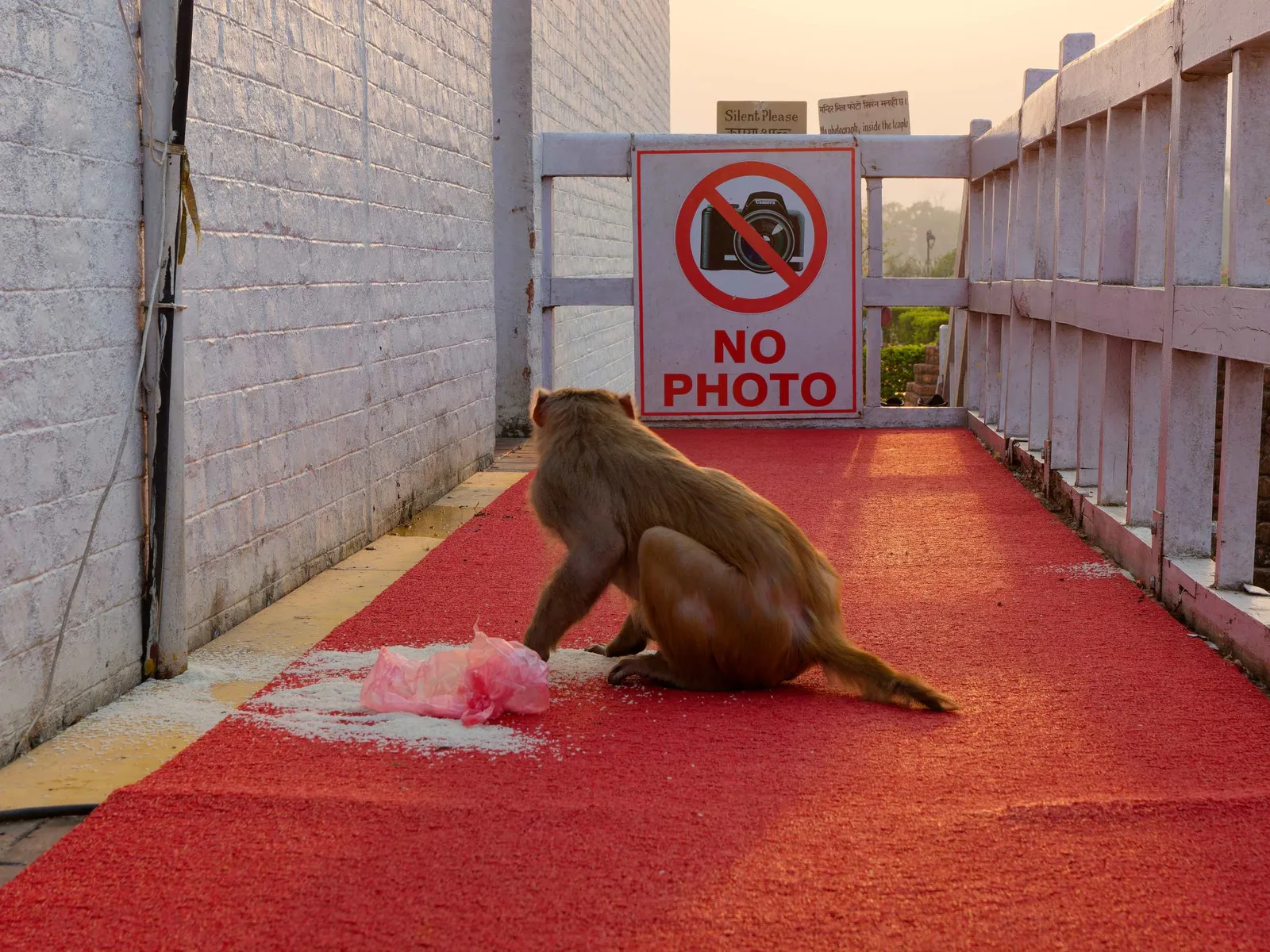
The pattern repeats at maunga and marae in New Zealand, at sites across the American Southwest, at mountains in Japan and the Himalaya, at caves and rock art across Australia and southern Africa, and inside temples, mosques and monasteries where photography, entry to particular rooms, or presence during particular hours has been restricted.
The sign asking people not to climb stood for decades. It became a rule with a penalty because signs are advice and a minority treated it as such.
Why "but it was allowed before" is not an argument
Because the permission was never the community’s to grant or withhold at the time it was given. Most of these sites were opened to visitors under an administration in which the people with the strongest claim had no legal standing, no property right and frequently no vote. A restriction imposed later is not a new rule taking something away; it is the original position being given effect once somebody was obliged to listen to it.
The related objection - that a natural feature cannot belong to a belief system, or that a rock is a rock - misunderstands what is being asked. Nobody is being asked to share the belief. They are being asked to respect a request made by the people whose place it is, which is the same standard applied without argument to a cathedral, a war grave, a mosque or a private garden. The asymmetry in who gets that courtesy without having to argue for it is the thing worth noticing.
There is a practical argument as well, and at some sites it is the operative one: erosion, damage to rock art from touch and from breath, and a genuine safety record that made a route indefensible to keep open.
How to visit these places
Read the specific rules for the specific site, because they are specific rather than general: photography may be permitted from one direction and not another, a path may be open and a summit closed, a season may be restricted around ceremony, a particular formation may be the point rather than the whole massif. Assume nothing transfers from the last place you visited.
Take a guide from the community where one is offered. This is nearly always the best version of the visit as well as the correct one - the interpretation is not available from any other source, and the fee is the mechanism by which the site’s custodians get something from the visit.
Do not photograph people at prayer without asking. Do not fly a drone anywhere near any of this. And do not take anything, including stones and sand: the return post to several parks worldwide receives a steady flow of parcels from people who did and then thought better of it, often years later, and the objects cannot be put back where they came from.
Sources
- Parks Australia - Uluru-Kaṯa Tjuṯa National Park
The board of management publishes the park rules and the record of the 2019 climb closure at the Anangu traditional owners’ request.
- The managing authority of the specific site
Photography directions, closed areas and seasonal restrictions are site-specific and current only at the source.