Journal
Reports, analyses and features from all 194 countries - the journalism behind the journeys.
Count the Lit Windows
A historic centre on a Tuesday evening in February, and the arithmetic that emptied it. Nobody decided to hollow out the old town; several thousand owners each decided, correctly, that visitors pay more than neighbours.

The Way In Without Paying
Nearly every major public museum has a mechanism for getting in free, and almost none advertise it. The four models, why they follow the funding rather than the wealth, and the arithmetic that decides whether a city pass is worth buying.
A City Built for the People Who Live in It
Proximity planning is a policy about residents that has quietly become the best thing to happen to walking around a strange city - and the reason a hire car will collect a fine four weeks after you returned it.
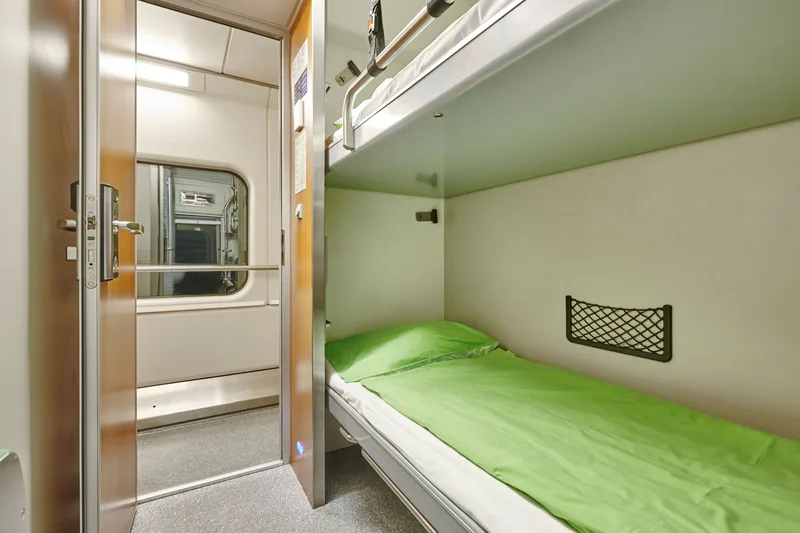
One Bed Per Night
Europe spent twenty years closing its night trains and a decade reopening some of them. Both decisions were rational on the numbers of their time, which is why the network that came back is the shape it is.
The Plaque and the Tenancy
A World Heritage inscription protects the fabric of a town and advertises its address. The management plan is written about stone by people with no housing budget, which is why so many listed places keep their façades exactly and lose their inhabitants gradually.

The Lever a Planning Committee Already Has
A city cannot cap arrivals without a border. It can cap beds with a planning committee - and a growing number have. What a bed cap reaches, what it misses entirely, and where the value moves when it lands.
The Village Learns at the Premiere
A production spends three weeks in a valley and leaves. What arrives afterwards is set by a release schedule rather than a season, lands on a single hillside, and is captured by the village or by nobody depending on one variable.
What Reaches the Quayside
A single ship can put several thousand people ashore in a morning and remove them six hours later. The arguments are usually anecdotal; the arithmetic is not, and it explains why berthing caps have spread faster than bans.

Four Instruments and a Housing Market
Registration, night caps, zone refusals and principal-residence rules. The anatomy of short-let regulation, why an unlicensed listing is the guest’s risk rather than the host’s, and what an enforcement action does to a booking.
A Hundred People in One Alley
Overtourism sounds like a quantity problem. Nearly every measured case is a concentration problem - a few streets, a few days, an afternoon peak set by twenty scheduling decisions. Including, this magazine should admit, decisions like ours.

The Fee That Was Never About the Money
Venice became the first major city to charge day visitors for entering it. The amount is trivial, the revenue is small, and the residents are unconvinced. What the scheme actually produced was advance notice of who is coming - the one number the city never had.