Journal
Reports, analyses and features from all 194 countries - the journalism behind the journeys.
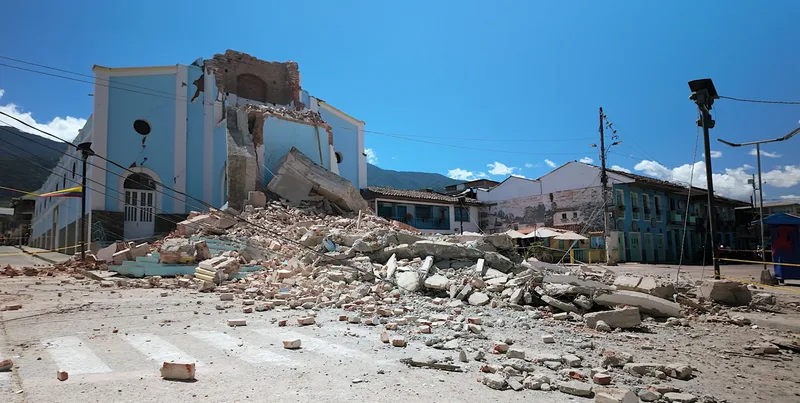
An Earthquake Without Borders
Colombia shook from a depth of more than a hundred kilometers. Venezuela still lives in the shadow of two shallow quakes. Geologically, no tectonic domino links them - yet in human terms they expose the same truth: magnitude alone does not make a disaster; the society it strikes does.
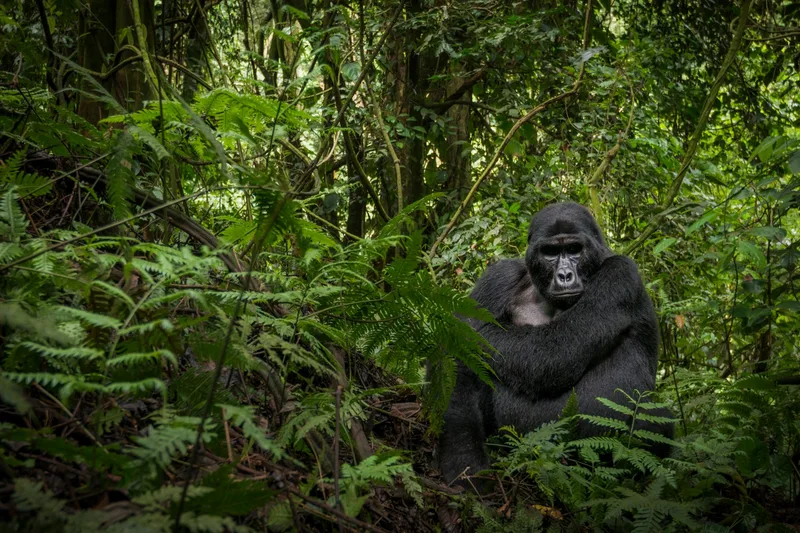
The Border the Gorillas Ignore
Roughly a thousand mountain gorillas live across three countries: one at war and under an Ebola emergency, one that has just ended its own outbreak, and one selling the world’s most expensive wildlife permit. A thousand kilometers west, their lowland cousins can be visited in three more countries including the forest where Ebola once killed five thousand of them. What a visit in 2026 actually involves, what it costs and what it costs the animals.
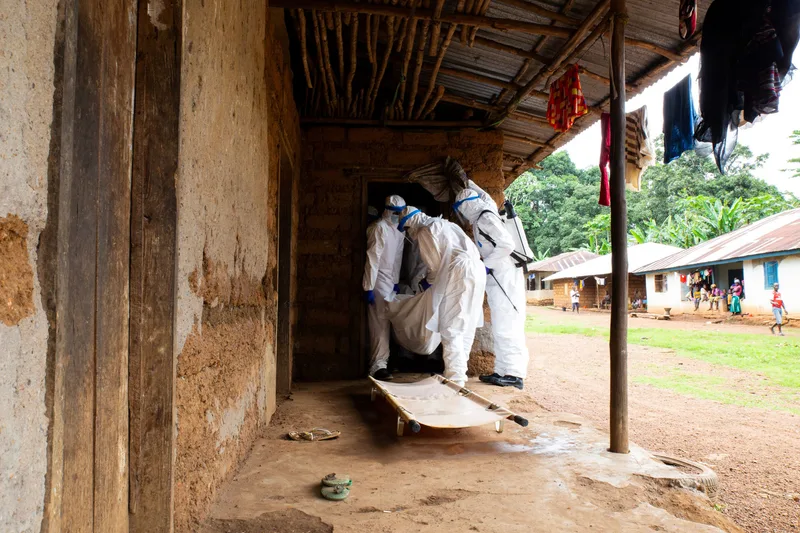
Ebola Without a Vaccine
The Democratic Republic of the Congo is fighting the largest Ebola outbreak in its history with a virus for which no vaccine and no treatment is licensed. Six thousand confirmed cases in fifteen weeks, an armed conflict at the epicenter, and a world that had prepared for a different strain.
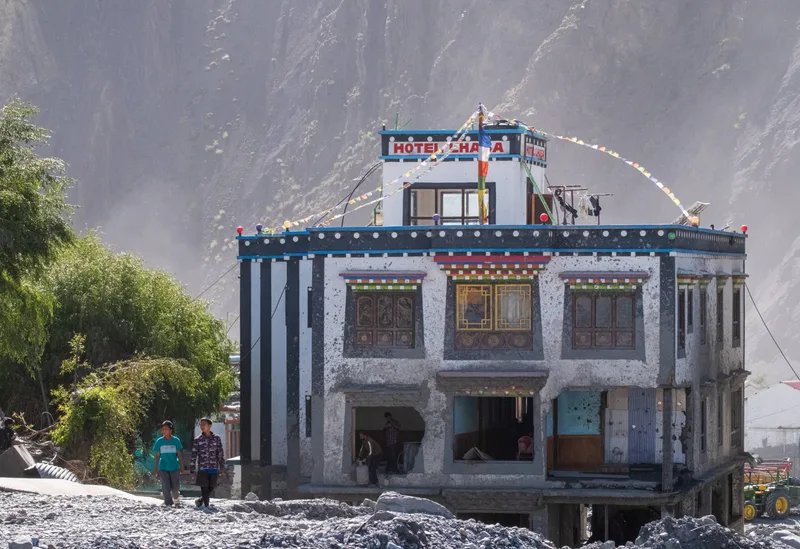
The Gateway That Flooded Twice
Rasuwagadhi is the only major road crossing between Nepal and China, and the single overland funnel for Kailash pilgrims, Langtang trekkers, and most of Nepal’s China trade. On August 26, 2026, it was destroyed for the second time in thirteen months. The first official explanation - an earthquake - turns out never to have happened.
The Wine Is Buried
Georgian wine ferments in clay vessels buried in the cellar floor, the way it has for eight thousand years - a method the Soviet plan had no use for and a Russian embargo accidentally turned into the country’s calling card.
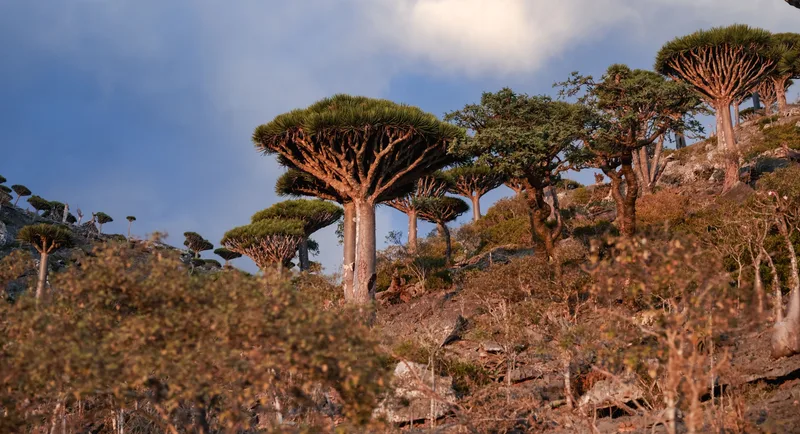
The Forest With No Children
The dragon's blood trees on Socotra's Firmihin plateau are the densest stand left of a species that grows nowhere else, and almost every one of them is an adult. The reason there are no young ones is not the climate, or not yet - it is a goat, and that makes it a question about the island's economy rather than its weather.
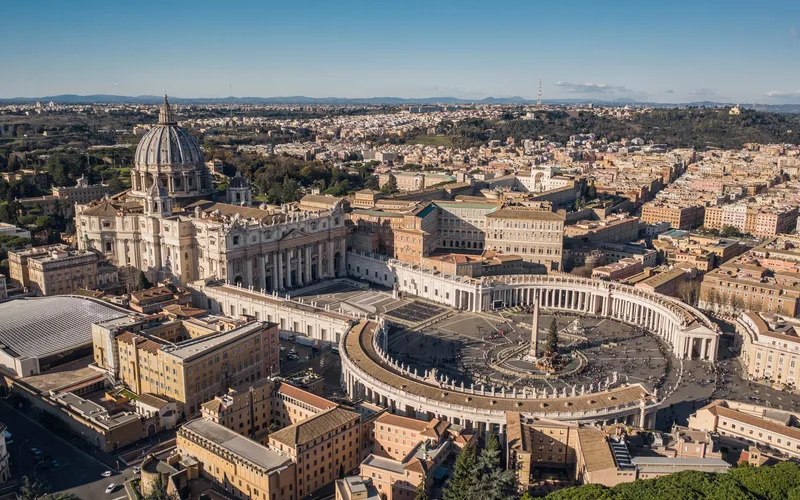
Six Million Tickets
Vatican City levies no income tax, exports almost nothing and houses fewer than a thousand people, and its public revenue rests on a museum turnstile and the rent from Roman property. The one time it tried to make money a different way it put something in the region of €350 million into a building in Chelsea and ended up trying a cardinal in its own criminal court.
The Reservoir Made of Wind
Uruguay has no oil, no gas and no coal, and for a century its electricity failed whenever the rain did. In about ten years it rebuilt the grid around wind it does not own, using an auction, a state utility and four dams repurposed as a battery.
The Eighty-Five Millimetre Border
Ukraine's railways run on 1,520 mm track and Europe's run on 1,435, and the eighty-five millimetres between them have to be crossed by jacking up every carriage or unloading every wagon. Since the airspace closed in February 2022 that seam has been the country's front door, and what to do about it has quietly become an accession question.
Two Hundred and Eighty a Year
In June 2025 Australia opened a ballot for 280 permanent residence visas a year for Tuvaluans, and within four days more than three thousand people had registered - close to a third of the country. The treaty behind it also contained a clause that took Tuvalu six months to argue back out of.
The Order to Put Out the Fire
In 2010, and again in 2022, the president of Turkmenistan ordered the burning gas crater at Darvaza extinguished, and it is still alight. It is also, by an enormous margin, the least significant thing leaking methane in the country.
The Patent on the Pan
On 10 April 2001 the United States Patent Office granted patent 6,212,772 - "Production of a Caribbean steel pan" - to two men from the University of Delaware. Trinidad has spent the quarter-century since working out what a country can and cannot own about an instrument that nobody in particular invented.
The Decree and the Factory Ships
In 1978 the King of Tonga banned whaling by decree, and Tongan harpoons went into sheds. The whales they had been taking in ones and twos had already been destroyed on a different scale entirely, by fleets that reported one set of numbers and killed another.
Who Owned the Pattern
For three decades a woman in Lomé could hold the sole right to sell a particular printed cloth across a large part of West Africa, and the fortunes that built are why Togo's wax traders were called the Nana Benz. That right was never written into any law - it was a commercial convention, and it was withdrawn by a company in the Netherlands.
The Three Per Cent Rule
Timor-Leste copied Norway's sovereign wealth fund almost line for line, wrote a spending limit into the law, and then spent above that limit in nearly every year since 2009. The gas field that filled the fund stopped producing in 2023, and the field meant to replace it has been sitting undeveloped since 1974.
The Dam and the Winter
Almost all of Tajikistan's electricity comes from water, and in winter the water is locked up as ice upstream - much of the country has spent two decades on a few hours of power a day from November to March. The fix has been under construction since 1976, and at 335 metres it would be the tallest dam in the world.
The Villages People Moved Back Into
UNESCO inscribed the limestone villages of north-west Syria in June 2011, three months after the uprising began, and moved them to the danger list two years later. By then families displaced from Idlib and the Aleppo countryside were living inside them, which is how a conservation problem turned into an argument about what a ruin is for.
The Dam Outlived the Smelter
In 1958 an Alcoa subsidiary agreed to dam the Suriname River, and in exchange for building it kept the dam and the electricity on a seventy-five-year concession. The smelter it was built to run closed in 1999, the refinery in 2015, and on the last night of 2019 the dam changed hands.
The Cataract Under the Lake
The Merowe Dam closed the Fourth Cataract in 2008, roughly doubling Sudan's generating capacity and putting some 170 kilometres (105 mi) of the Nile under water. Archaeologists had spent a century assuming almost nobody had ever lived along that reach, and they were given four seasons to find out how wrong they were.
The Canal That Stopped Halfway
A bucketwheel excavator weighing some 2,300 tonnes cut 240 kilometres of a 360-kilometre canal across the Sudd, and then stopped in 1984 and never moved again. It is still there, and the argument it was built to settle has come back inverted.
Bricks of Shillings
Somaliland has issued its own currency since 1994, through a central bank that belongs to no international institution because no state recognises the government behind it. Then its own citizens dollarised the retail economy from below, using a mobile-money system run by a phone company, and left that central bank presiding over small change.
The Intervention Parliament Voted For
On 24 July 2003 a force that would build to about two thousand two hundred foreign police and soldiers began landing at Honiara, and the first thing that had happened was a unanimous vote in the Solomon Islands parliament. Fourteen years later the mission left on a date agreed years in advance, which almost no armed intervention anywhere has managed.
The Sanctuary the Law Needed
Sierra Leone has had a wildlife protection act since 1972, but for two decades a confiscated chimpanzee had nowhere at all to go, which is another way of saying the law could not be enforced. The place that fixed it was built by a private citizen in 1995, at the height of the civil war, and the state has been leaning on it ever since.
The Law for the Oil That Never Came
In 2004 the National Assembly of São Tomé and Príncipe unanimously passed one of the strictest natural-resource revenue laws written anywhere - a sealed account, a fund for future generations, every payment published. The country has never produced a commercial barrel of oil, and it still imports every litre of fuel it burns.
Seventeen Years for Eighty Thousand Pounds
San Marino declared itself neutral, opened its border to more than 100,000 refugees against a population of about 15,000, and was bombed by the RAF anyway on 26 June 1944 - 63 dead and its only railway destroyed. It presented Britain with the bill in October 1945 and was paid on 7 July 1961, in wording that admitted nothing.
The Airport Built Without a Bank
Until 2017 nobody could fly to Saint Vincent from outside the Caribbean, because the runway was 1,400 metres of tarmac wedged between a hillside and the sea. The replacement took twelve years and was financed without a loan from the IMF, the World Bank or the Caribbean Development Bank.
A Contract With a Reef
In 1994 the fishers, dive operators and hotels of Soufrière stopped fighting over the same reef and drew a map instead, closing roughly a third of the fishing ground. Five years later the boats working the water next to it were landing between 46 and 90 per cent more fish.
The Heat Under the Bath House
Water comes out of the ground at the foot of Nevis Peak at around 42°C, and a hotel was built over it in 1778. Turning that heat into electricity has been declared policy on Nevis since 2008, and the island still runs on imported diesel.
The Line That Outlived Its Argument
The Baikal–Amur Mainline was begun with prison labour in the 1930s, abandoned, restarted in 1974 as the Soviet Union's last great construction campaign, and finished so late that the state it was built for had stopped existing. For thirty years it was the standard example of an infrastructure project that made no economic sense - and then Europe stopped buying Russian coal, and the only way out was east.
Thirty Billion Tonnes of Wet Ground
Under the flooded forest of northern Congo lies the largest tropical peatland complex on earth, and nobody had measured it until a team went in with a soil auger and started counting. What they found holds roughly three years of the world's fossil fuel emissions, and it stays where it is only for as long as it stays wet.
The Clause That Came Due
Paraguay owns half of the largest hydroelectric plant in the western hemisphere and has never been allowed to sell that half to anyone but Brazil. The financial annex that arranged it was written in 1973 with a fifty-year clock on it, and the clock ran out in 2023.
Closing Eighty Per Cent of the Sea
In October 2015 Palau passed a law shutting four-fifths of its ocean to all extractive activity, giving up the licence fees that distant-water fleets had been paying to fish it. The plan was that visitors would make up the difference, and the law took full effect in January 2020.
The Lake That Ate the Highway
On 4 January 2010 a hillside above the village of Attabad slid into the Hunza river, killed about twenty people and dammed the valley, and over the following months a lake rose behind it that drowned some nineteen kilometres of the Karakoram Highway. Pakistan and China decided not to drain it - they tunnelled around it instead, and the road reopened in September 2015 above water that had not existed when it was last driven.
A Hundred Metres Under Pyongyang
For decades visitors to Pyongyang were shown two stations of its metro and nothing else, which was enough for a theory to take hold that the rest of the system did not exist. It does, it has run since 1973, and what is genuinely known about it is a good measure of how much anyone outside knows about the country above it.
The Marketer Was the Studio
Nigeria built one of the highest-volume film industries in the world with no cinemas, no bank credit and no state funding - the money came from electronics traders in two Lagos markets, and so did the decisions about what got made. Streaming money arrived thirty years later, paid properly, asked for better, and then went away again.
The Monday Convoy
In 2015 Niger criminalised the business its northern capital had run for six centuries - carrying paying passengers across a desert - in exchange for European money and equipment. Eight years later it repealed the law, quashed the convictions, and let the trucks load in the open again.
The Clause That Started the Clock
On 25 June 2021 Nauru sent a letter to the International Seabed Authority and triggered a treaty clause nobody had ever used. It gave the regulator of the entire deep ocean floor two years to finish its rulebook, and the country that started the clock is the one that has already been mined flat.
A Ruin Is Not a Draft
Myanmar put Bagan forward for World Heritage listing in the 1990s and was turned down, because the government rebuilding its temples was inventing the parts that had fallen off. It was finally inscribed in July 2019, after an earthquake had gone through the plain and demonstrated, brick by brick, which of the work was medieval and which was not.
Four Million Francs
In February 1861 Monaco signed away Menton and Roquebrune for four million francs and lost about ninety-four per cent of its territory in an afternoon. It has spent the last sixty years manufacturing a fraction of it back out of the sea, most recently six hectares that cost in the region of two billion euros.
The Gas That Was Never Free
For three decades Russian gas arrived on the left bank of the Nistru, was burned in a Soviet power station there, and came back to the rest of Moldova as electricity no European supplier could undercut. The bill went to a company in Chișinău that never paid it, and on 1 January 2025 it stopped arriving.
The Districts That Voted Themselves Out
On 12 July 1978 the districts of the American-administered Trust Territory voted on a single constitution for a single Micronesian nation, and two of them - the Marshall Islands and Palau - voted it down. The four that voted yes are 2,700 kilometres apart, share no common first language, and have spent the years since engineering a federation designed to survive its own arithmetic.
The Ore Line and the Ouguiya
In seventeen months between 1973 and 1974 Mauritania walked out of the French monetary zone, invented a currency, and took the iron mine that paid for almost everything the state did. Then it had to defend the railway.
Full and Final Settlement
The United States tested 67 nuclear weapons in the Marshall Islands and then, in 1986, settled the consequences for US$150 million described in the document as full and final. The tribunal the Marshallese built to distribute that money went on to award more than two billion dollars it did not have.
The Trunks That Left Timbuktu
When armed groups took Timbuktu in April 2012, the city's manuscript libraries were private, family-owned and largely uncatalogued. Over the following months something like 350,000 volumes were packed into metal footlockers and moved some nine hundred kilometres south to Bamako - by taxi, by bus and by pirogue, through checkpoints held by the people they were being hidden from.
The Court That Cancelled an Election
On 3 February 2020 five Malawian judges annulled the presidential election their own head of state had won, and ordered the country to vote again. They read the judgment wearing body armour, and four months later the man who had come second was president.
The Committee That Closed the Mills
Between the mid-1970s and the early 1990s Luxembourg shut down most of an industry that had employed close to 25,000 people in a country of about 360,000, and it did so without compulsory redundancies. The mechanism was a standing committee of ministers, employers and unions, and the country has never stopped using it.
A Veto and an Exit Clause
In March 2003 Liechtenstein voted to hand its head of state powers no other monarch in Europe holds, and 64.3 per cent said yes on an 87.7 per cent turnout. In the same document the Prince wrote in a clause letting the voters abolish him.
Who Guards Leptis Magna
Libya has five World Heritage sites and all five went onto the danger list in July 2016, but what happened to them since 2011 has varied enormously - a bank vault in Benghazi was cut open and emptied of a hoard excavated at Cyrene in 1917, tombs at Cyrene have been bulldozed for building plots, and Leptis Magna is essentially intact. The difference is not international listing, and it is not state capacity, because for long stretches there was not much of either.