Journal
Reports, analyses and features from all 194 countries - the journalism behind the journeys.
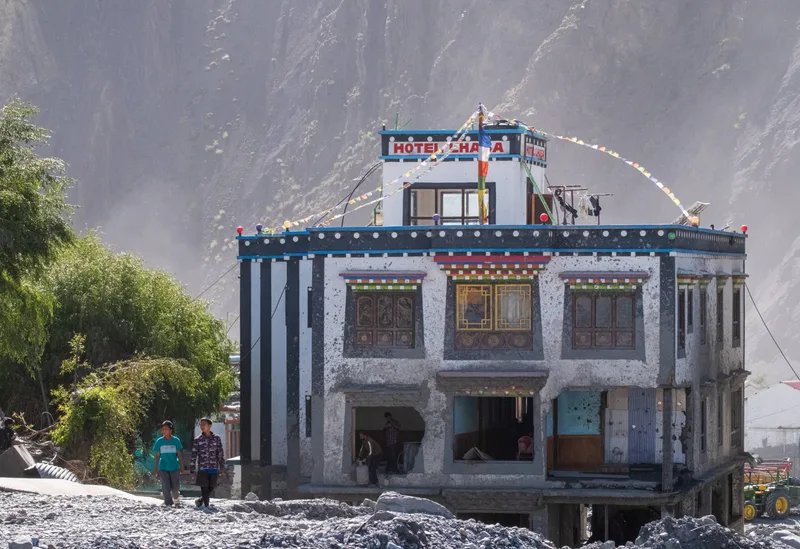
The Gateway That Flooded Twice
Rasuwagadhi is the only major road crossing between Nepal and China, and the single overland funnel for Kailash pilgrims, Langtang trekkers, and most of Nepal’s China trade. On August 26, 2026, it was destroyed for the second time in thirteen months. The first official explanation - an earthquake - turns out never to have happened.
The Dam and the Winter
Almost all of Tajikistan's electricity comes from water, and in winter the water is locked up as ice upstream - much of the country has spent two decades on a few hours of power a day from November to March. The fix has been under construction since 1976, and at 335 metres it would be the tallest dam in the world.
The Lake That Ate the Highway
On 4 January 2010 a hillside above the village of Attabad slid into the Hunza river, killed about twenty people and dammed the valley, and over the following months a lake rose behind it that drowned some nineteen kilometres of the Karakoram Highway. Pakistan and China decided not to drain it - they tunnelled around it instead, and the road reopened in September 2015 above water that had not existed when it was last driven.
The Treaty Signed Under a Blockade
Lesotho has no coast, no oil and one neighbour. What it also has is rain falling on mountains above 3,000 metres, and since 1998 it has been selling that rain to South Africa through a tunnel driven under the Maloti - under a treaty signed nine months after Pretoria closed the country's borders and a coup removed the government that had refused to sign it.
The Country That Taxed Itself
Until 2013 Andorra had no general sales tax, and until 2015 no personal income tax at all - the state ran on duties charged on the goods filling the shops. In a decade it built a tax system, opened its banks to automatic information exchange and joined the IMF, and it did none of it voluntarily.
The Park the Villages Ran
Afghanistan gazetted its first national park in April 2009, around six lakes in the central highlands held back by dams the water builds itself, and what made it function was not a boundary but a committee drawn from the fourteen villages inside it. In August 2023 the ministry for the propagation of virtue barred women from entering, removing about half the people the arrangement had been built to serve.
The Terraces Were a Wage
Drought in Cabo Verde has never stopped, and famine has - the last one ended in 1948, and there has not been another since. What changed was not the rainfall but a labour scheme that paid rural people, in wages funded by selling donated food, to rebuild the hillsides they were standing on.
Built on the Defence Power
The Snowy Mountains Scheme was legislated in 1949 under the Commonwealth's defence power, because Canberra had no clear authority to build it, and was declared finished in 1974 on time and within budget. Its successor, Snowy 2.0, was announced in 2017 at a third of what it now costs and is being tunnelled through a national park.
Ten Per Cent of the Gate
In May 2017 Rwanda doubled the price of an hour with a gorilla family from 750 dollars to 1,500, in a park of 160 square kilometres that can sell fewer than a hundred permits a day. The number was a policy rather than a market outcome - high value, low volume - and a tenth of it is written back into the villages on the park boundary.
Selling Summer, Buying Winter
Bhutan sells electricity to India all summer and buys it back all winter, because nearly every plant it has built runs on the river rather than on a reservoir and the rivers fall when the snowmelt stops. The largest of those plants was begun in 2008, was due in 2016, and is still not generating, because the hillside it is anchored to keeps moving.
Eight Per Cent
A few hundred walkers trespassed on Kinder Scout in 1932 and five went to prison, though not for trespassing. Seventy-three years later England opened about eight per cent of itself to walkers, while Scotland, in the same decade, opened almost all of it.
Fifty Hairpins and a Wooden Chapel
The most driven road in Slovenia was cut over a 1,611-metre pass in 1915 by Russian prisoners of war, to move Austro-Hungarian shells to the Soča front faster. A hundred of them died under an avalanche, and the survivors built a chapel that is now a fixed point in Slovenian foreign policy.
The Mine Above the Lake
Kumtor is an open pit at four thousand metres in the central Tian Shan, worked in permafrost and moving ice, and for most of this century it has been the largest single item in the Kyrgyz economy. The state seized it from its Canadian operator in 2021 and a settlement in 2022 left it owning the mine outright, which answered the question of who owns it and none of the questions about where its water goes.
The Valley That Named the Dollar
One valley in the Ore Mountains produced the silver coin that named the dollar, the pitchblende that gave Marie Curie her radium, and the uranium that the Soviet weapons programme wanted badly enough to staff the mines with political prisoners. The spa that opened in 1906 to sell the radioactivity is still open, and still pumping from a shaft sunk in 1518.
The Reactor That Was Never Switched On
Austria finished a 692-megawatt nuclear power station on the Danube, then voted by about thirty thousand votes not to start it. Half a century later the building is still there, still complete, and the ban has been written into the constitution.
The Room Is Not the Business
You can walk to 4,130 metres in Nepal with a daypack, sleeping in a bed and eating hot food every night. The teahouse system that makes it possible was never planned - and roads are now unmaking it.
The Eight Weeks Nobody Mentions
Every spring the air in Chiang Mai becomes some of the worst on earth, and almost no itinerary says so. The cause is not industry or traffic - it is maize stubble on hillsides too steep for machinery.
The Country That Runs on a Clock
In 1982 Switzerland stopped designing timetables around trains and started designing them around connections - then dug tunnels through the Alps to make the arithmetic work.
A Volcano and Thirty Islands
La Soufrière erupted explosively in 2021, in 1979 and in 1902 - and in 2021 nobody died, because the evacuation came before the explosion. South of it runs a chain of thirty islands, and from this one the Garifuna were deported in 1797 to a coast where their descendants still speak the language.
The Island That Grew Back
Hurricane Maria crossed Dominica in three hours in 2017 and stripped every leaf from every tree on the island. Two months later its prime minister told the UN the country intended to become the world’s first climate-resilient nation. What that has actually meant, on an island with nine volcanoes and no beaches.
The Coast That Was Never Logged
The largest intact temperate rainforest on earth, a black bear that comes out cream-coloured, and a forest whose trees have been shown to contain nitrogen carried inland from the ocean by animals. How blockades, a market campaign and twenty-six First Nations stopped the clearcutting and built something else instead.
The Tables of the Gods
Two-billion-year-old sandstone plateaus standing a kilometre above the savanna, each summit isolated long enough to evolve its own flora, with the highest waterfall on earth dropping off one of them. And a country with the largest proven oil reserves in the world that has produced the largest displacement crisis in the Americas.
The Loom and the Long War
A Guatemalan huipil identifies the town its wearer comes from, in motifs that predate the Spanish. During a thirty-six-year war in which the state was found responsible for acts of genocide, that made the cloth dangerous - and later made it the means by which the dead in clandestine graves were identified.
The Mountain That Ate Men
In 1545 someone found silver in a hill at 4,090 metres, and the coin struck from it became the first global currency - circulating from Seville to Ming China. The bill was paid by the men sent underground under the mita, and the mountain is still being worked today by cooperatives with hand drills.
The Country That Bought Its Forest Back
Costa Rica cut down most of its forest for cattle, then spent thirty years paying landowners to put it back - and roughly doubled its forest cover from the low point. The most-cited conservation success on earth, including the parts that get edited out: secondary growth, pesticide intensity and a transport sector nobody has solved.
The Sky as a Resource
Above the Atacama is the clearest sky on the planet and a large share of the world’s ground-based telescopes. Beneath it is roughly a quarter of the accessible lithium. Chile now regulates darkness as a national asset - while the pumps below the salar draw down water the Atacameño communities have farmed for centuries.
The Men Who Carry the Mountain
Peru wrote one of the only trekking labour laws on earth that is genuinely enforced: twenty kilos, a minimum wage, tents and insurance for the porters of the Inca Trail. Two decades on, the trail is in better condition than it was - and the crowds have moved to the mountains the law does not reach.
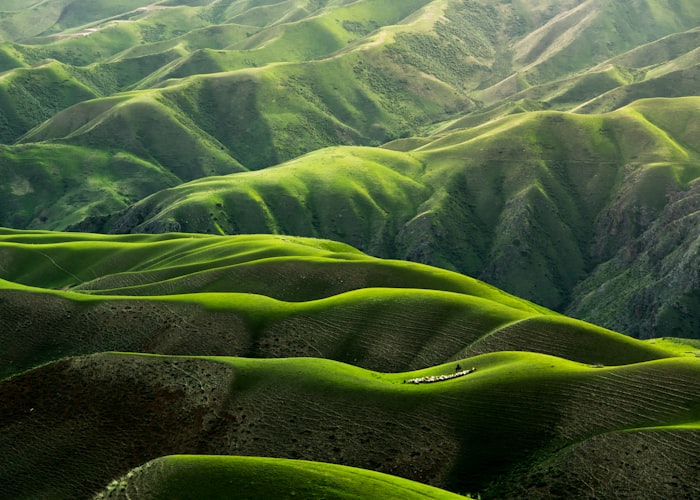
Harvest Season in the Cordillera
Six weeks on the fincas of Quindío during the main cosecha: the mathematics of a kilo of cherries, the jeeps that hold an economy together, and what climate change looks like from a slope at 1,800 metres.
Bogotá Learns to Breathe
Every Sunday, the capital closes 120 kilometres of road to cars and hands them to cyclists, skaters and grandmothers walking arm in arm. At 2,640 metres, the city that outsiders still misread has quietly become a masterclass in urban reinvention.
Salt, Altitude, and the Sacred Lake
Ten thousand square kilometres of salt flat at 3,660 metres, a fifth of the world's identified lithium underneath it, and a lake at 3,812 metres that Andean cosmology says the world began in.
Atlas Light: A Photographer's Journey from Marrakech to the Drâa Valley
The light changes twice on the road south from Marrakech, and both times faster than expected. A photographer's account of the High Atlas passes, the earthen kasbahs and the longest palm grove in Morocco.
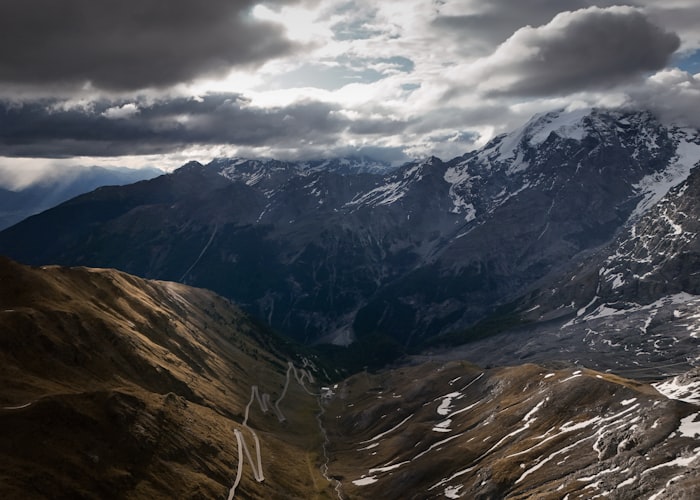
Crossing the Wakhan: A Winter Traverse
The Wakhan Corridor in winter is one of the world's most demanding journeys. High altitude, extreme cold, almost no infrastructure.
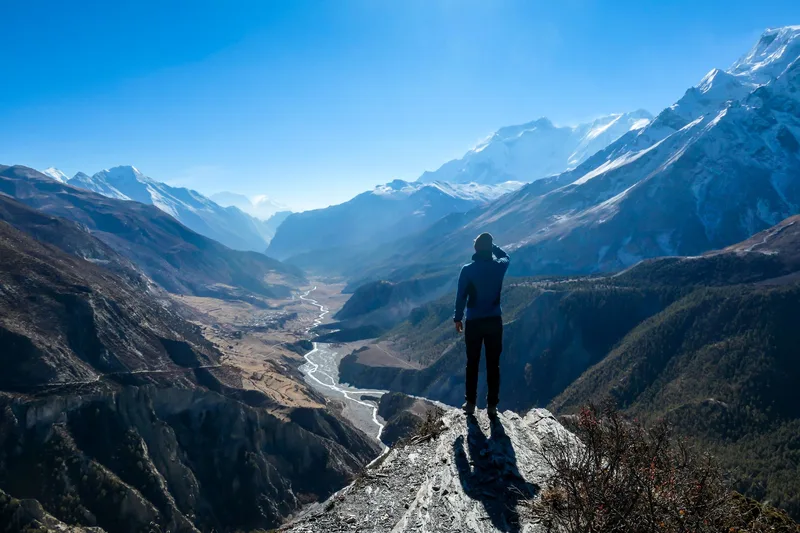
The Newest Marker Is Furthest From the Ice
Retreat has outrun the infrastructure built to show it: viewpoints of where a glacier was, approaches over unstable moraine, and a permafrost problem above the ice that has closed classic routes outright.
The Number Was Chosen by Someone Who Counted
Some of the best-known walks on earth cannot be walked on a decision. Three rationing systems - release-date scramble, ballot, rolling quota - that are not interchangeable, and the operator layer that changes the problem entirely.